
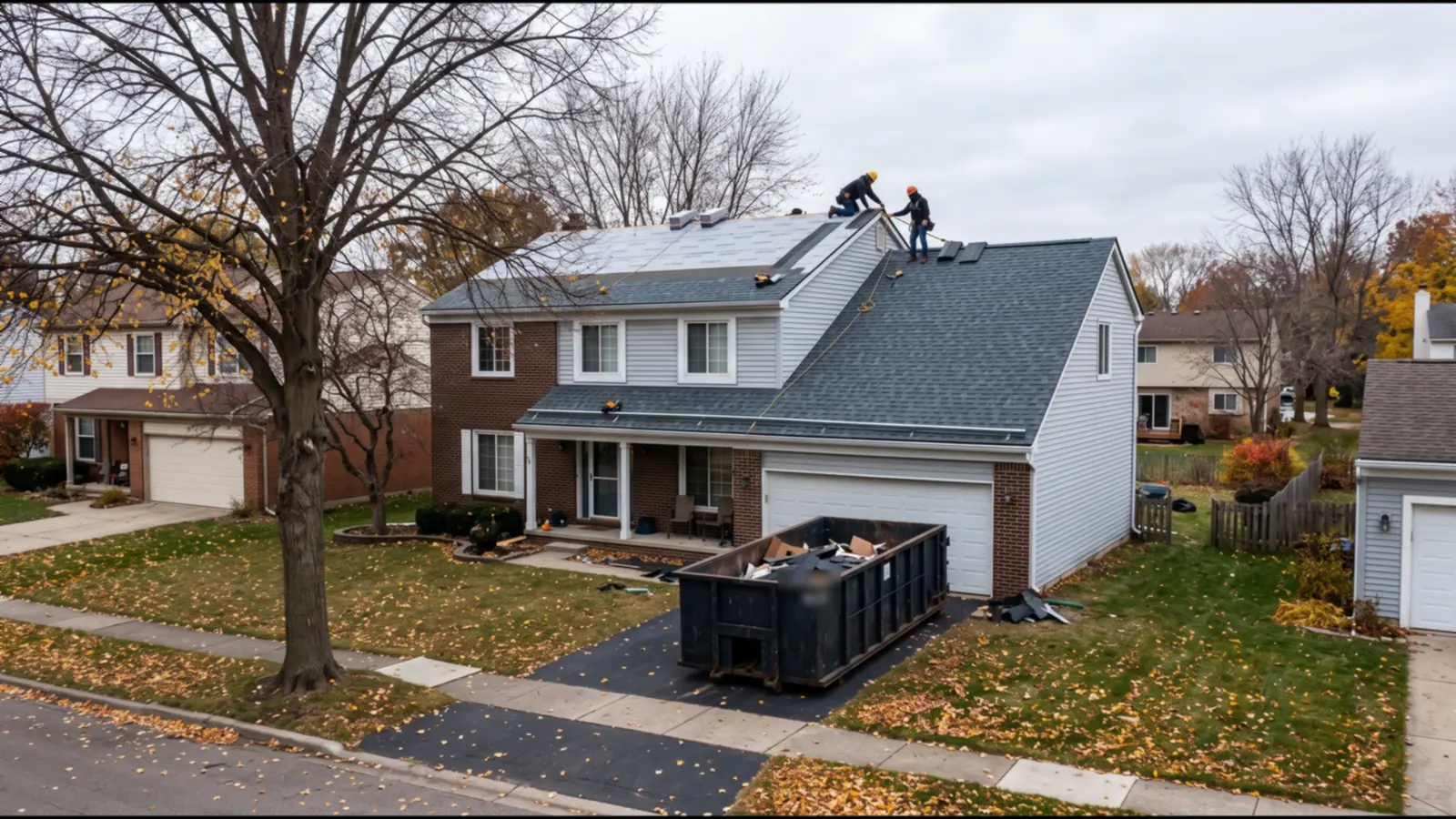
Storm Damage Roof Repair Work, Wind to Ice
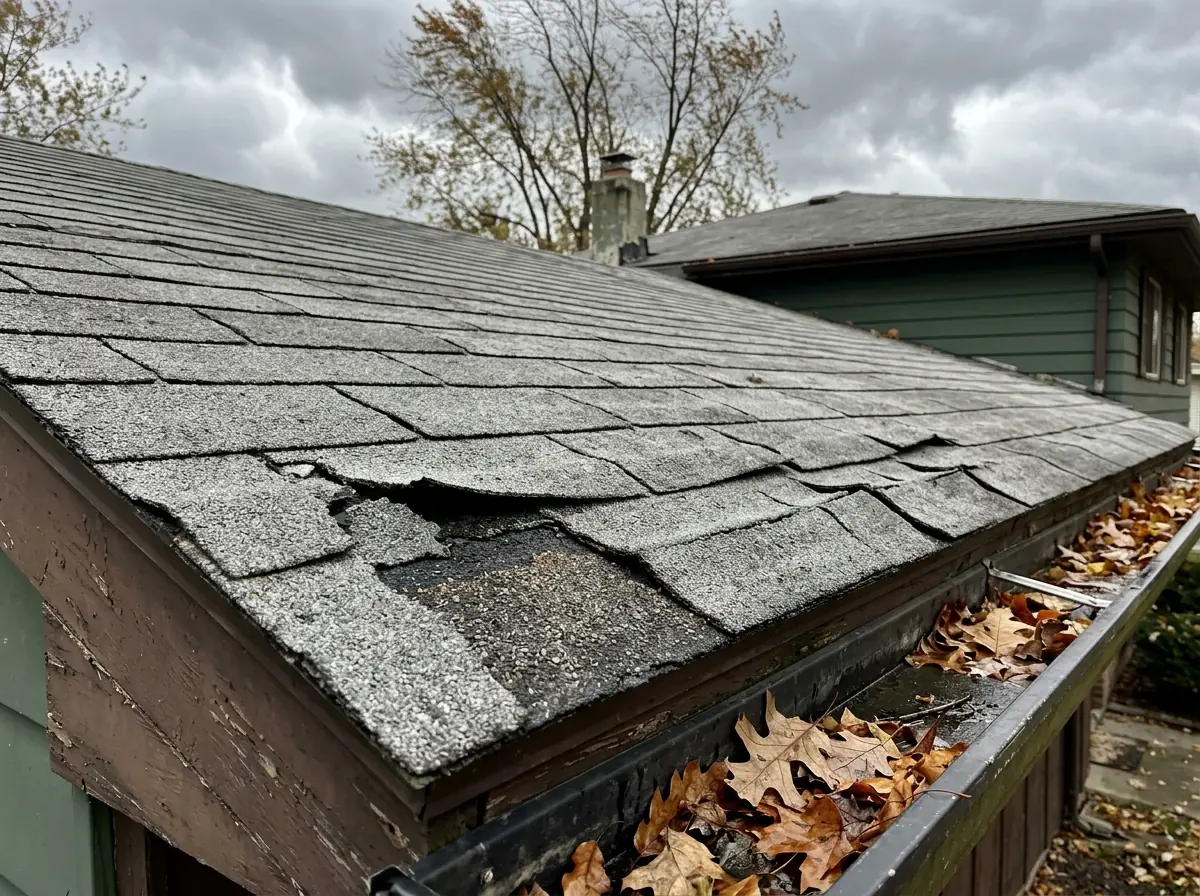
Wind-Creased and Torn-Off Shingles
A sealed shingle resists wind until a gust breaks the adhesive strip under its tab. Once the tab lifts, it catches more wind, flaps, and folds across the top of the exposed part, leaving a crease. Enough flapping and the tab tears off and lands in the yard. IIBEC, the International Institute of Building Enclosure Consultants, puts it simply: wind damage leaves evidence (creases, folds, tears, missing pieces), and it shows up most at eaves, hips and ridges, where wind loads are highest. A tab that has merely come unsealed, with no crease or tear, isn't proof of wind damage. Creased tabs get replaced: new shingles slid into the courses and hand-sealed, as long as the neighbors aren't too brittle to lift.
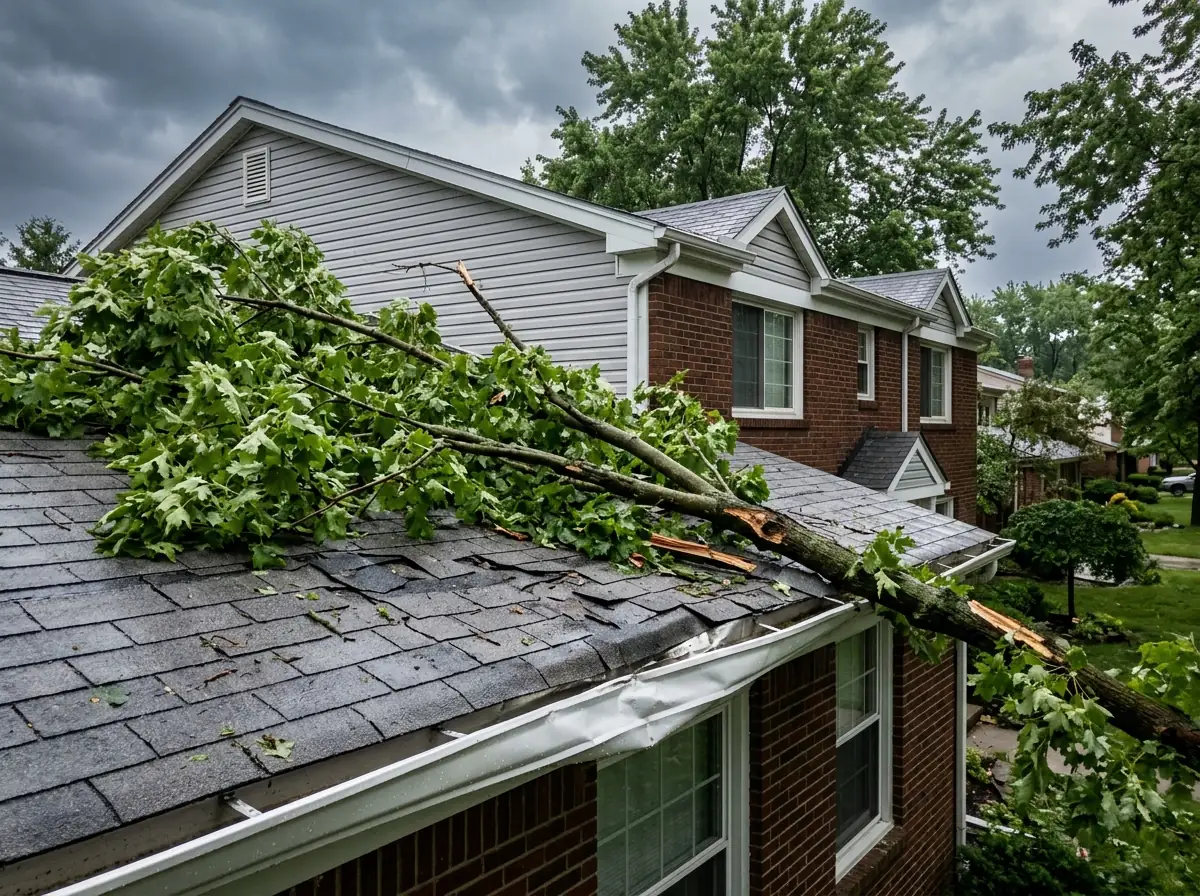
Tree and Limb Strikes
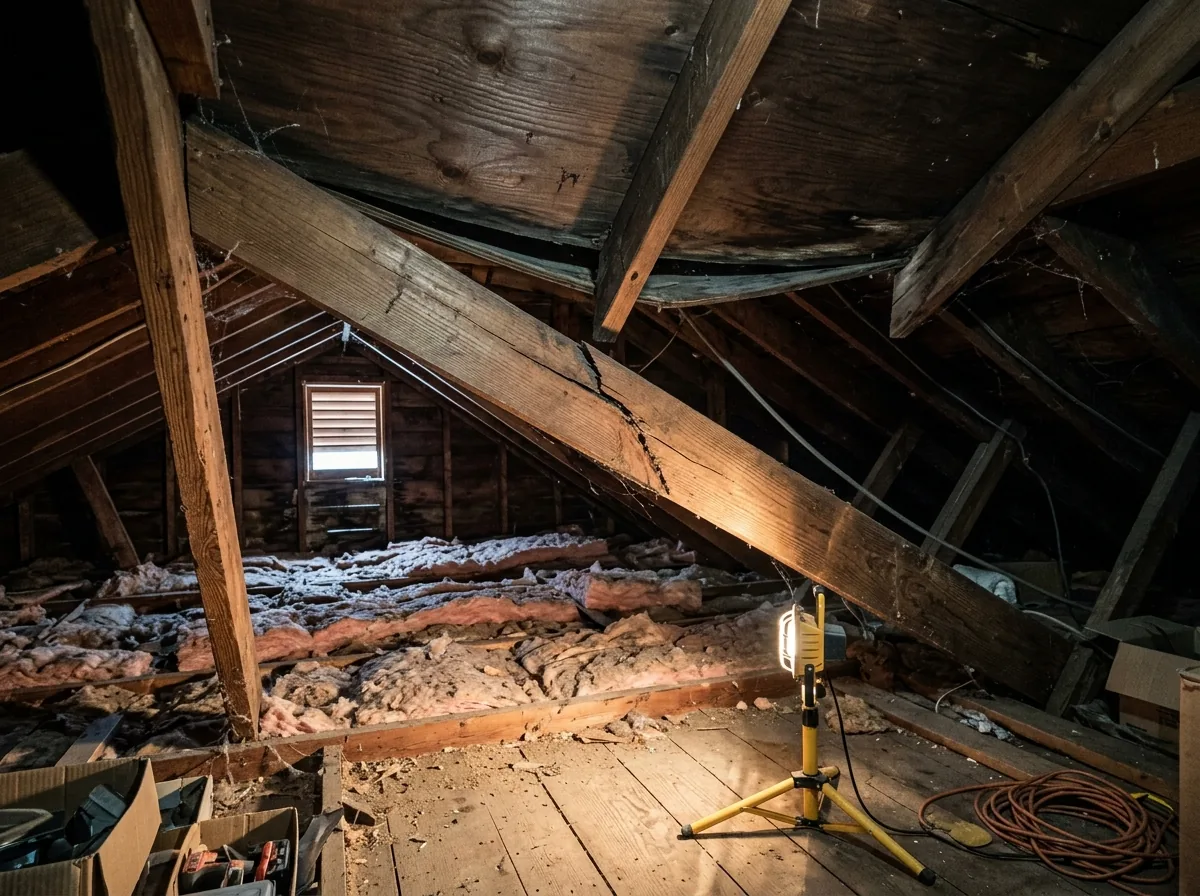
A limb can crack the deck, split a rafter and push the gutter off the fascia, and some of that only shows from the attic. The limb comes off first (a big one is a tree service's job, wires are the utility's), then a roofer dries in the hole (the emergency roof repair page covers that), checks the framing from inside, and scopes the repair: sistered or replaced rafters, new decking, underlayment and shingles tied into the old roof. The homeowners guide from Michigan's insurance regulator, DIFS, gives tree removal coverage a $500 standard limit, and many insurers pay only when the tree fell or damaged property because of a covered peril.
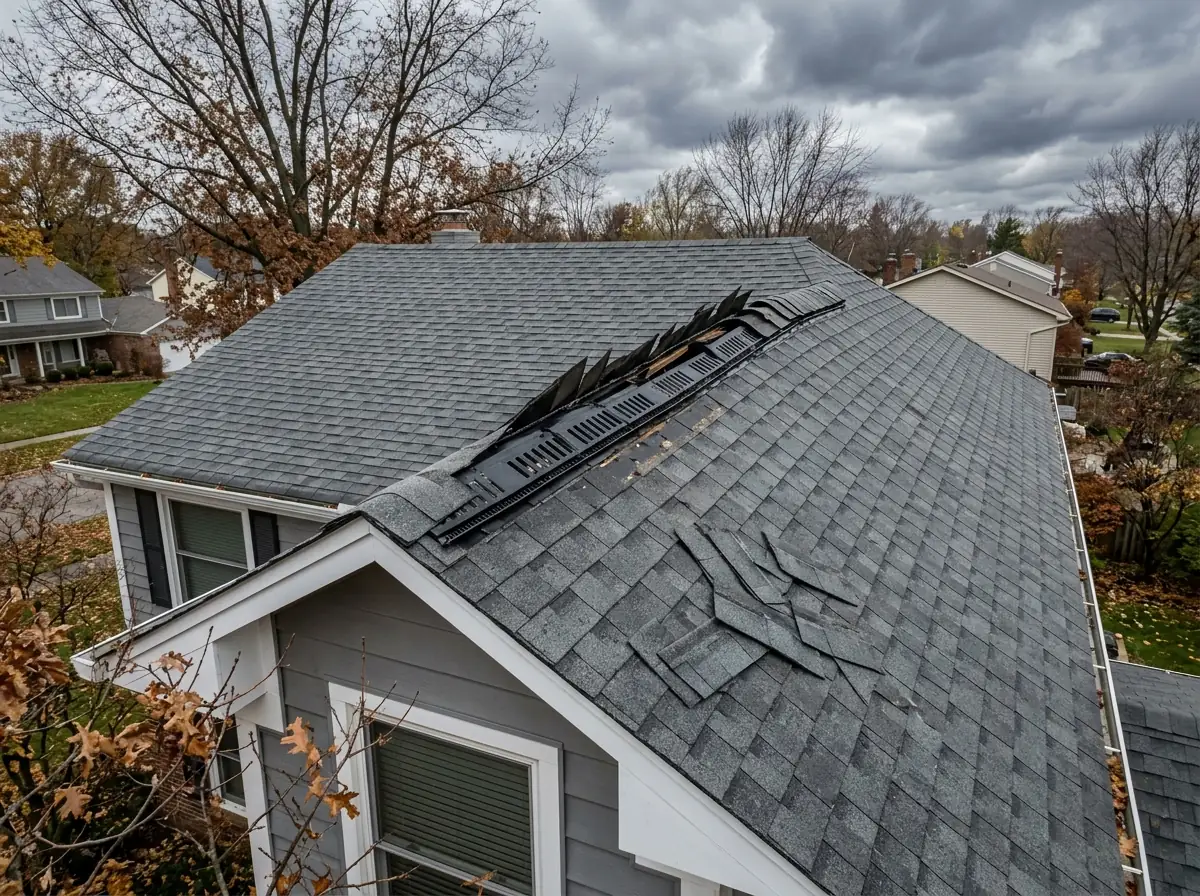
Lifted Flashing and Ridge Cap After High Wind
Ridges and hips catch some of the highest wind loads on a pitched roof, and the cap shingles over a ridge vent are small, bent pieces. When they go, the vent underneath is left open to blowing rain. Wind also gets under loose metal: drip edge along a rake, step flashing whose sealant dried out, or the apron at the bottom of a chimney. The repair replaces the ridge cap with matched cap shingles nailed per the maker's pattern, refastens or replaces bent drip edge, and reseats wall and chimney flashing. If a chimney's counterflashing was only caulked to the brick, wind can peel it off; the chimney flashing repair page explains the cut-in method that holds.
Snow and Ice Load Damage
DIFS also warns that wet, heavy snow can bring down roofs, porches, carports and outbuildings. Smaller damage is easier to miss: a cracked rafter or collar tie, a sag line along the deck, a porch roof pulling away from the house wall, or a detached garage roof that's visibly bowed. Check from the attic and from across the street once the snow melts (warning signs while it's still up there are on the emergency roof repair page). The repair is framing first (sister or replace cracked members, sometimes with an engineer's sign-off), then the deck and the roof covering. Ice dam damage is its own problem, covered on the ice dam removal page.
Gutters Torn Loose in a Storm
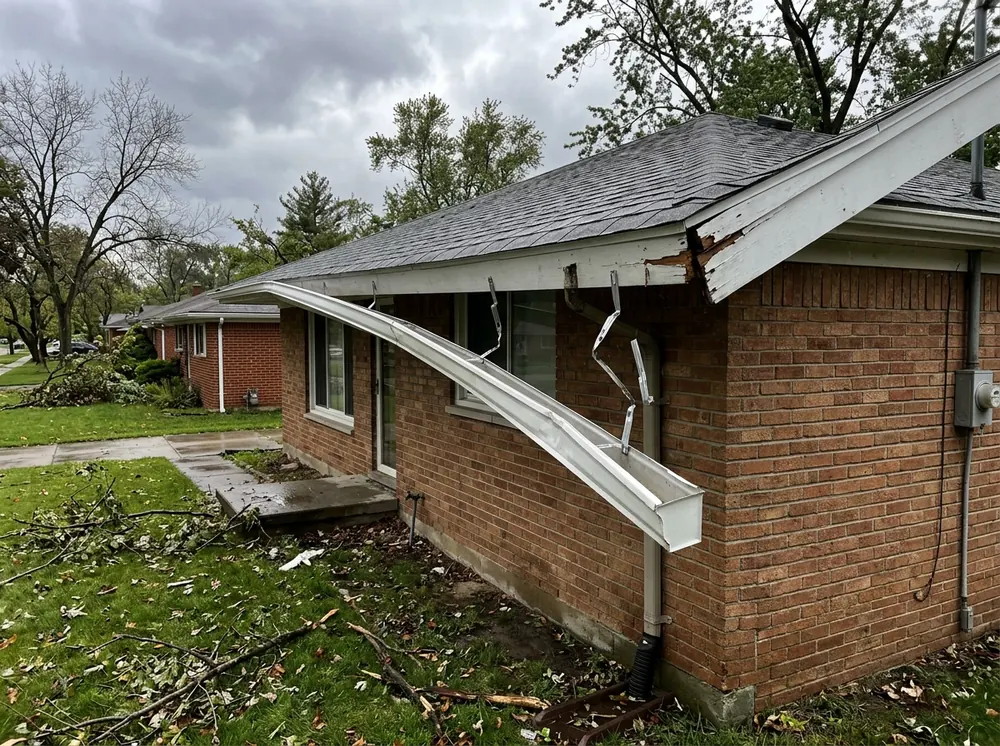
Gutters come down when a limb or wind catches them, or when ice fills them until the hangers pull out of the fascia, often bending the drip edge and splitting the fascia. A proper repair checks the fascia first (rotted wood won't hold new hangers), straightens or replaces the drip edge, then rehangs or replaces the gutter run with hidden hangers screwed into solid wood. More detail is on the gutter repair and soffit and fascia pages.
Why Sterling Heights homeowners call Sterling Heights Expert Roofing
- Free roof and attic inspection
- Itemized written estimate before any work
- Your request goes to one local roofer, not a call list
- Requests from inside Sterling Heights city limits
- Nothing to pay for the referral
Storm Damage Roof Repair and Your Homeowners Policy
Your insurer and your policy decide what's paid. Here's how the Michigan Department of Insurance and Financial Services (DIFS) describes a typical policy.
What's usually covered. The most common Michigan homeowners policy is the HO-3, an "all risk" form that covers the house against every peril not specifically excluded. DIFS lists ice dams, wind damage, leaky roofs and collapse from ice or snow weight among the winter losses standard policies cover. Flood is excluded from most policies. DIFS also notes that "flood" is a specialized term, so tell your insurer about any water damage and ask what applies, since storm-driven rain coming through a damaged roof may be covered.
What usually isn't. Wear and tear. HomeGuide notes that insurance generally covers a roof damaged by an accident or natural disaster, not one that's just old. That's why a dated inspection tying damage to a specific storm matters.
How the check is figured. Actual cash value is the replacement cost minus depreciation, the value lost to age and use. DIFS says dwelling losses are typically settled at replacement cost, but read your declarations page to see which applies to your roof.
Code upgrades. When a damaged house can't be put back exactly as it was because current code requires more, ordinance and law coverage pays for the upgrade. Without it, the insurer won't. DIFS lists a standard limit of 10% of dwelling coverage. On a reroof that can mean things like an ice barrier along the eaves or new flashing the old roof didn't have.
Other coverages that come up. The same DIFS guide says additional living expenses coverage pays for a hotel and meals if the house is unlivable, typically up to 20% of dwelling coverage. It also notes that when debris removal plus the damage exceeds the limit, an extra 5% of the limit may be available for debris removal.
Storm Damage Roof Repair Claims: Adjusters, Public Adjusters and Disputes
DIFS's guidance after severe weather comes down to a few steps. Report the claim to your insurer's claims line or your agent. Photograph or video the damage, and don't throw damaged materials away until the insurer says so. Protect the house from more damage and keep the receipts, which is what emergency tarping is for.
A few points people get wrong:
The insurer's adjuster works for the insurer
DIFS says company adjusters are paid by the insurance company and should never ask you to pay them for services your policy covers.A public adjuster works for you, for a fee
In Michigan a public adjuster must be licensed by DIFS, use a DIFS-approved form, and can charge no more than 10% of the claim proceeds.The roofer can document; you make the claim
The roofer we refer you to can provide photos, measurements and a written scope. Talking to the insurer, agreeing to the settlement and deciding how to use it stay with you.Disputes have a route
DIFS asks homeowners to try to resolve a disagreement with the insurer first, and then it will step in to help. Complaints go through DIFS's consumer complaint page.
Storms also bring door-knockers. DIFS warns that fraudsters posing as contractors and adjusters go door to door after severe weather, and advises calling your insurer before you hire anyone and checking the contractor's license, references and insurance. How to look up a Michigan contractor license is on the roof repair page.
Storm Damage Roof Repair in Macomb County: Wind and Trees
The National Weather Service rates a thunderstorm severe when its winds reach 58 mph or more, or its hail reaches 1 inch. In this county, trees are a big part of the wind story. On August 24, 2023, Storm Prediction Center reports logged trees and power lines down across Macomb County. Census Bureau survey data (ACS 2024) put the median year built for Sterling Heights homes at 1977, and the maples and oaks planted with those houses have had decades to grow over the roofs.
Mature trees shade the roof and break the wind, but a big limb over the house is a risk in every summer storm. DIFS suggests removing dead or rotting trees from the property. For hail, the county's storm record and how hail marks differ by material are on the hail damage roof repair page.