
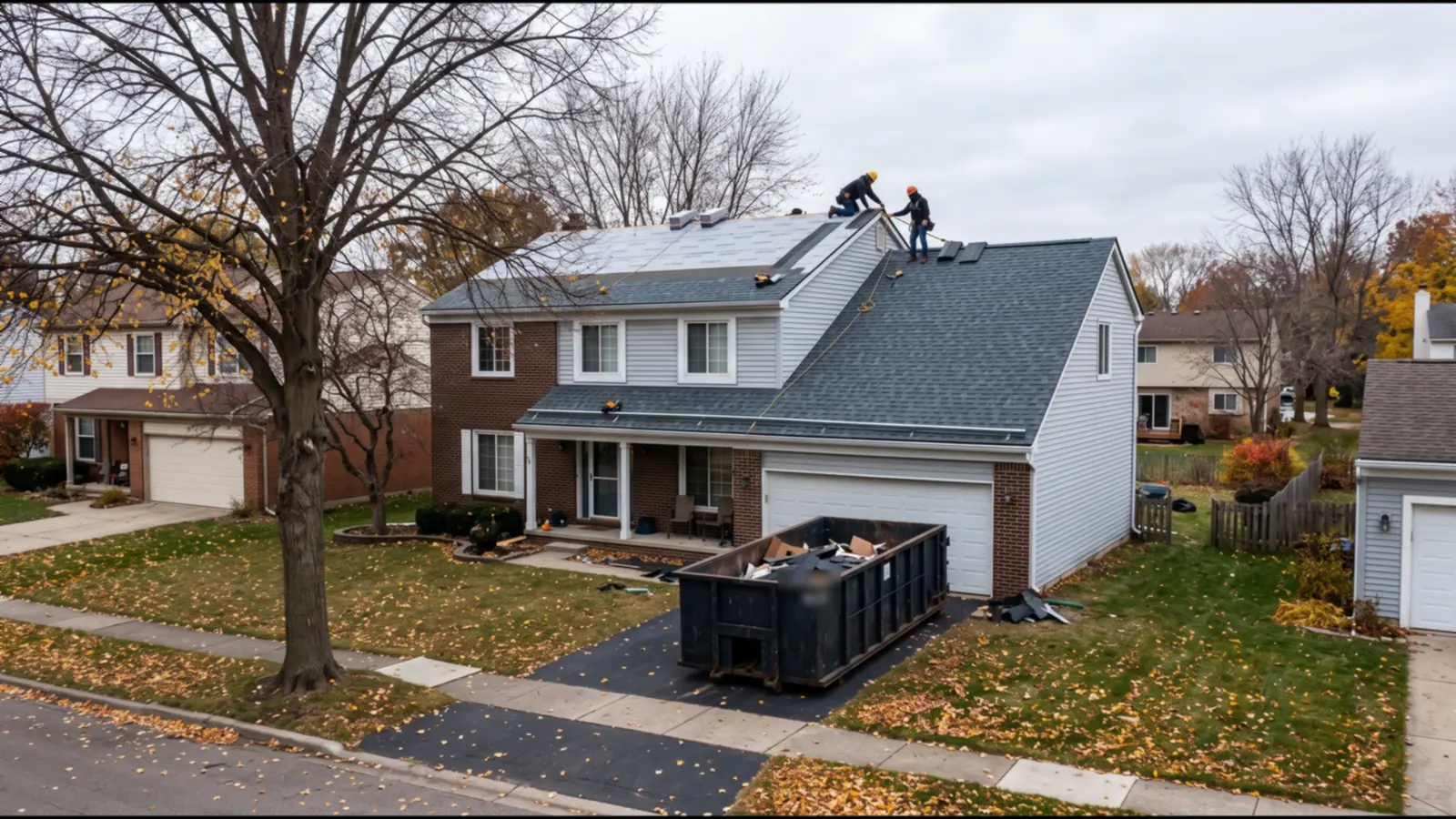
Roof Replacement Jobs on Sterling Heights Houses
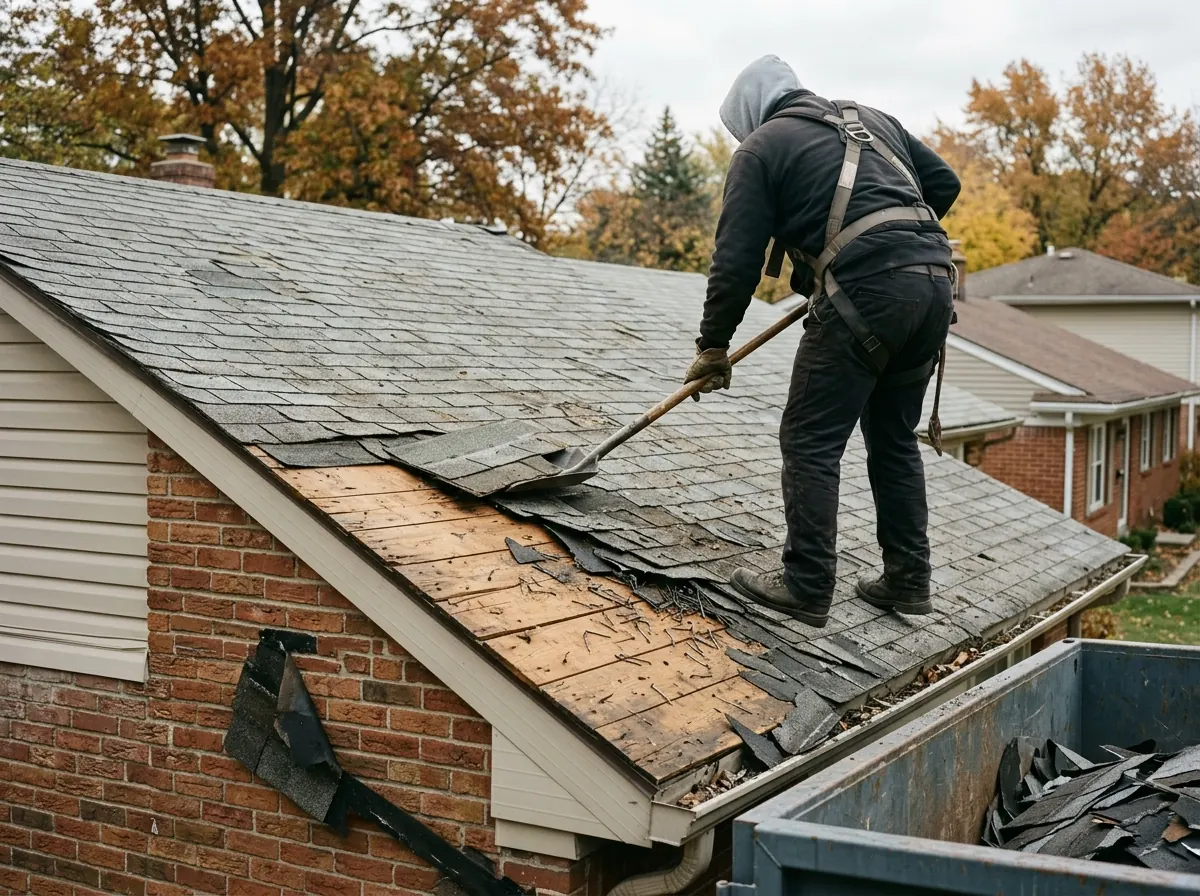
Strip-Off of a Two-Layer Roof
A house that already wears two layers of shingles can't take a third (the rules are further down this page), so the next roof starts with both layers in the dumpster. That's where the surprises turn up. With two layers on top, nobody has seen the deck since the first roof went on: plank boards with wide gaps, delaminated plywood along the eaves, soft spots where an old leak sat for years. Expect the crew to cut those out before any underlayment goes down. The extra layer shows up in the estimate as more tear-off labor and more disposal weight, and it's fair to ask for both as separate lines.
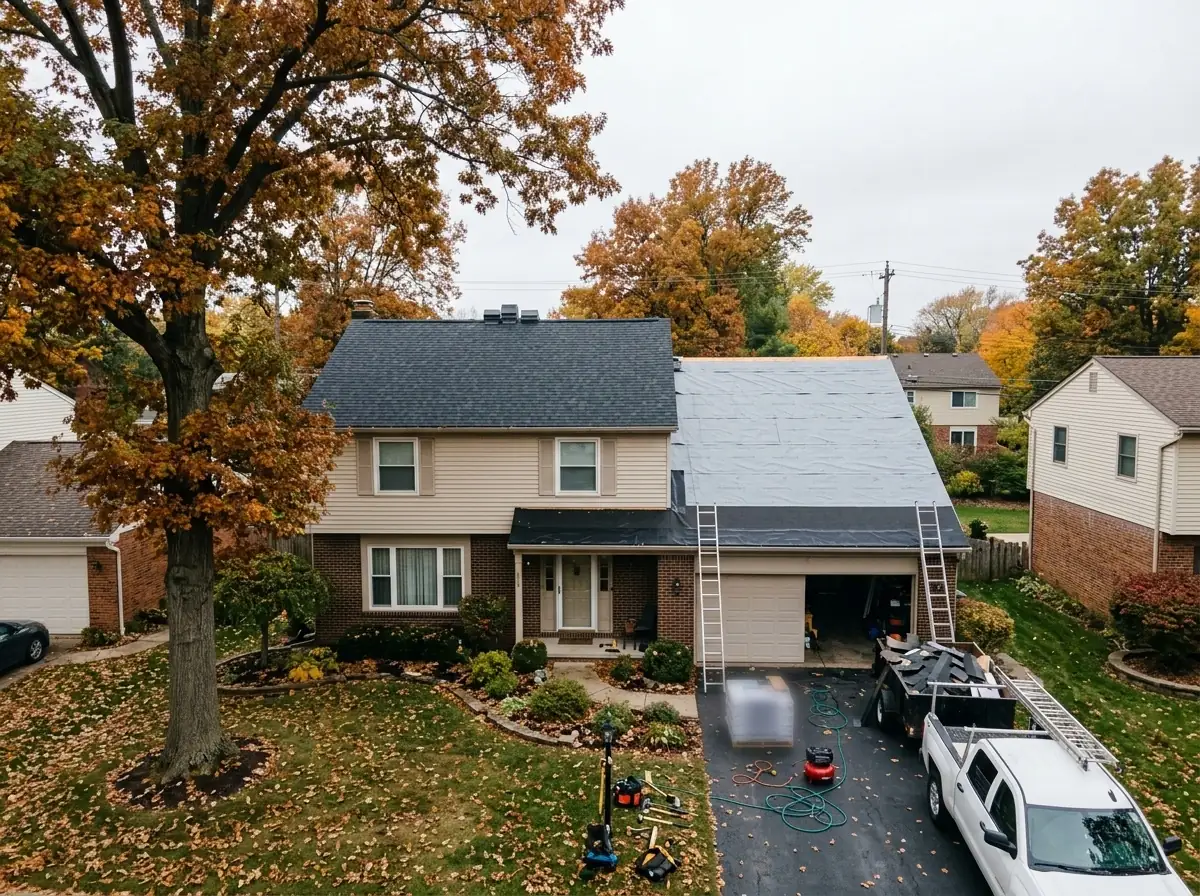
Main House Tear-Off and Re-Shingle
This is the standard job: the main roof stripped to the deck and rebuilt, one section at a time, with no more opened than the crew can dry in before the end of the day. The order of the layers matters more than the shingle brand. Edge metal goes on at the eaves and rakes following the drip edge rules, the ice barrier runs up from the eave, underlayment covers the rest of the deck, and then the shingles go on, each strip held by at least four nails under the code. Pipe flashings, vents and edge metal that are rusted or damaged get replaced rather than reused, which the code also requires on a reroof (flashing at reroof).
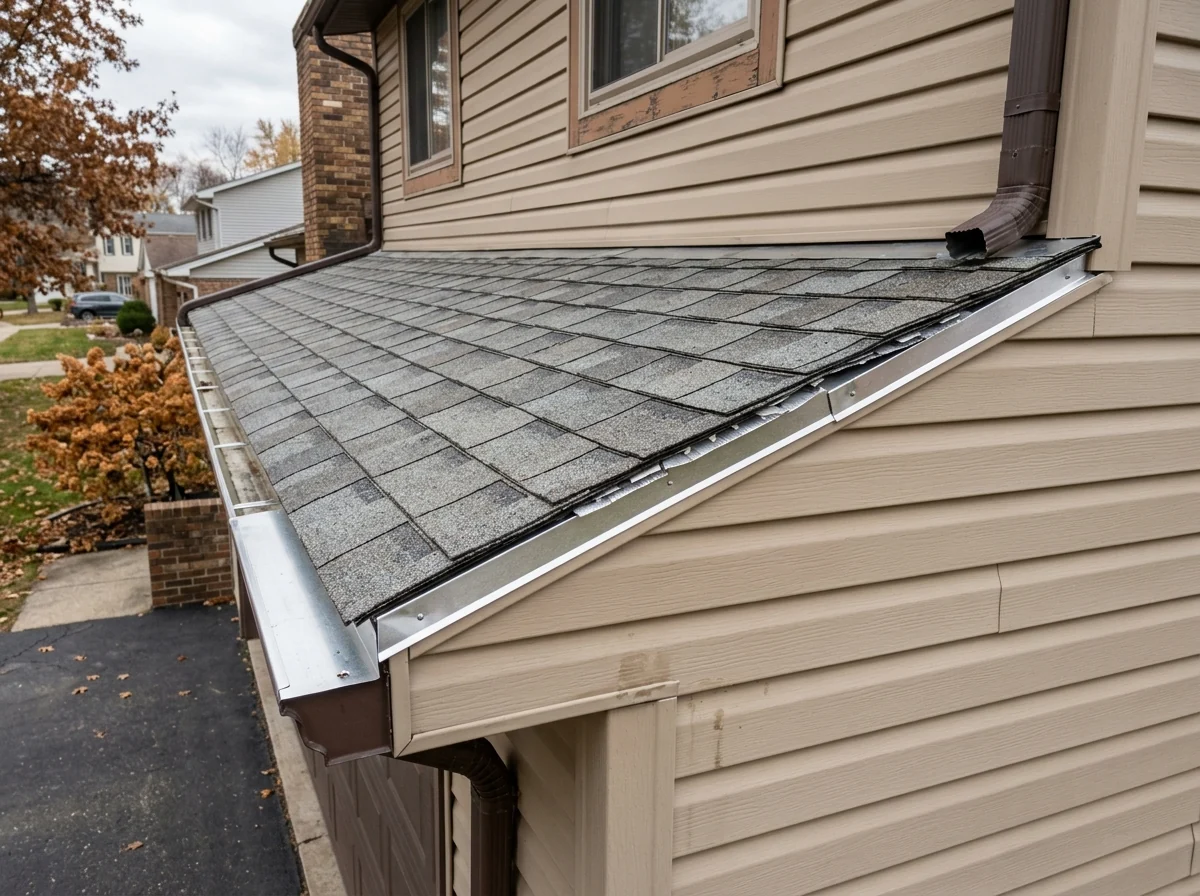
Attached Garage Roofs
On many ranches and split-levels the garage roof either runs into the house roof or stops against a second-story wall. That joint is where step flashing, a kick-out at the bottom of the wall and the eave ice barrier all meet, and it leaks more often than the open field of shingles does. Under the Michigan code, an unheated attached garage still needs the eave ice barrier. Doing the garage together with the house keeps the shingle color and the flashing in one continuous run. Doing it separately a few years later usually means cutting into the newer roof to tie in.
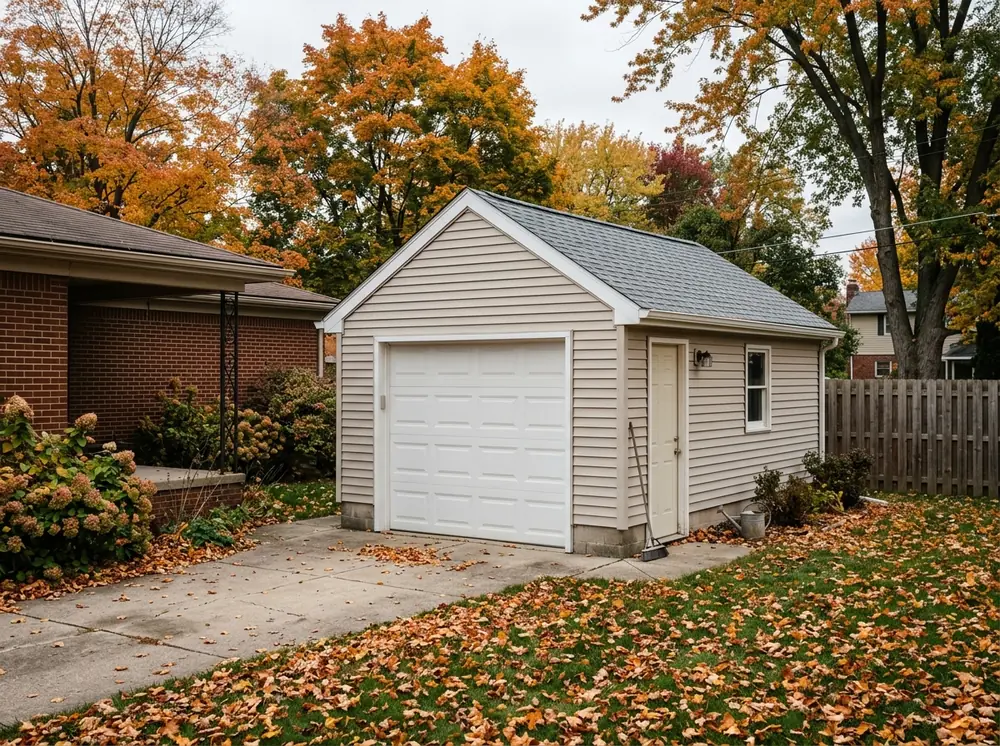
Detached Garages and Sheds
A detached garage is a small roof with its own math. HomeGuide estimates a one-car garage of about 280 square feet at $1,000 to $1,700 in asphalt shingles or $1,400 to $3,600 in metal. Per square foot that's more than the house, because most contractors set a minimum project fee. A detached building with no heated space is exempt from the eave ice barrier rule. We'd still ask for a strip along the eaves, since it costs little next to the rest of the job.
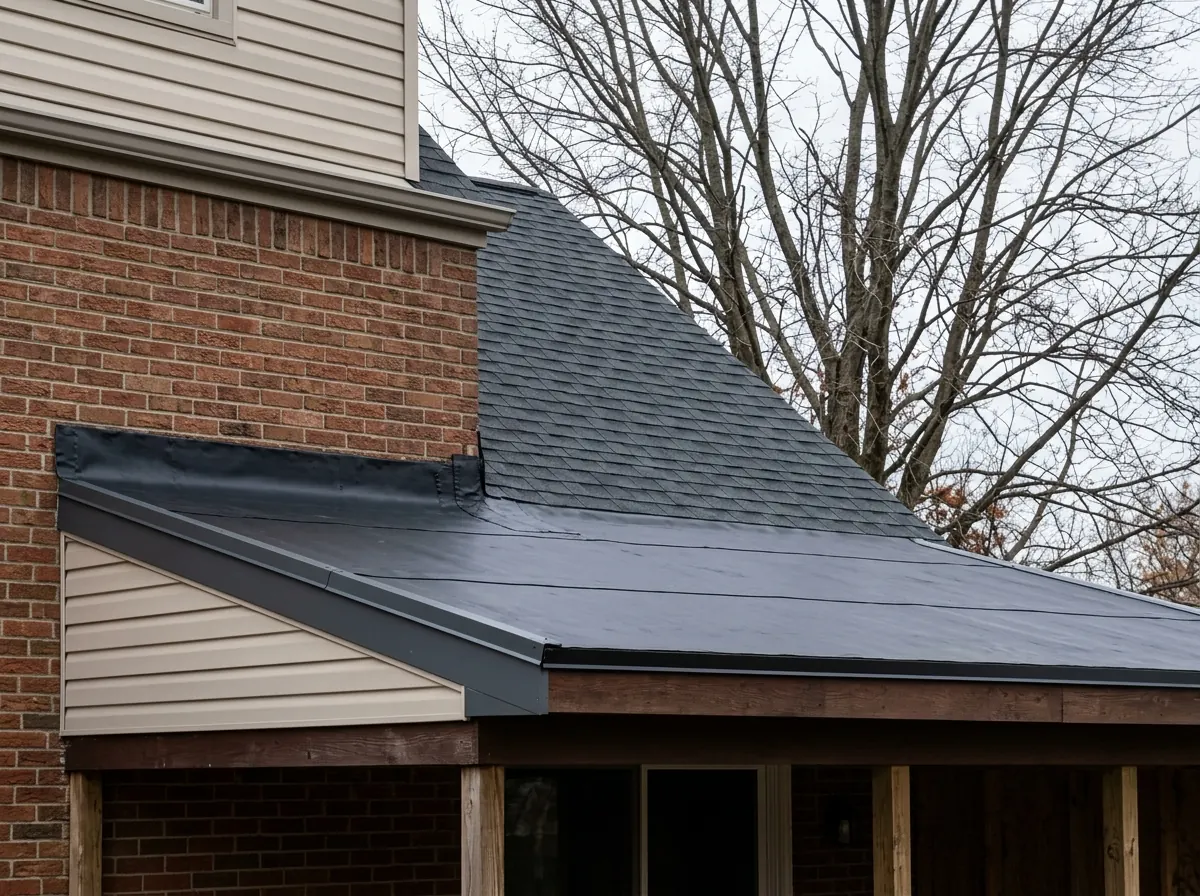
Low-Slope Porch and Addition Sections
The code stops asphalt shingles at a 2:12 slope and asks for doubled underlayment anywhere from 2:12 up to 4:12. Some rear porches, sunrooms and family-room additions are framed flatter than that, so at replacement they get a membrane (EPDM, TPO or modified bitumen) and the shingles stop at the change in pitch. The critical detail is the tie-in, where the membrane runs up under the bottom shingle courses. If someone shingled the old porch roof at too low a pitch, that's often the leak you've been chasing. Membrane types and their prices are on the flat roofing page.
Why Sterling Heights homeowners call Sterling Heights Expert Roofing
- Free roof and attic inspection
- Itemized written estimate before any work
- Your request goes to one local roofer, not a call list
- Requests from inside Sterling Heights city limits
- Nothing to pay for the referral
Roof Replacement Prices: What Moves the Estimate
Published ranges give you a frame, not a quote. HomeGuide's national average for a roof replacement is $5,700 to $16,000, or $300 to $600 per square (100 square feet) installed, with labor making up $150 to $300 of each square. For Michigan its range is $6,400 to $17,900. A bigger job is modeled in the 2025 Cost vs Value report from JLC: 30 squares torn off to bare sheathing with fiberglass shingles, new underlayment, galvanized drip edge and aluminum flashing. In the Detroit market it lands at $33,692, about $1,120 a square, and the report estimates 67.8 percent of that comes back at resale.
On a real house these lines decide where you land:
Tear-off
HomeGuide puts removal at $1 to $5 per square foot. Shingles and metal sit at $1 to $3, and every extra layer pushes the number up.Decking
Nobody knows the count until the old roof is off, so the estimate should carry a unit price per sheet. Prices and deck types are on the roof deck replacement page.Material
Each covering has its own price line. See shingle roofing for 3-tab, architectural and premium shingles, and metal roofing for panels and steel shingles.Separate roofs
A garage, porch or flat section should be priced as its own line, so you can see what each one adds.
Roof Replacement Permits and the Two-Layer Rule in Sterling Heights
Every re-roof in Sterling Heights needs a building permit, whether the crew strips to the deck or lays a second layer over the first. The Office of Building caps a roof at two layers, and after any complete tear-off it requires ice and snow shield on the decking. The residential code backs that up from the other side: no new roof may go over one that already has two or more layers, is water-soaked, is too deteriorated to hold nails, or is slate, clay, cement or asbestos-cement tile. In code terms, "replacement" means removing the coverings down to the deck.
Who pulls the permit matters, and the FAQ below covers why it should be the contractor. Without a license, an owner can take out a permit only on a home they occupy or will occupy once the work is done (PA 299 of 1980, section 2403). Permit records can be searched on the city website by address, so confirm the permit exists before the dumpster arrives. How to check the contractor's state license is covered on the roof repair page.
Roof Replacement Materials: How Long Each Lasts
Two published estimates, side by side:
| Roof covering | InterNACHI estimate | HomeGuide estimate |
|---|---|---|
| 3-tab asphalt shingles | about 20 years | 15-20 years |
| Architectural shingles | about 30 years | 20-30 years |
| Metal | 40-80 years | 30-80+ years |
| EPDM rubber (flat) | 15-25 years | 15-20 years |
| TPO (flat) | 7-20 years | 10-25 years |
| Modified bitumen (flat) | about 20 years | not listed |
According to InterNACHI, where a roof falls in its range depends on weather, design, the quality of the material and upkeep. HomeGuide adds that shingles usually wear out before the warranty term runs out, except in mild climates, and a Michigan winter is not mild. Use the table to plan the next roof, not to judge the old one. If you expect to stay in the house well past 20 years, compare cost per year of service as well as the upfront price.