
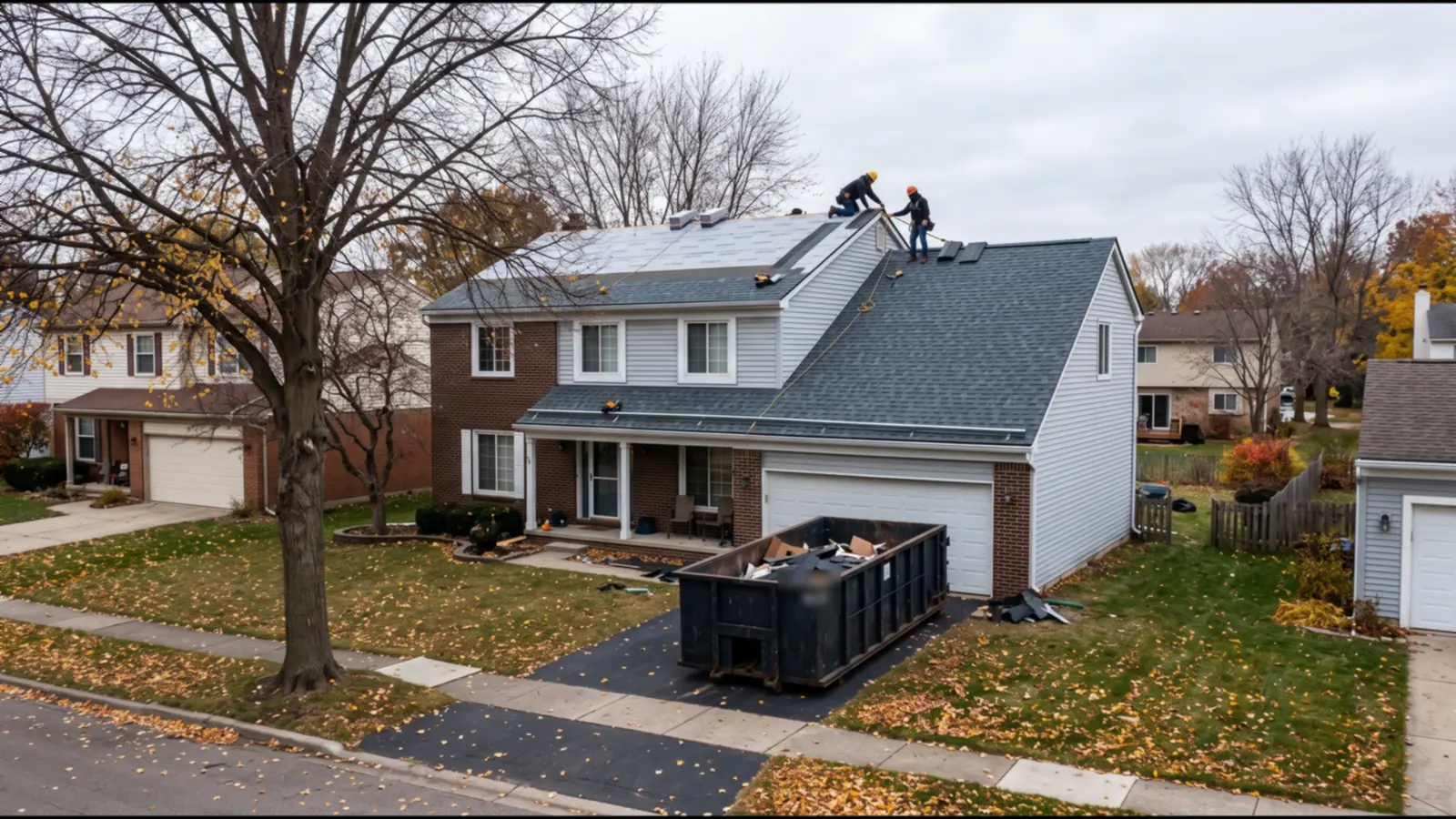
Gutter Installation Options for Sterling Heights Houses
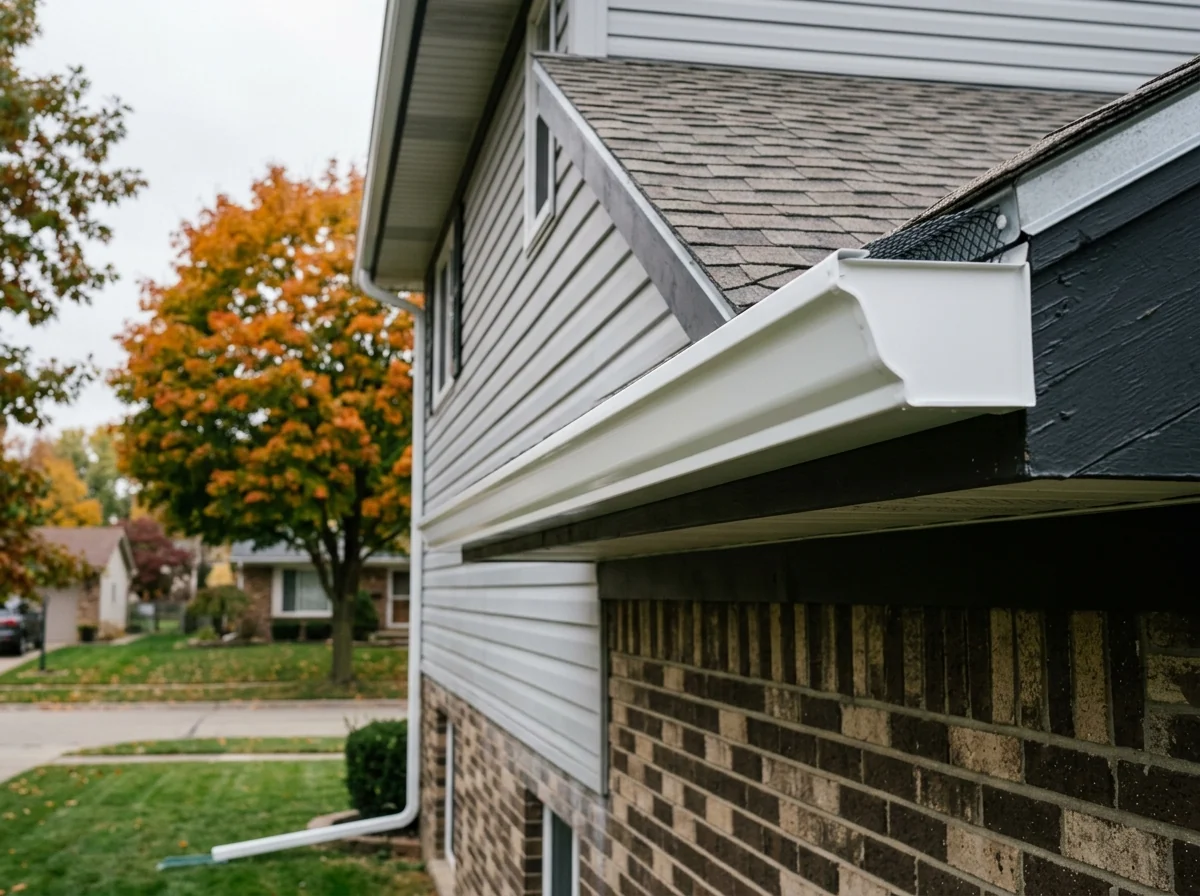
Standard 5-Inch Seamless K-Gutters
K-style gutters have a flat back and bottom and a front face shaped like crown molding, and HomeGuide says 5-inch K-style is what most houses use. A seamless gutter is rolled out of flat aluminum coil by a forming machine parked in your driveway and cut to fit the wall it goes on, so there are no joints along the run itself. Installed aluminum runs $10 to $20 a running foot in HomeGuide's figures and lasts 20 to 30 years. Hidden hangers screwed through the front lip into the fascia hold better than the old spikes and ferrules nailed through the face, which work loose as the wood dries and shrinks.
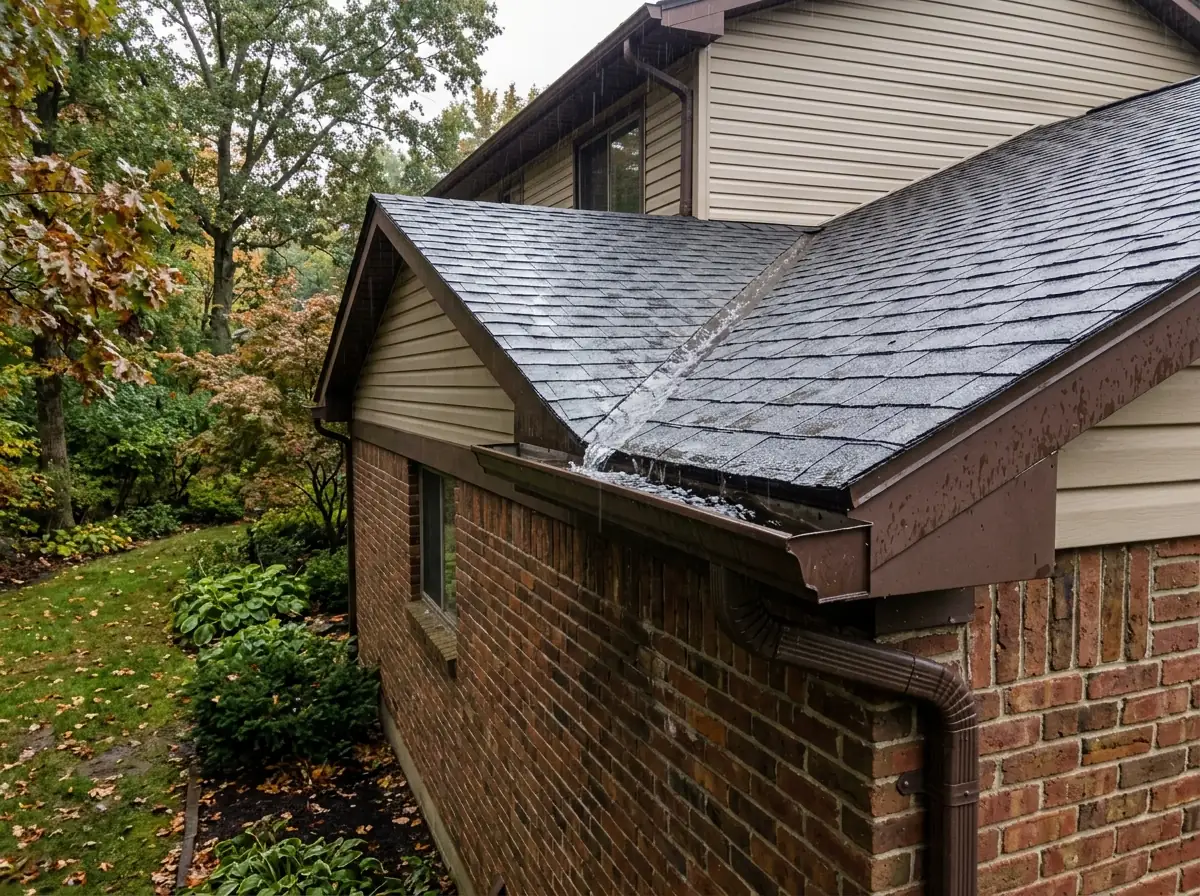
6-Inch K-Style for Long Runs
A 6-inch gutter holds more water per foot than a 5-inch one. HomeGuide recommends it for houses with large roof areas or heavy rain and puts the upgrade at $1 to $2 per linear foot. On local houses the candidates are easy to spot: the long rear slope of a two-story colonial, a corner where a valley dumps two roof planes into a short stretch of gutter, and any run where water already sheets over the front edge in a summer downpour. You don't have to upsize the whole house. Putting 6-inch on the problem runs and keeping 5-inch elsewhere works, as long as the color and profile match.
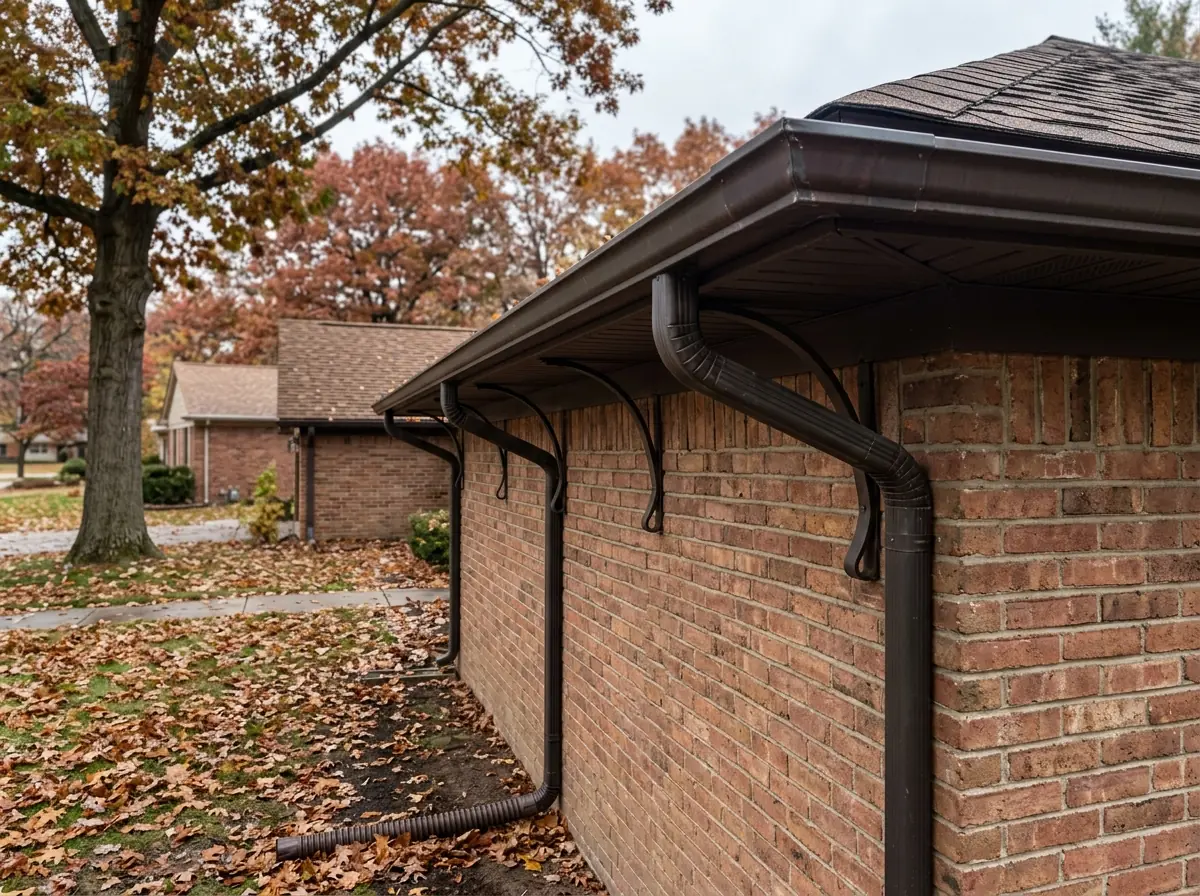
Half-Round Gutters
Half-round gutters are a semicircular trough hung on exposed brackets, with round downspouts instead of rectangular ones. They suit brick houses with a more traditional front, and the round bottom has no inside corners for wet leaves to pack into. Expect to pay $1 to $2 more per linear foot than K-style for the specialized installation, per HomeGuide. The brackets screw to the fascia or the rafter tails and stay visible, so they're part of the look. Half-round also comes in aluminum, at a fraction of the price of copper.
Copper Gutter Systems
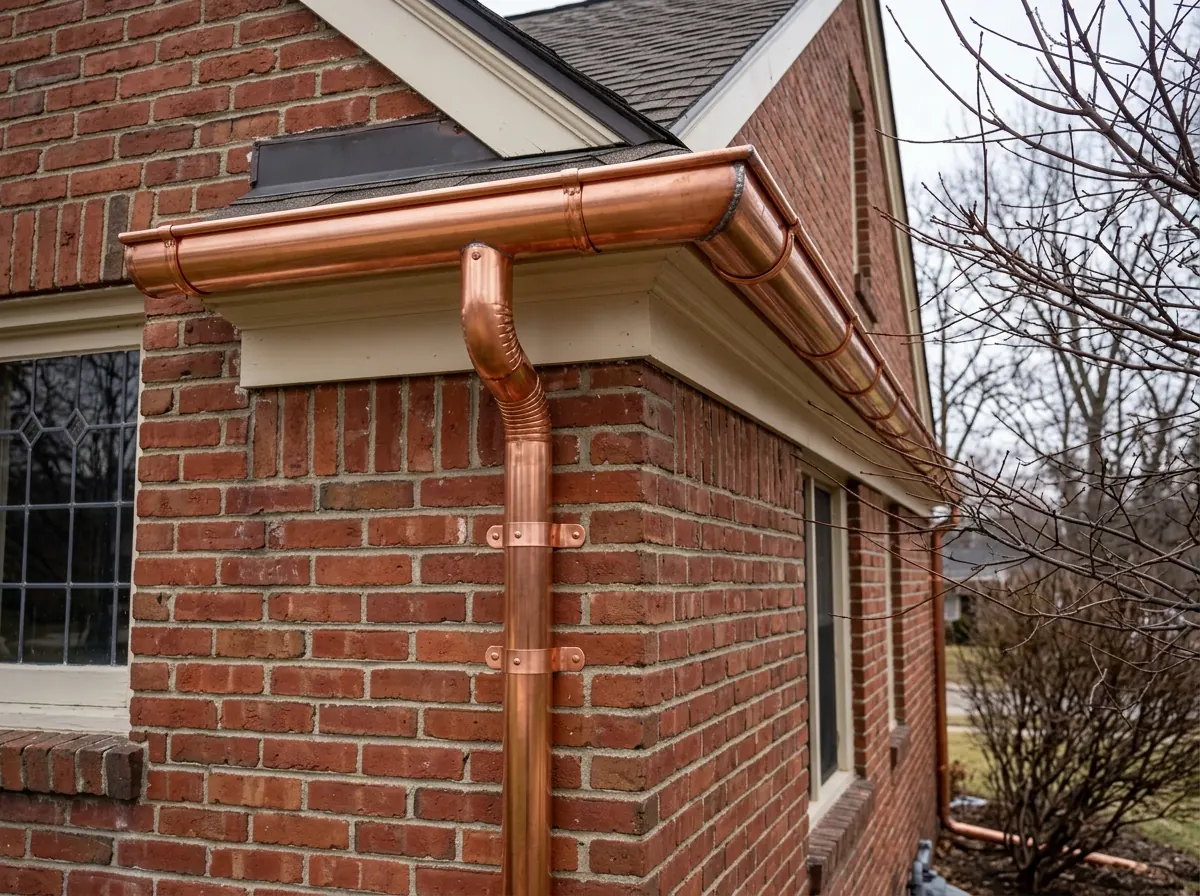
Copper gutters are soldered at the seams and corners, and copper weathers from bright metal to brown and, in time, to a bluish-green patina. Installed, copper costs $25 to $40 a foot in HomeGuide's table, which gives it 50 to 100 years, so a copper gutter can outlast the roof above it more than once. Seamless copper is also available, at $30 to $50 a foot in HomeGuide's figures. Copper only makes sense with matching copper hangers, downspouts and straps, which is part of why it costs what it does. For most houses here, copper is a choice about looks and how long you'll stay, not about drainage.
Downspouts, Elbows and Extensions
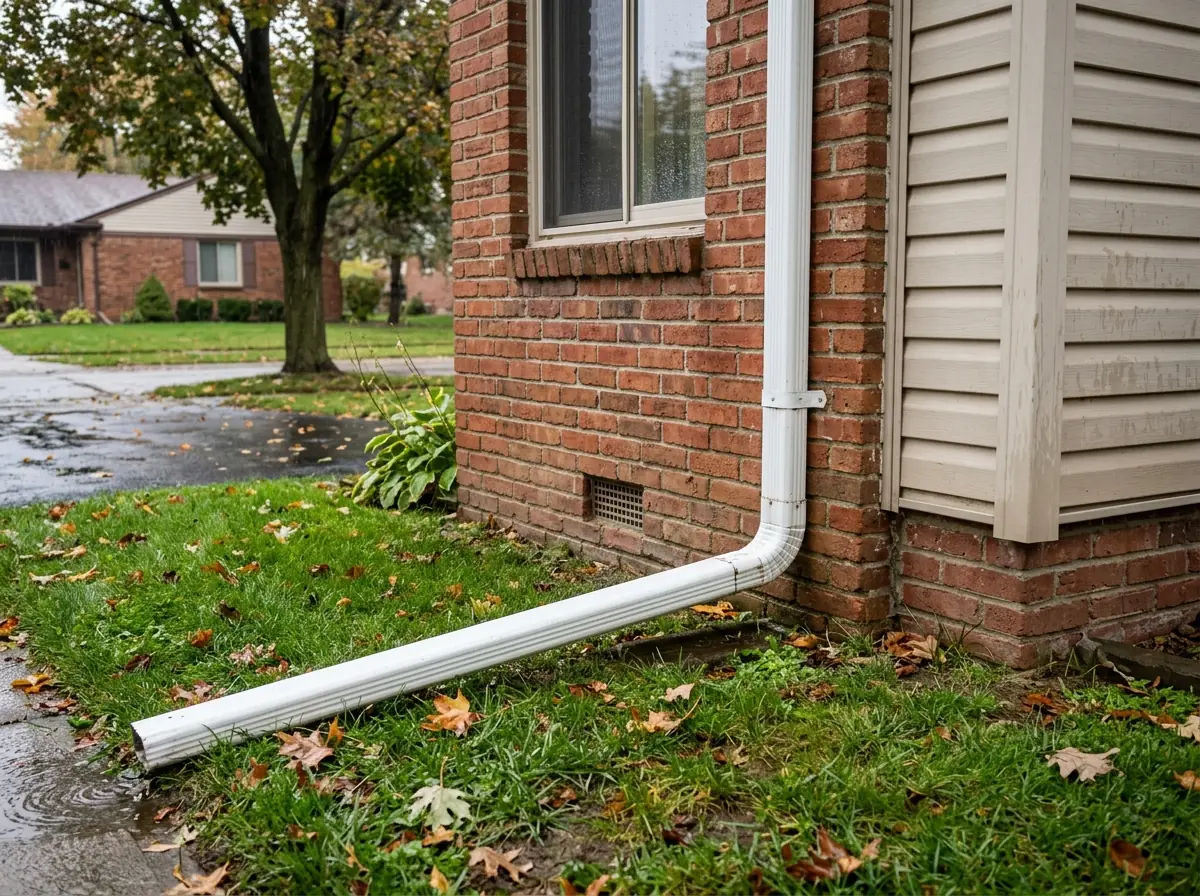
A gutter only collects the water; the downspouts decide where it ends up. HomeGuide says an average house needs four to five downspouts of 10 to 15 feet, about one for every 30 to 40 feet of gutter, at $30 to $75 each installed, plus $10 to $50 per downspout for a splash block or extension. The bottom elbow should hand the water to an extension that carries it well away from the basement wall, not drop it at the foundation. Where a second-story downspout empties onto a lower roof, it should land on a splash plate or feed a lower gutter, never pour straight onto shingles, where the constant stream wears the granules off one stripe of roof.
Why Sterling Heights homeowners call Sterling Heights Expert Roofing
- Free roof and attic inspection
- Itemized written estimate before any work
- Your request goes to one local roofer, not a call list
- Requests from inside Sterling Heights city limits
- Nothing to pay for the referral
Gutter Installation Prices: What Moves the Estimate
HomeGuide estimates 180 to 200 linear feet of gutter on a house of 2,000 to 2,500 square feet, and prices 200 feet of aluminum at $2,000 to $4,000. The per-foot material and size premiums are in the sections above. Beyond those, a quote moves with:
Height
HomeGuide says two-story homes add $1 to $3 per foot for the extra equipment and safety work.Tear-out
Taking down the old gutters adds $1 to $2 per foot.Downspout count
Each one is priced on its own, with extensions on top, and a house with several separate roof sections needs more of them.Fascia
Any rotted board has to be repaired before a gutter goes on it (local houses are covered below); see soffit and fascia replacement for that work.
Guards are a separate line, too. The options, from micro-mesh to hoods, are on the gutter guards page.
Seamless Gutters or Sectional: How to Choose
Seamless aluminum for the house, sectional only for a short shed or garage run you might hang yourself. That's our take for this climate, and the reason is the joints. Sectional gutters come in fixed lengths joined on site with connectors and sealant, and those joints leak as the sealant ages. Seamless gutters have joints only at the corners and end caps. HomeGuide prices seamless at $3 to $5 or more extra per foot compared with sectional and also credits seamless with better leak protection.
Vinyl sectional is the budget option, at $8 to $12 per foot installed with a 10- to 20-year life. It's also the weakest fit for a Michigan winter: HomeGuide notes that vinyl can turn brittle in extreme cold and fade in strong sun, and a gutter here may hold a ridge of ice for weeks.
Gutter Installation on Sterling Heights' 1960s-80s Houses
Two things set the gutter job on a local house: how much water arrives, and what the gutter hangs on. The National Weather Service's normals for Detroit, the nearest published station, total about 34 inches of precipitation a year, with May the wettest month at 3.72 inches. The houses matter as much. Census Bureau survey data puts the median year built for Sterling Heights housing at 1977, so half the homes are that old or older, and many still have their original wood fascia behind an aluminum wrap. Nobody knows what shape it's in until the old gutters come down, so the estimate should price fascia repair per foot in advance.
Timing matters too, if a new roof is coming. The gutters go up after the roof's drip edge, so hanging new gutters a year before a reroof can mean taking them down again; plan both together on the roof replacement page. The drip edge rules that decide where that metal sits are on the soffit and fascia page linked above. And because gutters packed with leaves make ice dams worse, the winter side of gutter care is on the ice dam removal page.