
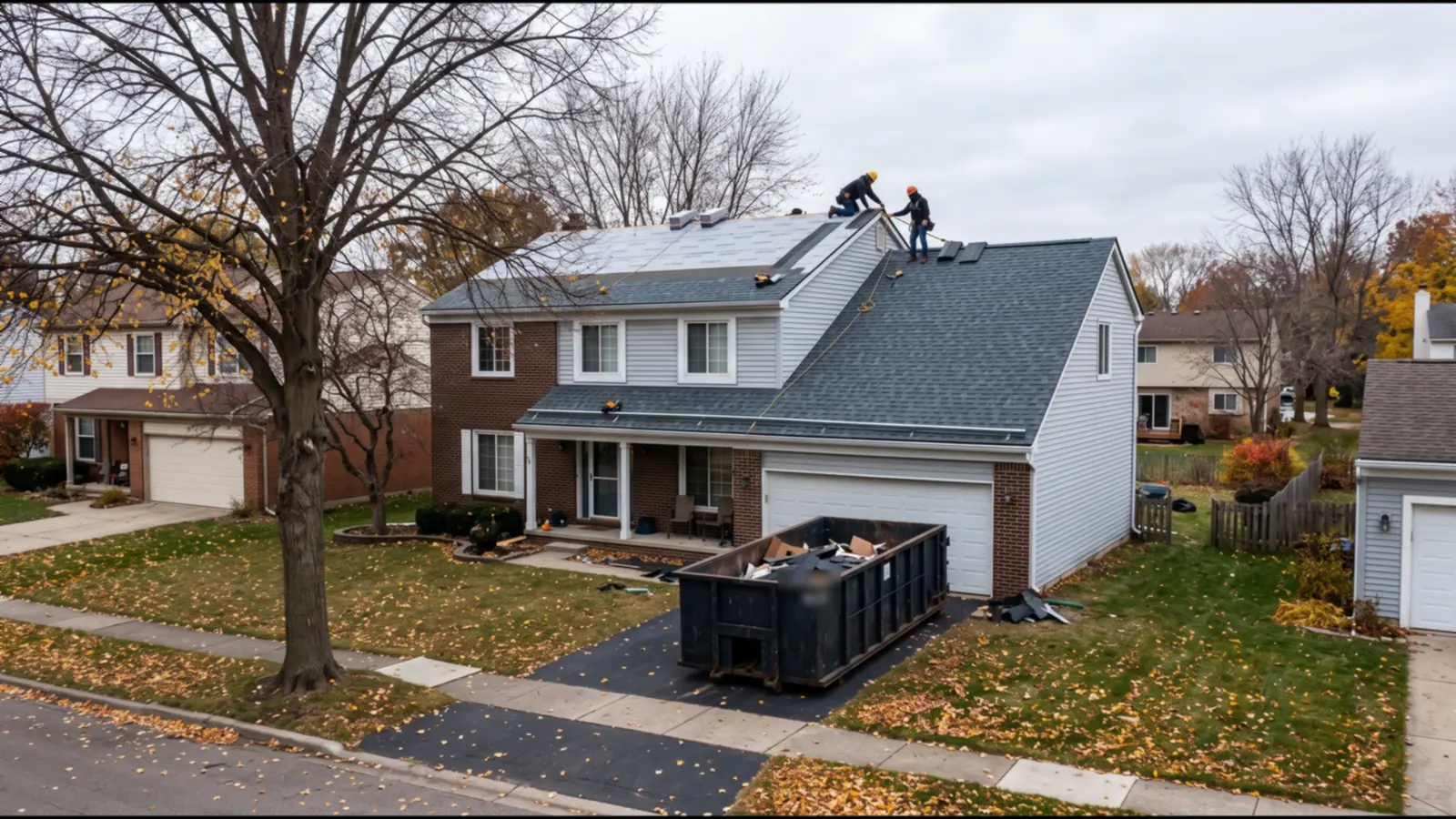
Roof Leak Repair, One Entry Point at a Time
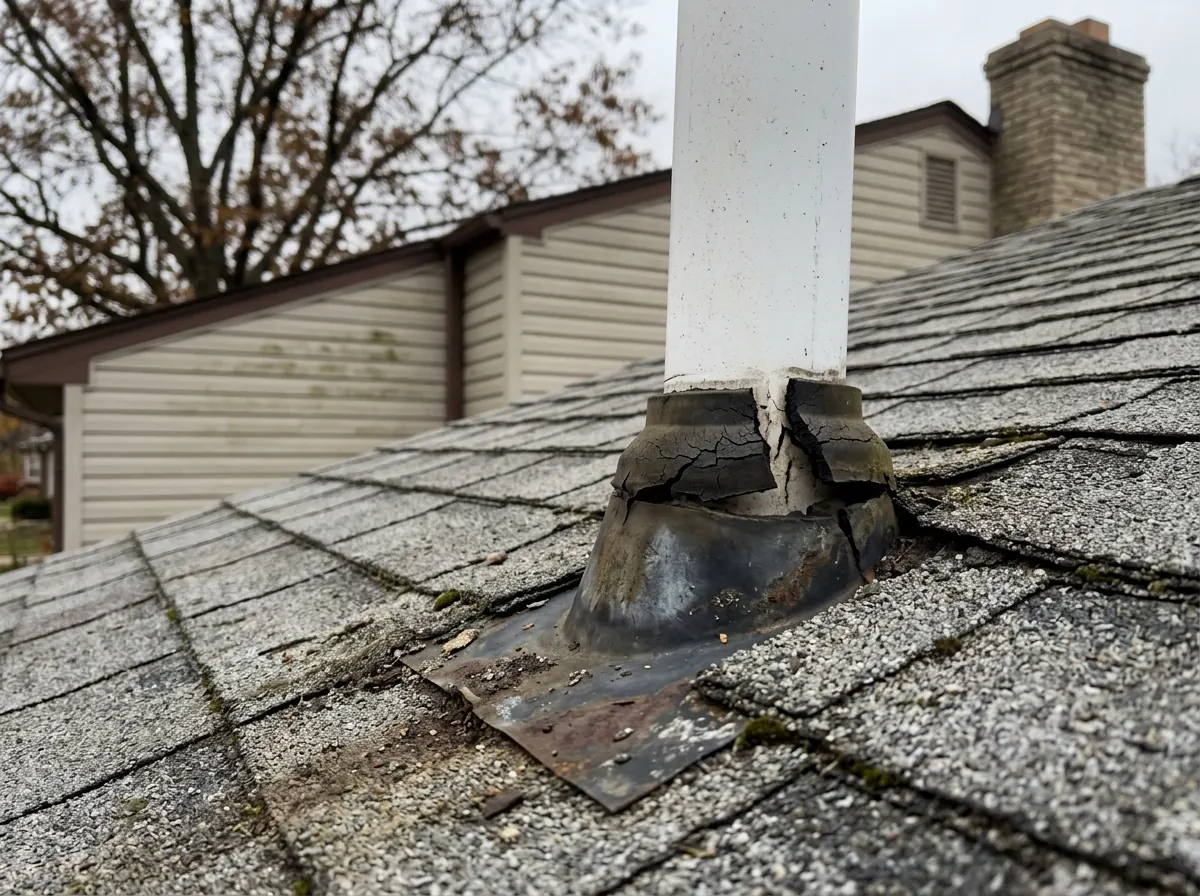
Cracked Plumbing Vent Boots
Every drain in the house vents through the roof, and each vent pipe passes through a boot: a flat flashing base tucked under the shingle course above and lapped over the course below, with a rubber, plastic or metal collar around the pipe. The rubber collar is what gives out. Sun and cold harden it until it splits, and water rides down the outside of the pipe into the ceiling under it, often a bathroom or hallway. The residential code leaves vent-pipe flashing to the shingle maker's printed instructions. A lasting repair swaps the boot and reseats the shingles around it, where caulk around a split collar would only buy time. HomeGuide puts a cracked boot replacement at $250 to $600, more on a steep or high roof. If one boot has failed, have the others priced too. They're the same age.
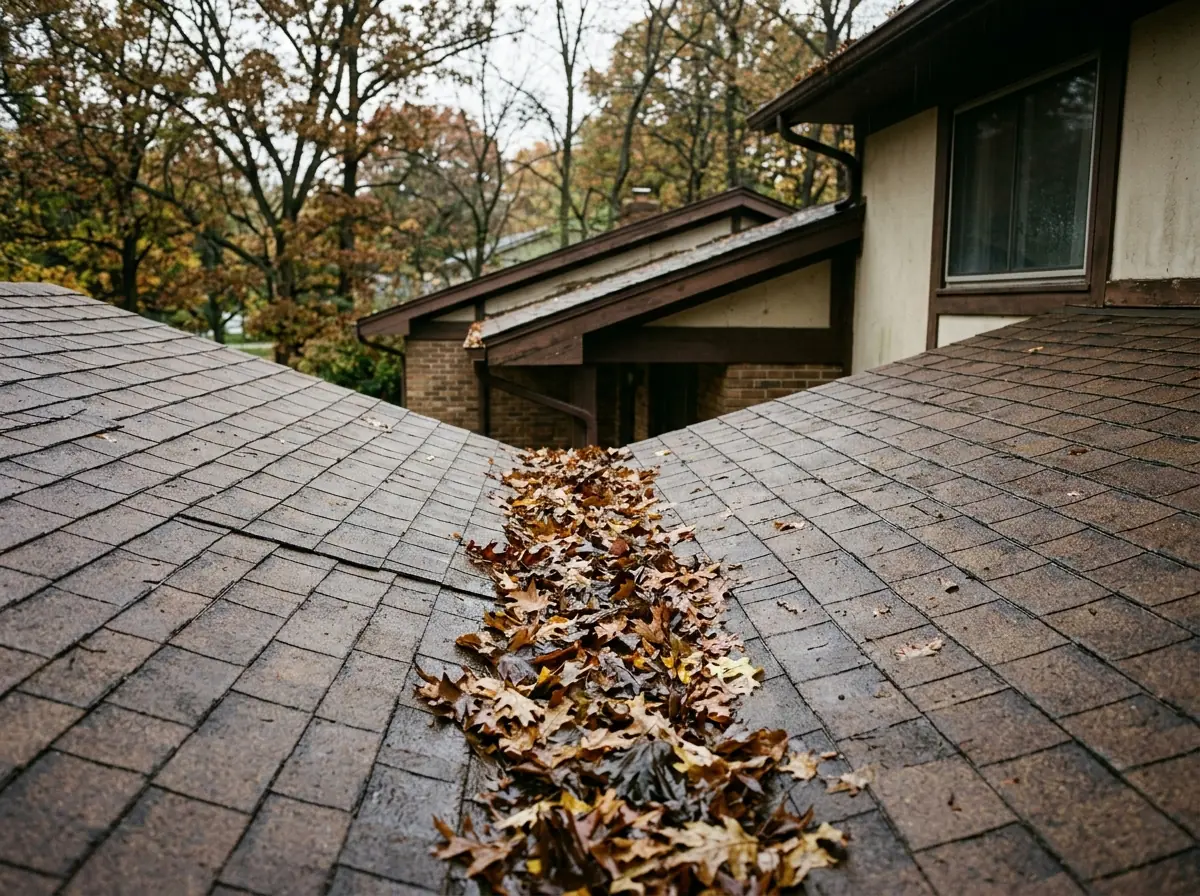
Open or Worn Valleys
A valley takes the runoff from two roof planes at once, and the code allows it open or closed. An open valley has a metal lining at least 24 inches wide (or two plies of mineral-surfaced roll roofing) with the shingles trimmed back to expose it. A closed valley has shingles running across a lining of 36-inch smooth roll roofing or a self-adhering ice-barrier membrane (ASTM D1970). Leaks start where nails were driven too close to the valley center, where the cut shingle edge was never sealed, or where an old metal lining has rusted through. Maple and oak leaves make it worse: a wet leaf mat holds water in the valley for days after the rain stops. HomeGuide prices a valley leak at $300 to $1,500, and the usual repair pulls and relays the valley flashing.
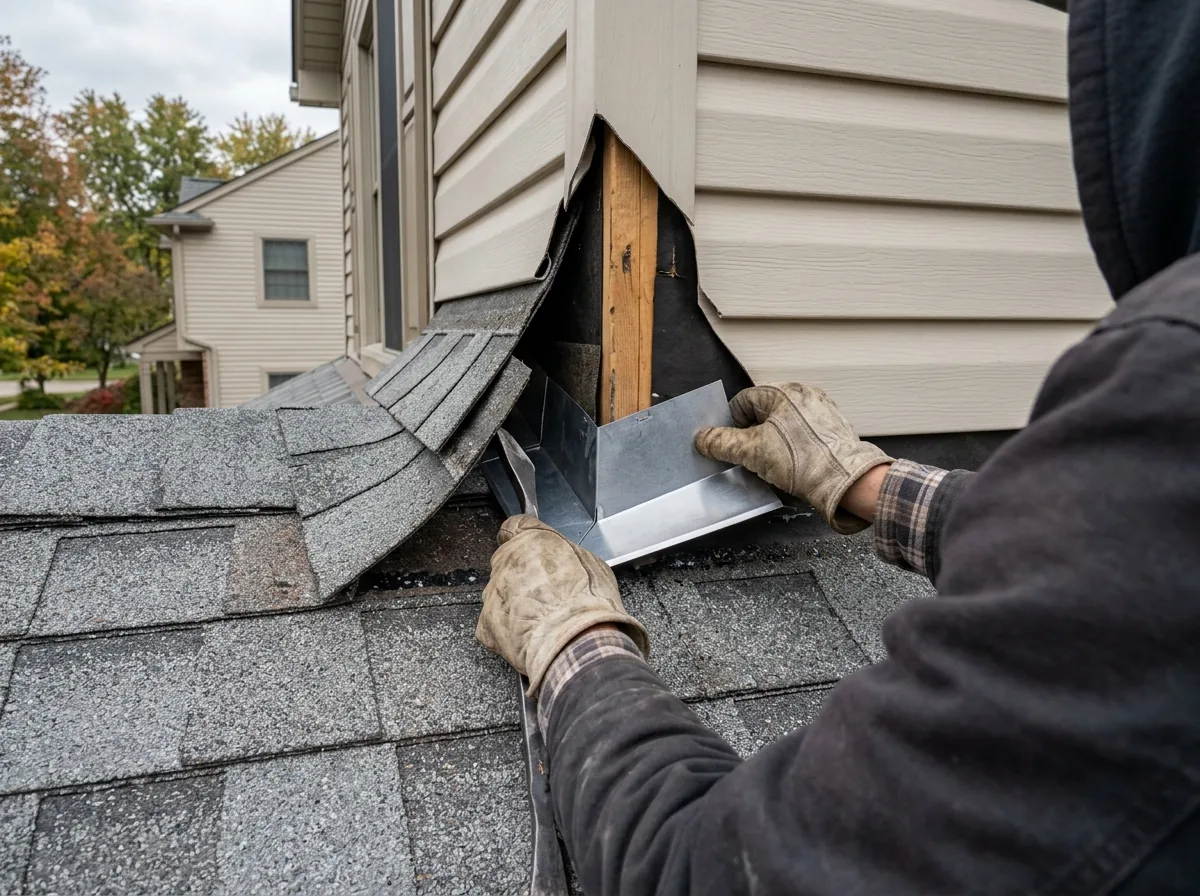
Sidewall and Dormer Flashing Leaks
Where a roof slope runs into a wall (a dormer cheek, or the upper-storey wall above an attached garage), step flashing seals the joint. Each shingle course gets its own bent piece, at least 4 inches up the wall and 4 inches onto the roof, with the vertical leg tucked behind the siding. At the bottom of the wall, a kickout flashing turns the water into the gutter instead of letting it run down inside the wall. When step flashing was face-nailed, skipped or reused from an older roof, the leak shows as a stain under the dormer window or soft wood in the garage header. Fixing it means lifting siding and shingles along the wall rather than running sealant down the seam. Brick walls also need counterflashing over the steps, the same detail covered on the chimney flashing repair page.
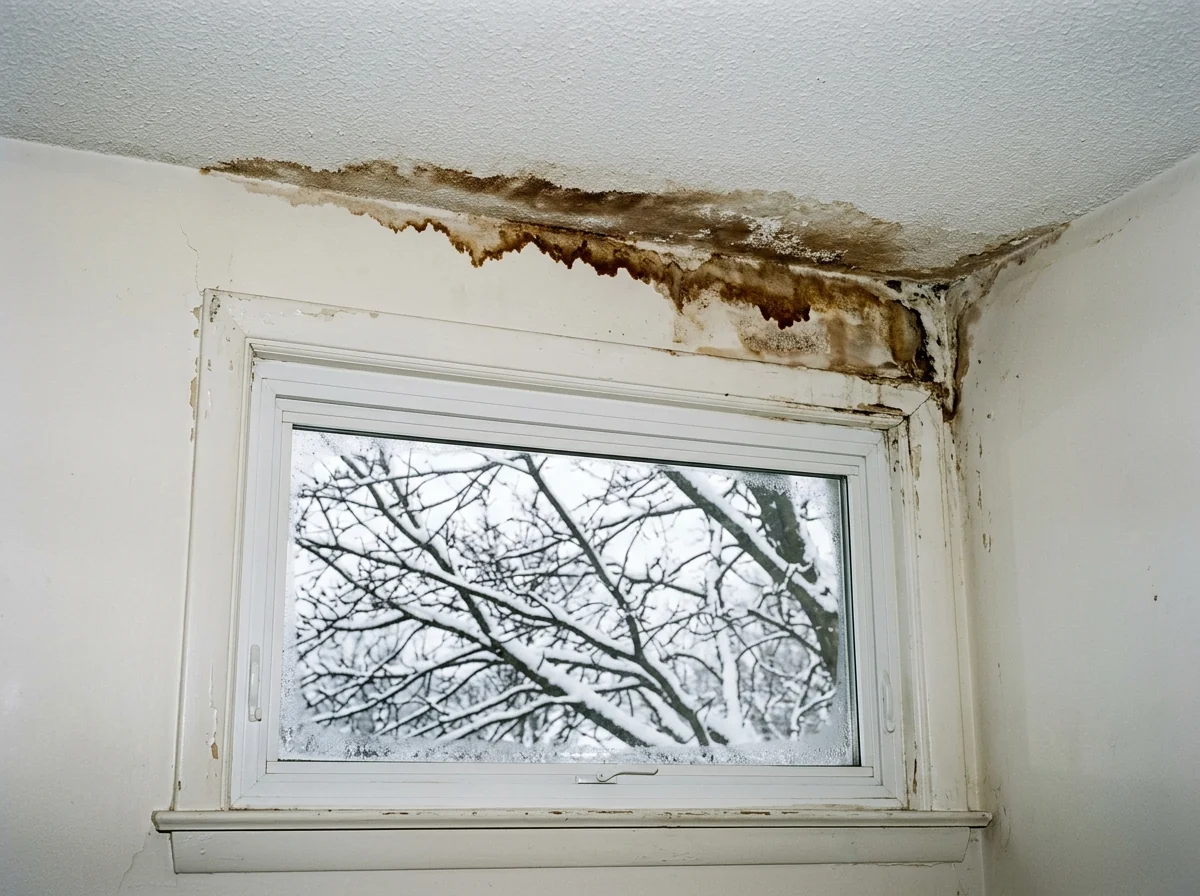
Leaks From Ice Backing Up at the Eaves
A leak that appears along the top of an outside wall in January, with no rain in the forecast, is usually ice. Water melting higher up refreezes at the cold overhang, pools behind it and creeps up under shingles that were made to shed water, not hold it. Inside, you'll see a stain along the ceiling edge or water at the top of a window frame. There are two jobs here. First, repair what got wet: HomeGuide lists $1,500 to $5,000 or more for leak repair and restoration after ice damming, separate from $350 to $1,500 to remove the ice. Second, stop it next winter with an ice barrier at the eaves and a colder attic, both explained on the ice dam removal page.
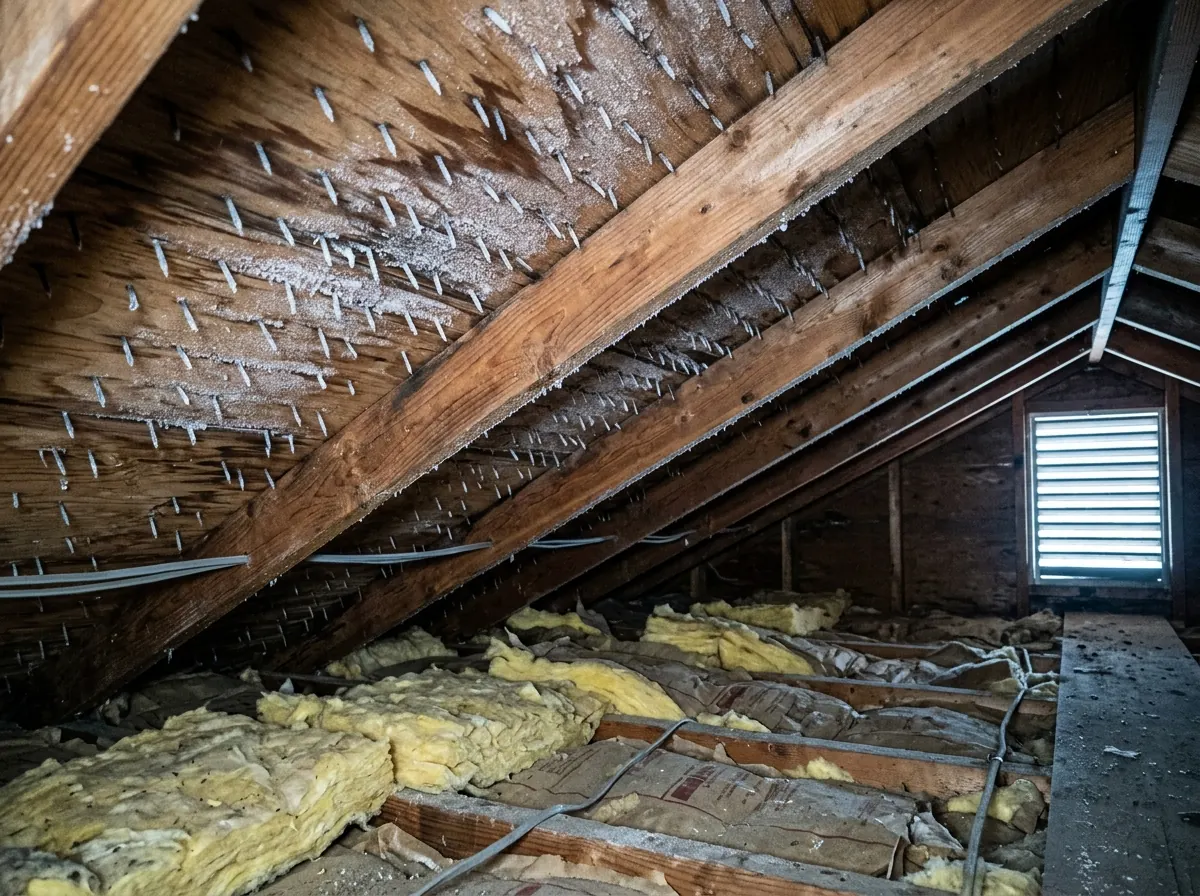
Attic Frost and Condensation Mistaken for Leaks
Some winter drips have nothing to do with the shingles. Warm, humid air from the living space leaks into the attic around light fixtures, plumbing chases and wiring holes, then condenses on the coldest surfaces up there: the nail tips poking through the deck and the underside of the sheathing. On a cold night it freezes into frost. On the first mild day it melts, and you get scattered drips across the ceiling instead of one stain, sometimes after a dry week. New shingles won't fix that. The cure is air sealing at the ceiling, bath fans ducted outdoors and balanced roof ventilation. If the leak only happens in winter, ask the roofer to look in the attic on a cold morning before quoting any roof work.
Why Sterling Heights homeowners call Sterling Heights Expert Roofing
- Free roof and attic inspection
- Itemized written estimate before any work
- Your request goes to one local roofer, not a call list
- Requests from inside Sterling Heights city limits
- Nothing to pay for the referral
Roof Leak Repair Prices: What Moves the Estimate
HomeGuide groups leak repairs by how much damage the water has done. A minor leak with no water damage runs $150 to $1,000. A larger leak with some water damage runs $1,000 to $3,000. A major leak with structural or interior damage runs $3,000 to $6,000 or more. On top of the failed part, these change the number:
How long it leaked
A boot that dripped for one storm is a small job. Two winters of dripping can mean wet insulation and soft deck sheets around the pipe, which get priced per sheet (see roof deck replacement).Where the leak is
A vent on a low ranch slope is quick. A valley above a two-storey wall needs more ladders and more time.What has to come apart
Siding, brick or gutters in the way of the repair all add labor.Shingle match
A 20-year-old roof may use a color that's no longer made. Leftover bundles in the garage help.Inside repairs
Drywall, paint and insulation are usually separate from the roofer's price.
Ask for the estimate to name the failed part, what gets replaced and what's included, so you know what you're paying for.
Roof Leak Repair or a Bigger Job: How to Choose
Repair makes sense when the roofer can point to one entry point and the rest of the roof still has life in it: flat shingles, granules on them, no soft spots. If you have shingle problems with no leak yet (blown-off tabs, nail pops, a loose ridge), the roof repair page covers those.
Think bigger when leaks keep moving. A boot this spring, a valley next year and a wall the year after on a roof near the end of its life usually means the flashings and the shingles are wearing out together. At that point a roof replacement can cost less than patching each one in turn, because all the flashing gets redone at once.
Two other cases have their own pages. If the leak followed hail, wind or a falling limb, start with storm damage roof repair, which covers what Michigan's insurance regulator tells homeowners to do. If water is coming in right now, emergency roof repair covers drying in the roof until a proper repair is done.
Roof Leak Repair on Sterling Heights' 1960s-80s Houses
Census Bureau survey data puts the typical Sterling Heights house in the late 1970s (median year built 1977). Asphalt shingles are measured in decades, not half-centuries, so most of these houses have been reroofed at least once. Every reroof was a chance to reuse old flashing instead of replacing it, and reused flashing is a good first suspect.
The house shapes matter too. Split-levels and quad-levels have roof sections that end against the wall of a higher level, so there's more sidewall flashing per house than on a simple ranch. Colonials add dormers and an attached garage roof meeting the main wall. Every one of those joints is a place to check before anyone blames the shingles.
Timing tells you something too. In the National Weather Service's normals for the Detroit station, May is the wettest month at 3.72 inches, so a flashing that went bad over the winter often gets found in the first heavy spring rain.