
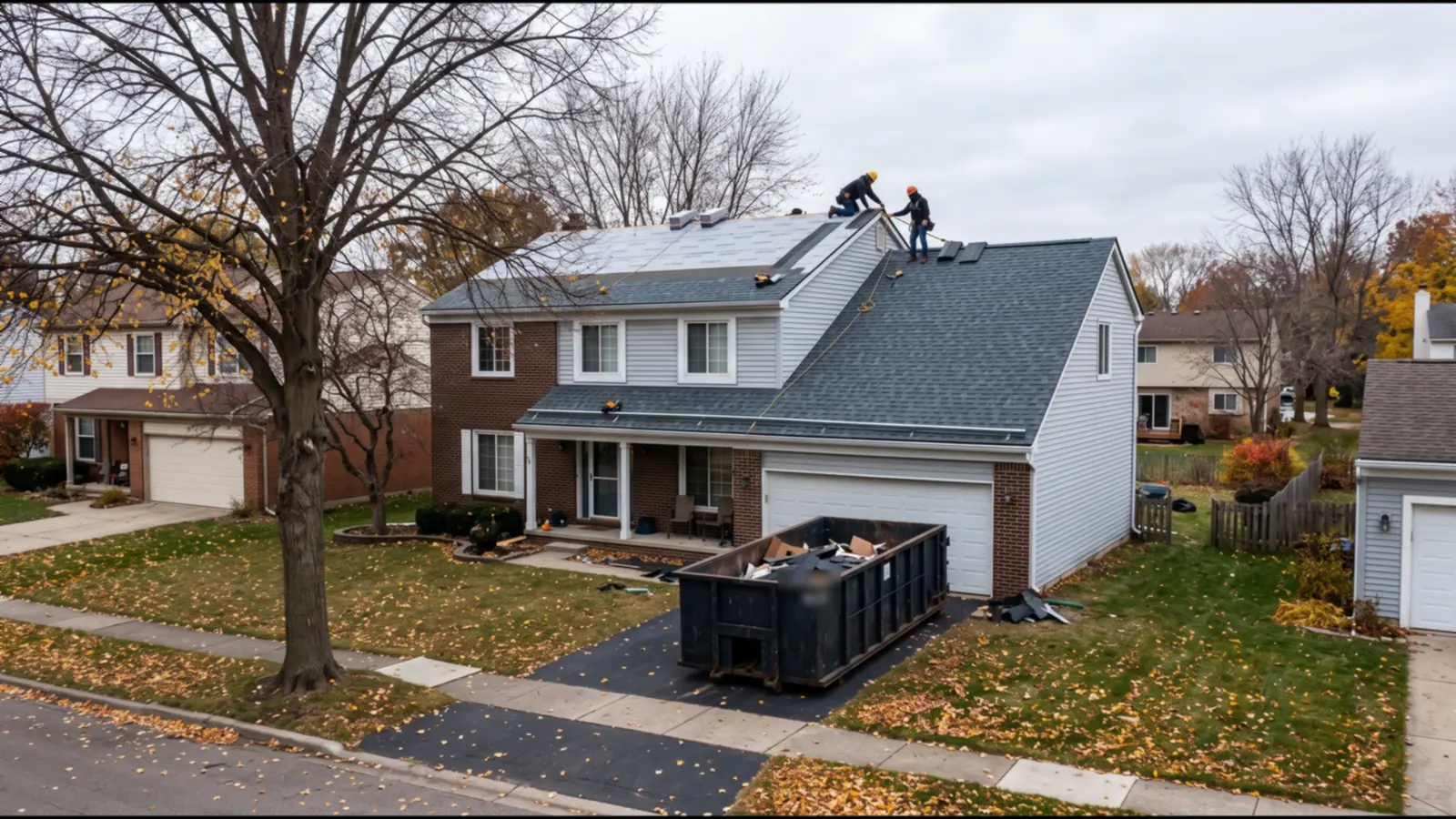
Standing Seam Metal Roof Choices on Sterling Heights Roofs
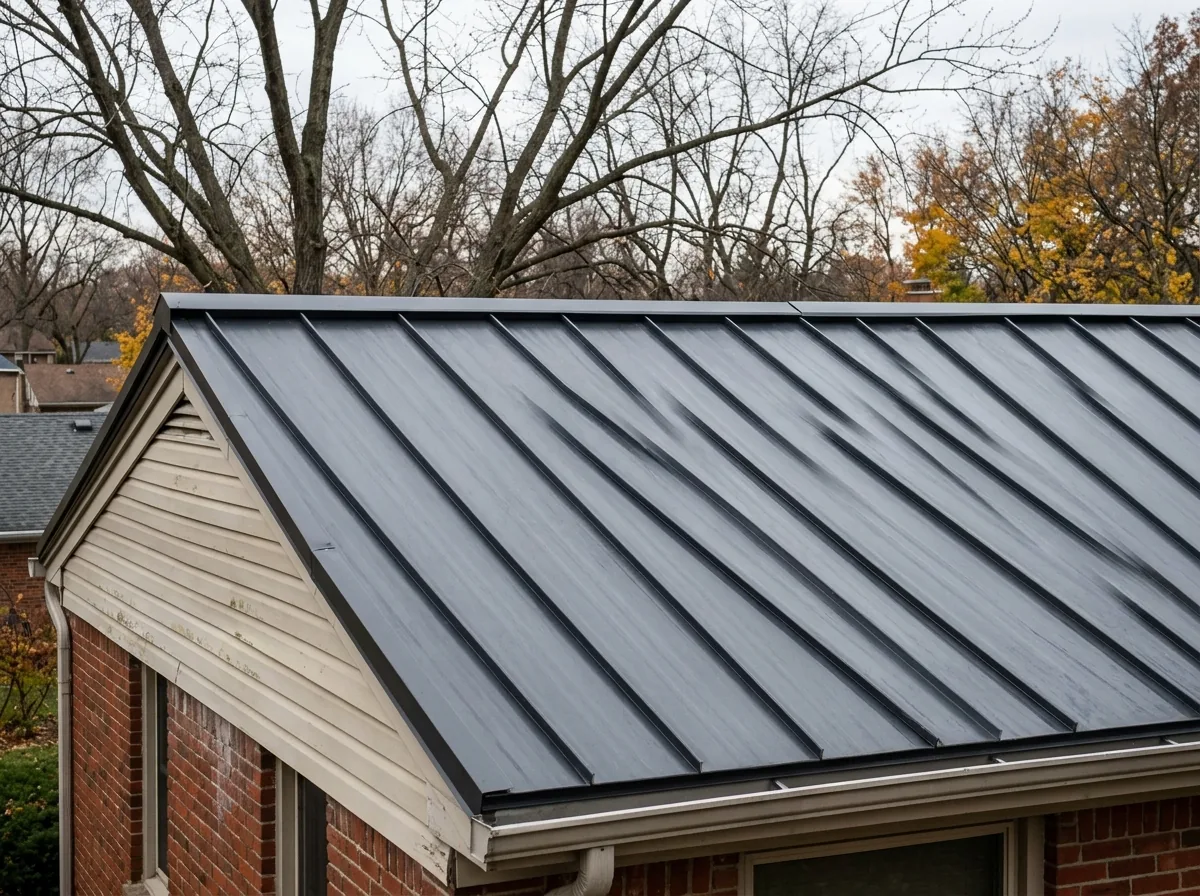
Snap-Lock Panels
A snap-lock panel has a male leg on one side and a female leg on the other. The installer screws a clip to the deck, sets the next panel over it and presses the legs together until they click. Nothing gets folded, so it goes on faster than a seamed system and doesn't need a seaming tool on the roof. The catch is slope: Western States Metal Roofing recommends snap-lock only at 3:12 or steeper. Main roofs usually clear that. Shallow sections like a porch roof or a rear addition are the ones to measure before you commit.
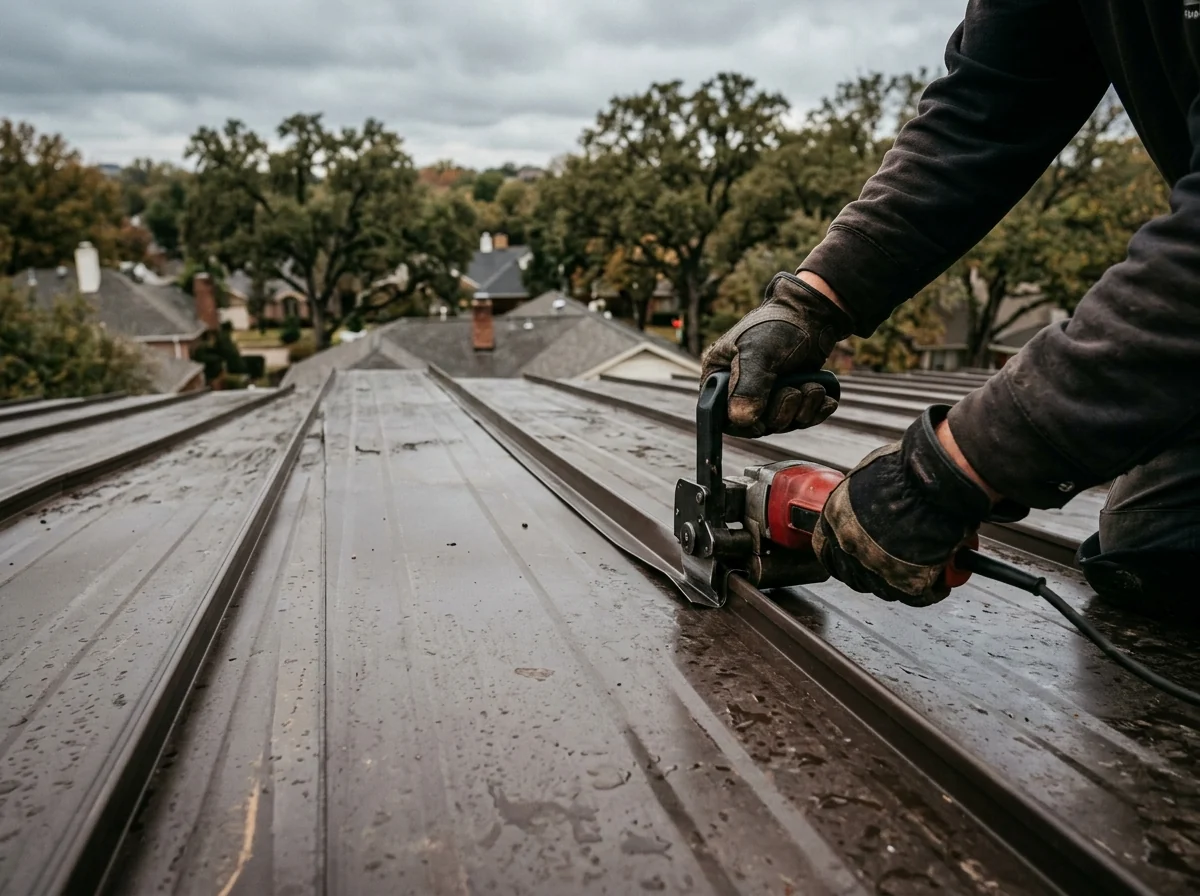
Double-Lock Mechanically Seamed Panels
Mechanically seamed panels are folded together after they're set, either once to 90 degrees (single lock) or twice to 180 degrees (double lock). Western States calls them the most weathertight standing seam and recommends double lock for snow country and slopes down to 1:12. The code itself sets the floor for standing seam at 1/4:12. These systems can sit on fixed clips or on floating clips that let a long panel grow and shrink with temperature, which matters on a south-facing run that goes from a January night to a July afternoon. Double lock takes longer to install, so expect a bigger labor line.
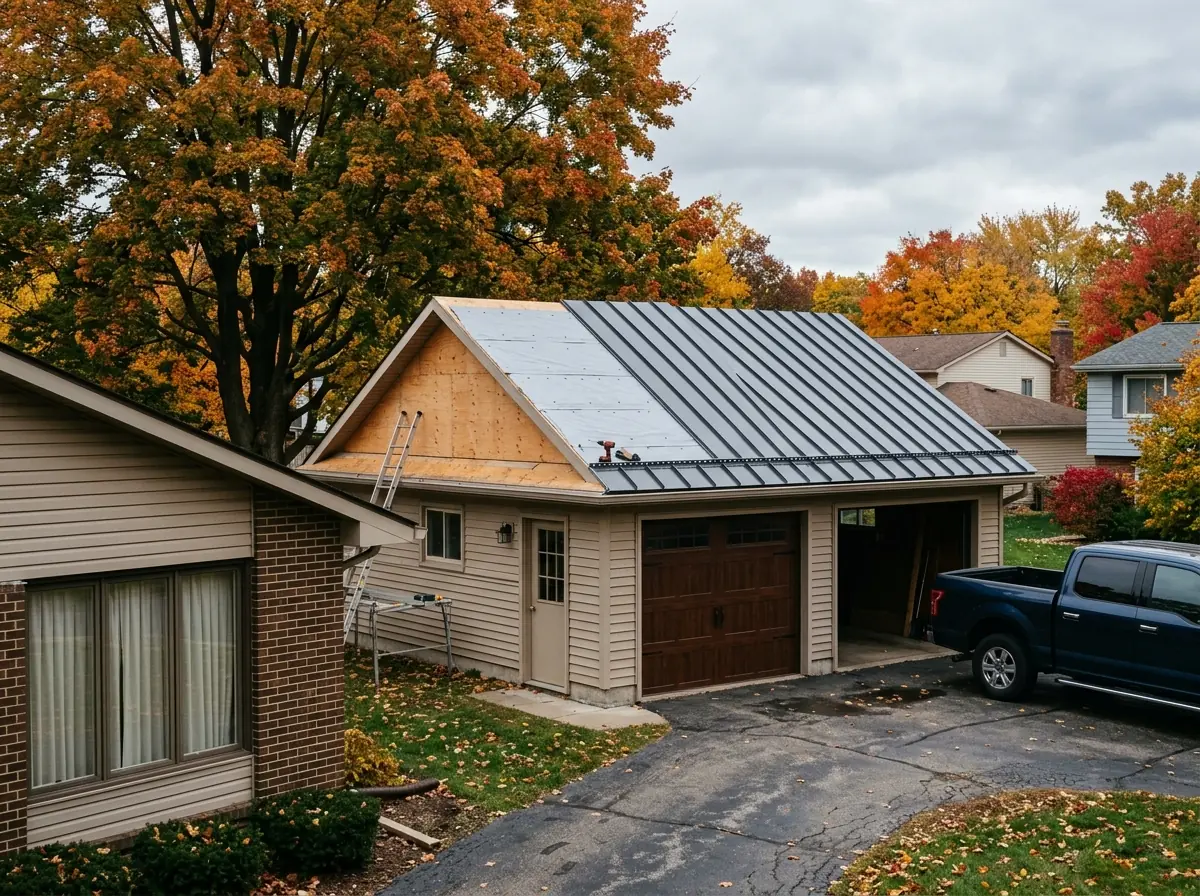
Nail-Flange Panels
Nail-strip, or nail-flange, panels skip the clips. Screws go straight through a slotted flange on the male leg, and the next panel's female leg snaps over and hides them. That makes it the cheapest standing seam, and the least weathertight. Western States sets 3:12 as the minimum slope and about 30 feet as the longest panel. It suits a detached garage, a shed or a short porch roof better than the long main slopes of a two-storey house.
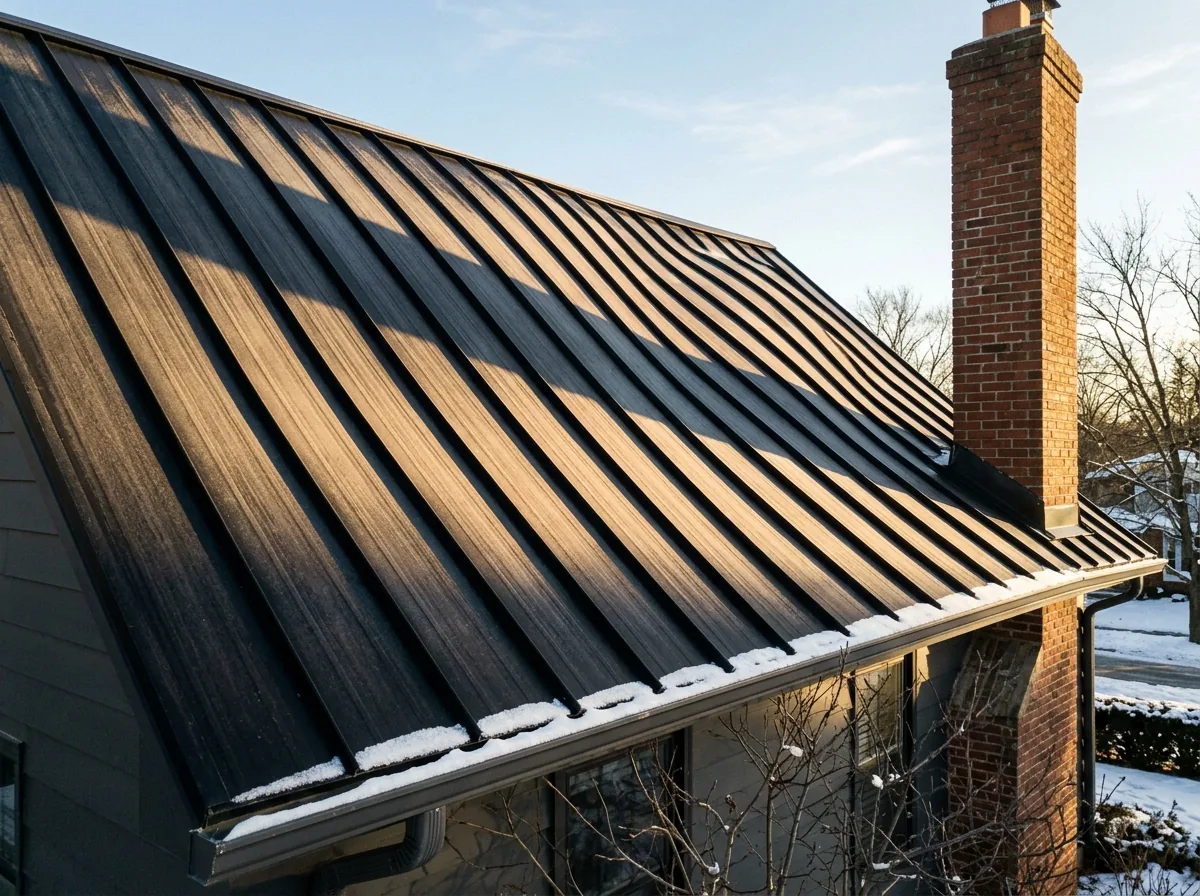
Striated and Pencil-Rib Panel Profiles
Wide, flat panels show oil canning, a slight wave in the metal that catches low sun. It's inherent in sheet metal, purely cosmetic and not a defect you can reject a panel for. Manufacturers roll stiffening ribs into the flat to hide it: striations (fine grooves running parallel to the seam), pencil ribs (narrow rounded beads) or V-ribs. Clip relief, a small rib an inch in from each seam, keeps clip screws from telegraphing through. If you want a perfectly flat look, know that it's the profile most likely to show waves.
PVDF Paint vs Bare Galvalume
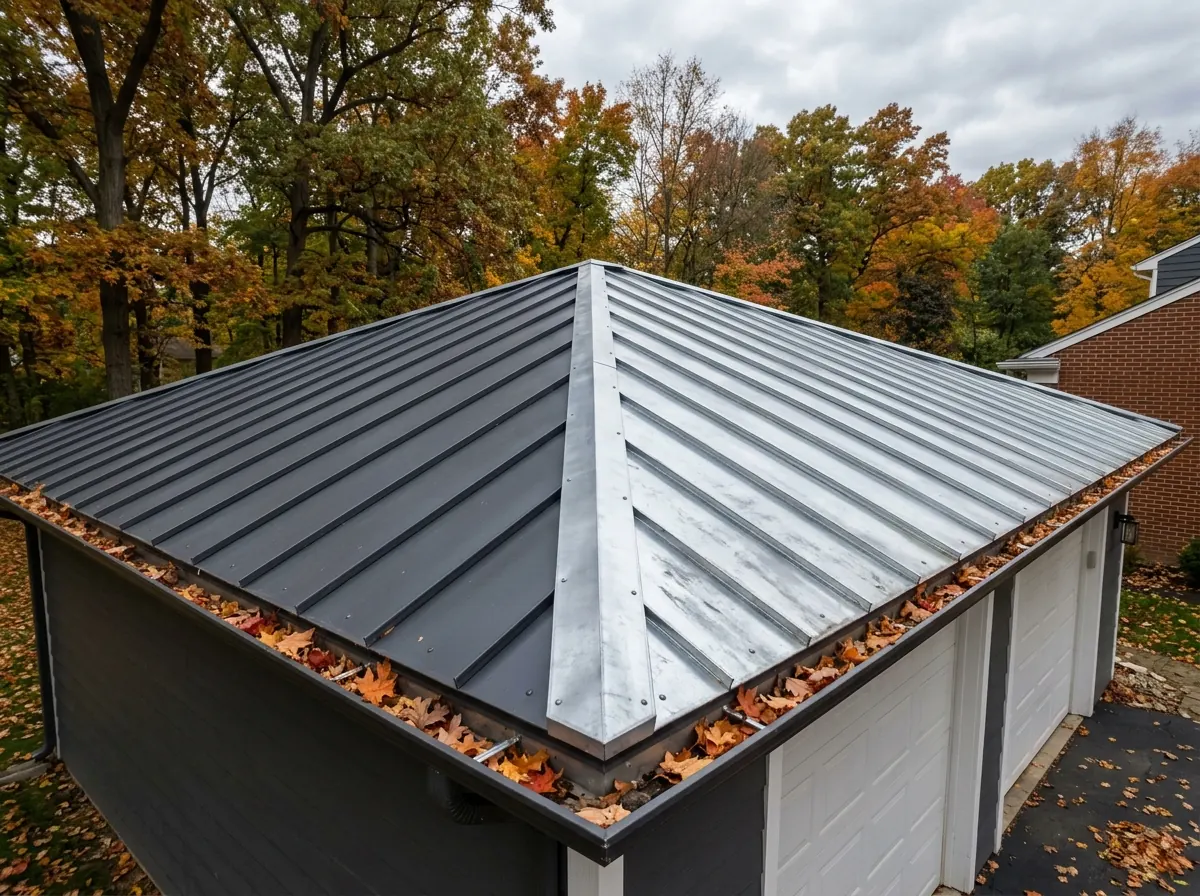
Galvalume is steel coated in aluminum, zinc and silicon, and HomeGuide notes it resists corrosion better than galvanized. The code's minimum for that coating is AZ50, and G-90 for galvanized. Left bare, it's silver and among the cheapest standing seam options. Painted panels add a coil coating on top. McElroy Metal ranks three paint systems: polyester (prone to chalking), silicone-modified polyester (SMP, mid-range) and PVDF, sold as Kynar 500, which needs PVDF to make up 70% of the resin and holds color and gloss best. On a house you plan to keep for decades, get a PVDF price next to the bare-metal one.
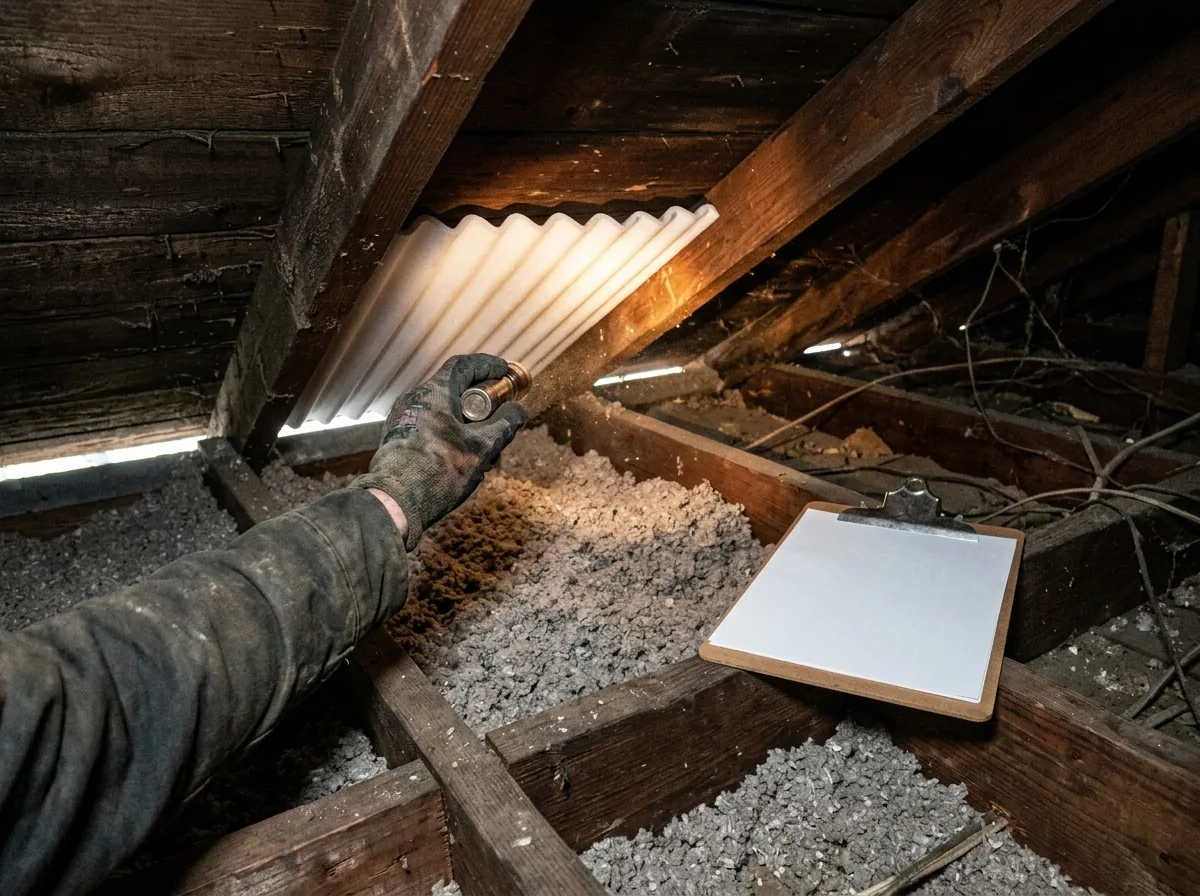
Why Sterling Heights homeowners call Sterling Heights Expert Roofing
- Free roof and attic inspection
- Itemized written estimate before any work
- Your request goes to one local roofer, not a call list
- Requests from inside Sterling Heights city limits
- Nothing to pay for the referral
Standing Seam Metal Roof Prices: What Moves the Estimate
HomeGuide puts standing seam metal at $9 to $16 per square foot installed. These are published national estimates, not quotes. The metal itself moves the number most:
| Standing seam metal | Installed, per sq ft |
|---|---|
| Galvalume | $7.50 to $12.50 |
| Steel (galvanized or painted) | $8 to $13 |
| Aluminum | $9.50 to $17.00 |
| Zinc | $10 to $20 |
| Copper | $18 to $32 |
Labor alone runs $5 to $8 per square foot, and removing the old roof adds $1 to $3. After that:
Gauge
Most residential metal is 24 or 26 gauge. The smaller number is thicker steel and costs more.Seam type
Nail-flange is cheapest, snap-lock sits in the middle, double-lock costs the most to install.Cut-up roofs
Every dormer, valley, hip and chimney means field-cut panels and custom trim.Decking
Bad sheets found at tear-off are priced on the roof deck replacement page.
On lifespan, InterNACHI puts metal roofs at 40 to 80 years. The metal roofing page has the Detroit-area cost comparisons for metal roofs in general.
Standing Seam Metal Roofs or Exposed-Fastener Panels: How to Choose
Exposed-fastener panels, like corrugated or R-panel, screw straight through the face of the sheet with rubber-washered screws. They cost less, and HomeGuide notes they need more upkeep, because every screw head is a hole the washer has to keep sealed. The code also treats them differently. A lapped, non-soldered seam without sealant needs at least 3:12, a much steeper floor than standing seam gets.
Our view: on a house you live in, the hidden fasteners are worth paying for. On a pole barn or a detached shed, exposed fasteners make sense. The metal roofing page covers corrugated panels, steel shingles and stone-coated steel.
Standing Seam Metal Roofs on Sterling Heights' 1960s-80s Houses
U.S. Half the homes in the city were built in 1977 or earlier, by the Census Bureau's count. A lot of those roofs are now on their second or third set of shingles, and that's usually when owners start asking about metal.
Snow is the first thing to plan for. A standing seam roof drops it in sheets, which helps with ice dams and is hard on whoever is standing on the porch steps below. Snow guards above doors and the driveway handle that (the metal roofing page goes into them), and the eaves still get a self-adhered ice barrier under the panels.
Then the layers. Whether panels can go over the shingles you have depends on how many layers are already there, so read the permit and layer rules before anyone quotes a roof-over.
A brick chimney in the middle of a panel run needs a saddle on the uphill side and counterflashing cut to fit the panel ribs; the chimney flashing page covers that detail. And check the attached garage. Its roof is often a lower pitch than the house, so measure it against the slope minimums above before choosing a seam.