
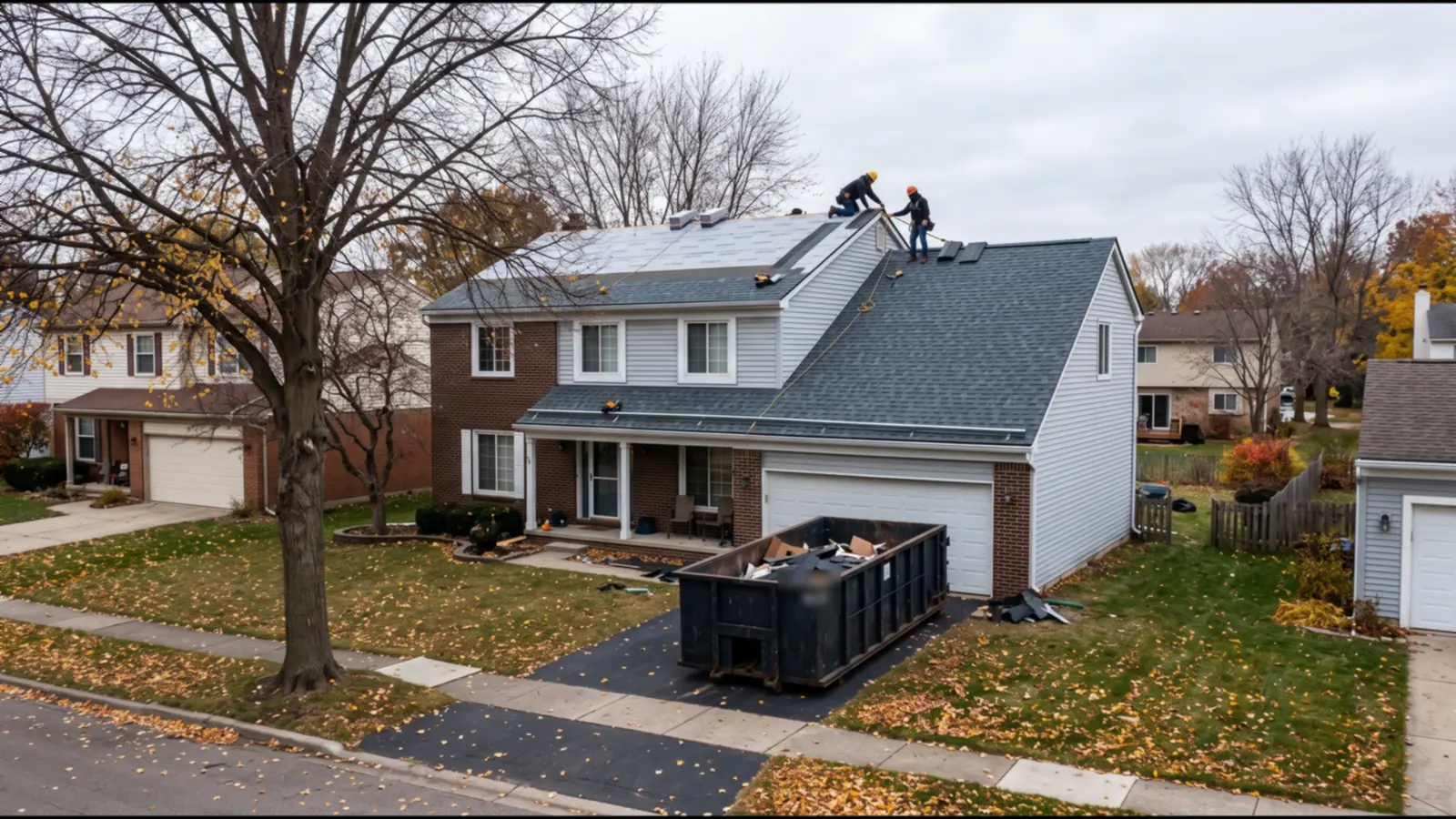
Emergency Roof Repair Jobs, Type by Type
Tarp Dry-In After Shingle Blow-Off
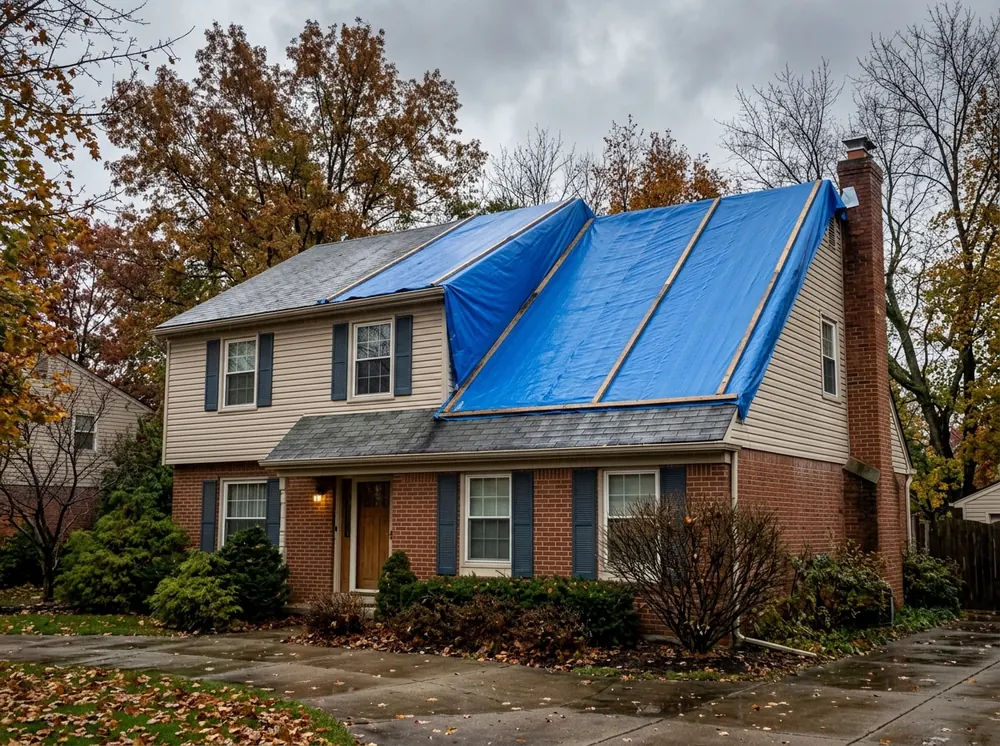
When a gust strips a run of shingles, the underlayment underneath was never meant to be the roof for long, and the next rain finds every nail hole. A dry-in covers the bare area with a heavy tarp that runs up and over the ridge, so water can't get under its top edge. It's held by 2x4 battens screwed through the tarp along the edges, rather than nails through the bare tarp, which tear out in the first wind. Thicker tarps last longer: HomeGuide says a standard tarp holds roughly 60 to 90 days, while a heavy 10-mil tarp can last up to two years. Treat that as the outer limit, not the plan. Sun and wind wear tarps down, and every screw is a hole to fill later.
Temporary Patches on Active Leaks
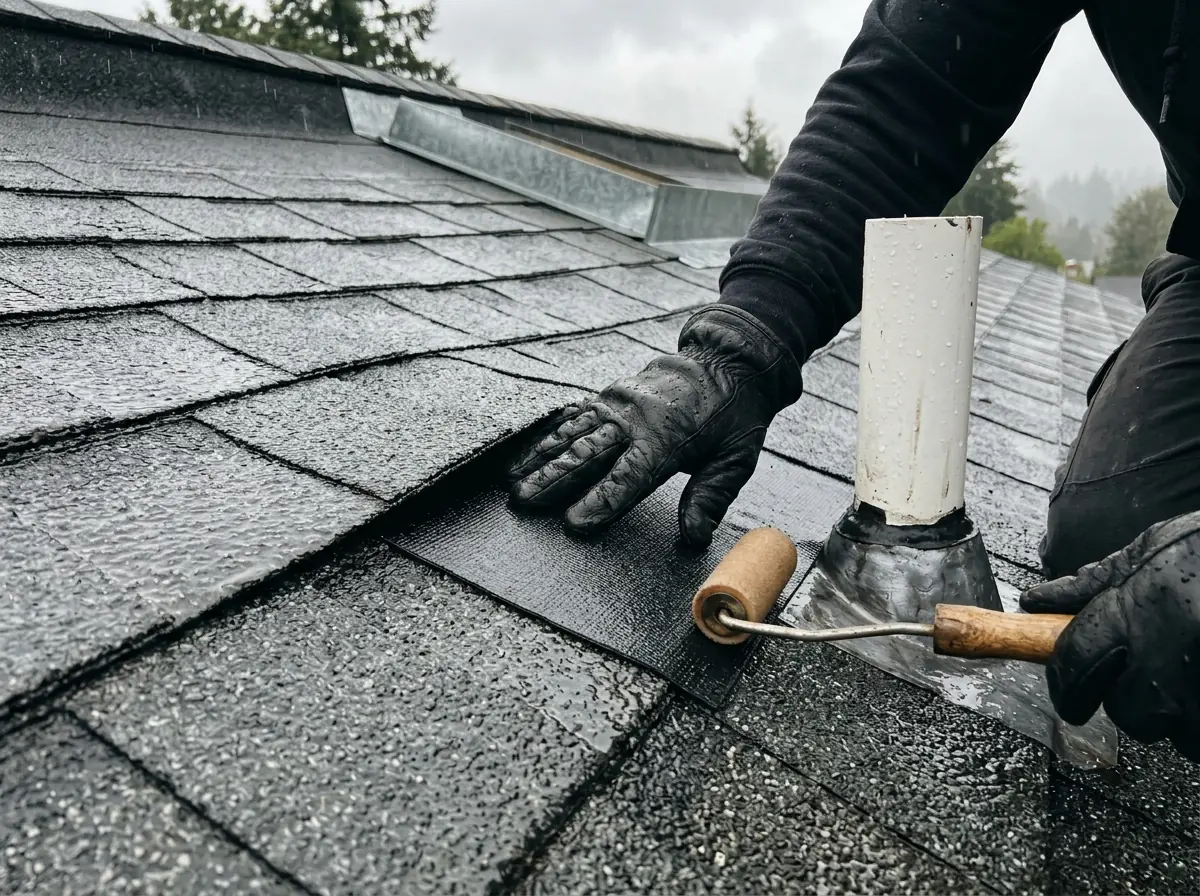
Not every emergency needs a tarp. A single cracked vent boot, a lifted shingle at a valley or a gap in wall flashing can be bridged with a temporary patch: a piece of self-adhered membrane slid under the course above, a bead of roofing cement under a loose tab, or a sheet-metal shim pushed behind a gap. On a cold or wet roof, cement and membranes stick poorly, so a roofer may tarp the area anyway. Inside, catch the water, poke a small hole in a bulging ceiling, well away from any light fixture, to drain it into a bucket before it brings the drywall down, and move what you can. Then book the real fix, which for most leaks is on the roof leak repair page.
Boarding Over Roof Punctures
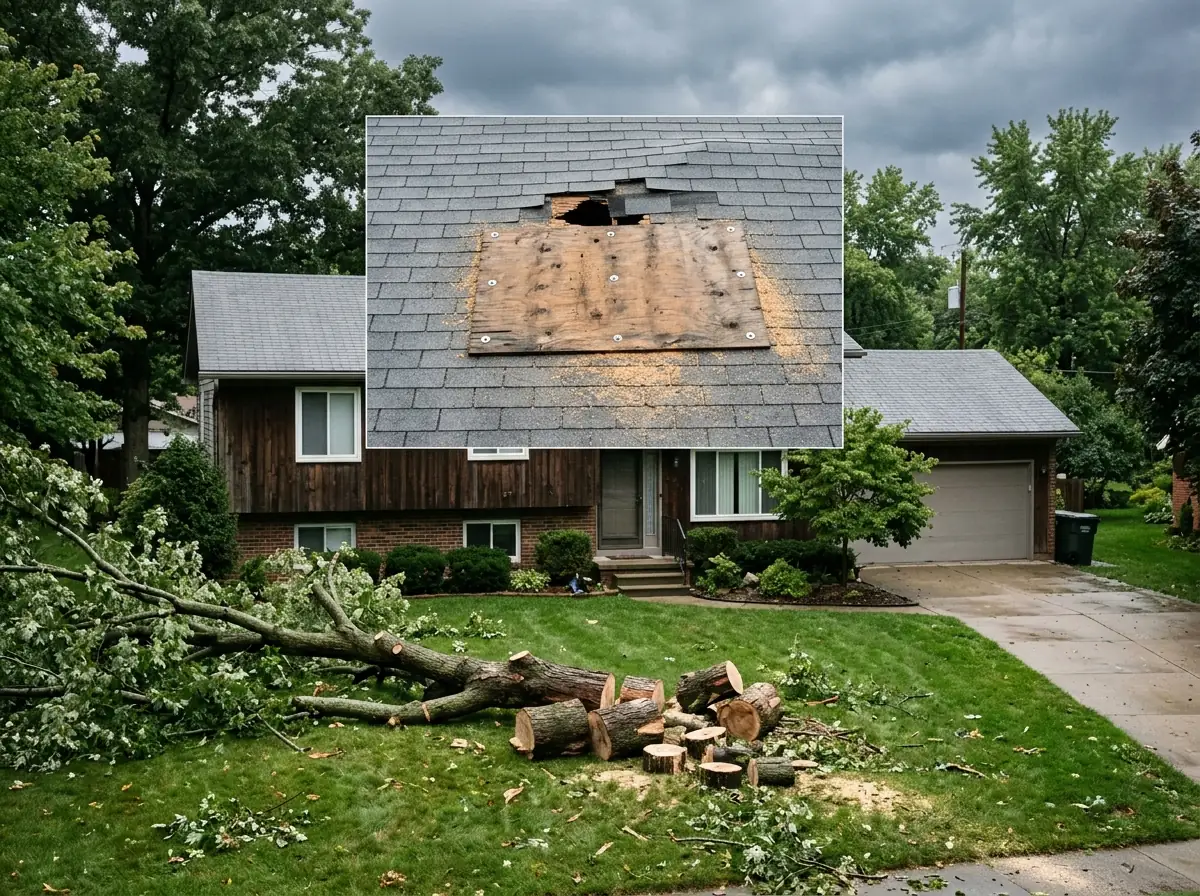
A limb that comes through the deck leaves a hole a tarp can sag into. After the tree is cut off the roof (a tree service's job when it's large or tangled in wires), a roofer screws a sheet of plywood or OSB over the opening, spanning onto solid deck, then covers the patch and the area around it with a tarp. Broken rafters get braced from the attic, and if the framing is cracked, the permanent repair may need a carpenter or an engineer's look before new decking goes on. Stay well clear of any downed wire tangled in the tree and let the utility deal with it. Storm damage of this kind usually leads to an insurance claim, so the storm damage roof repair page is the next stop.
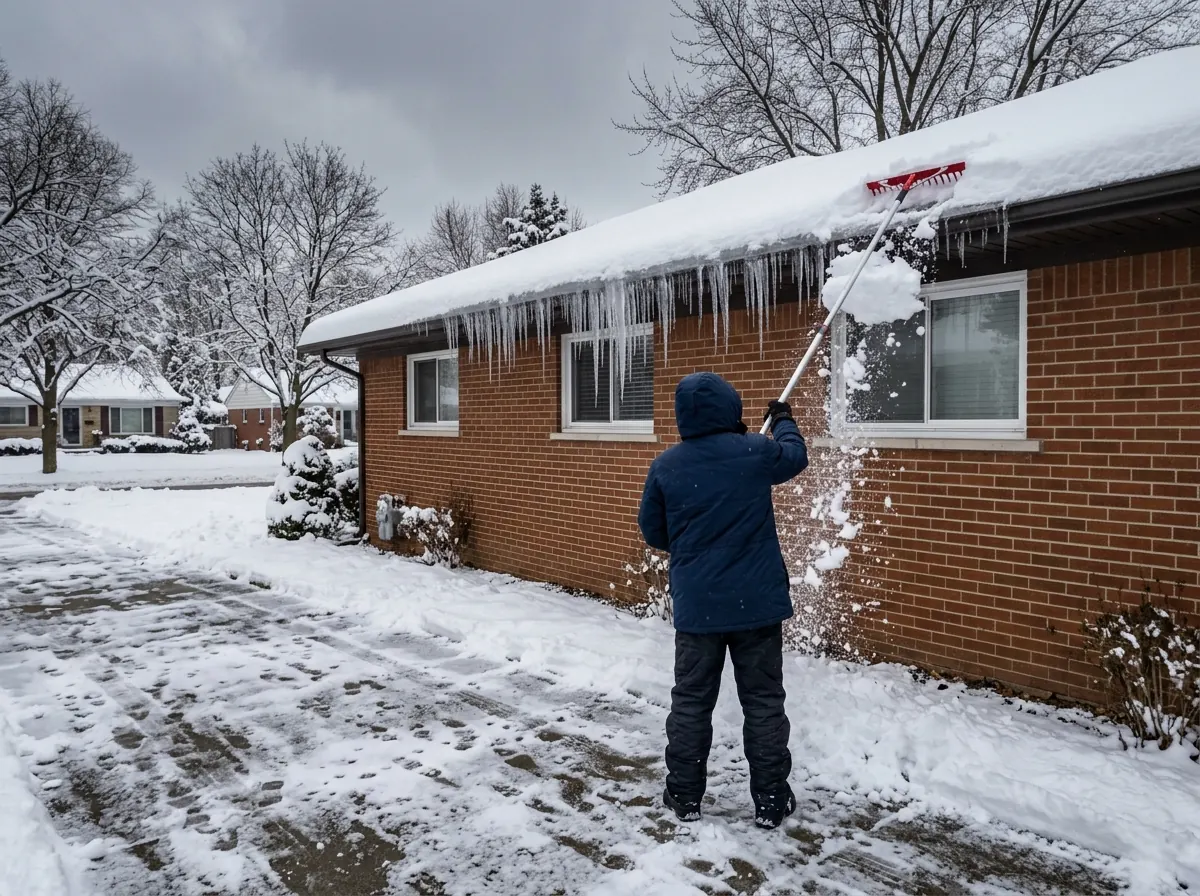
Winter Emergencies: Ice Backup and Snow Load
Two winter problems can't wait for spring. The first is ice backing up at the eaves and pushing meltwater into the walls. Chopping ice with a hammer or a shovel cuts shingles, so the emergency answer is low-pressure steam that melts channels through the dam, explained on the ice dam removal page. The second is weight. FEMA's snow load guide puts a foot of fresh snow at 3 pounds per square foot when light and dry, and up to 21 when wet and heavy. An inch of ice adds almost 5 more. FEMA lists the warning signs: sagging ceilings or roof lines, popping or creaking, doors that suddenly stick, and new cracks in walls. If you see those, get people out of that part of the house first and call second.
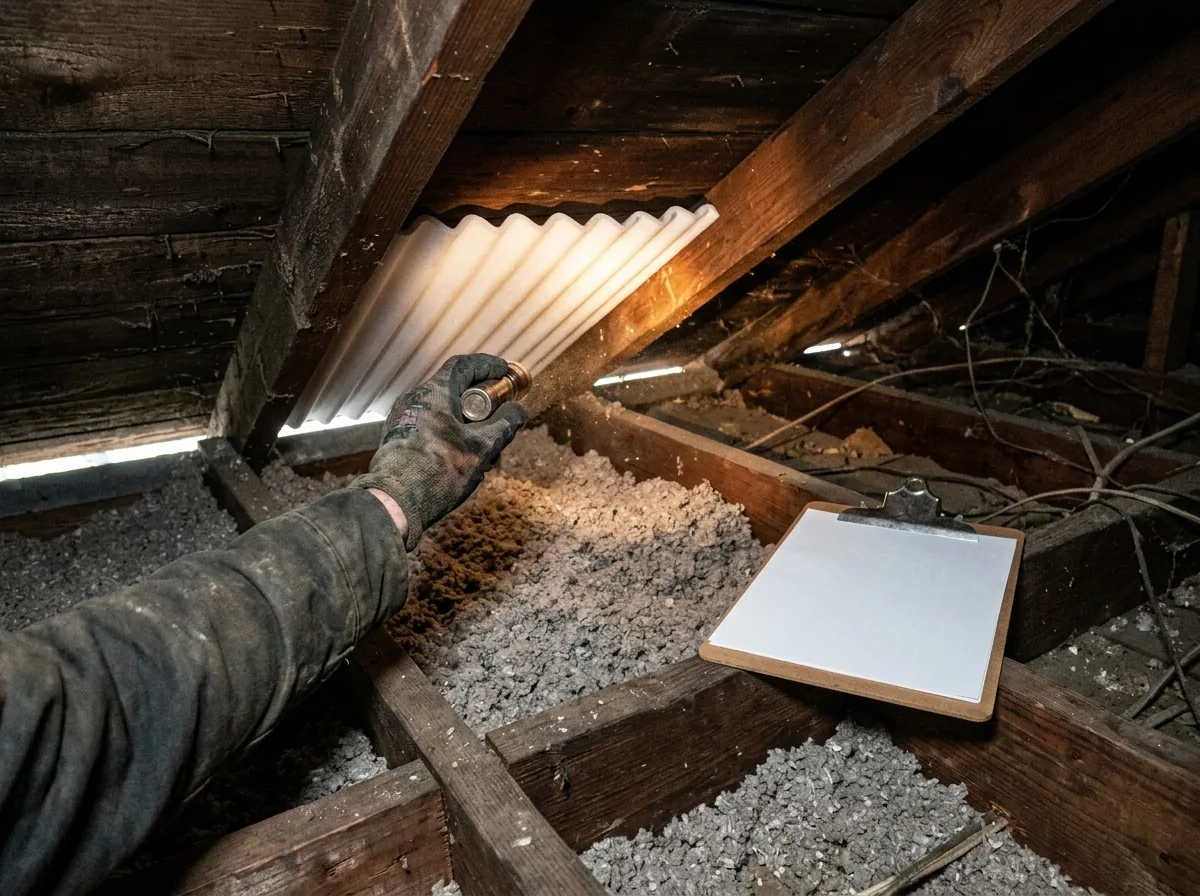
Why Sterling Heights homeowners call Sterling Heights Expert Roofing
- Free roof and attic inspection
- Itemized written estimate before any work
- Your request goes to one local roofer, not a call list
- Requests from inside Sterling Heights city limits
- Nothing to pay for the referral
Emergency Roof Repair and Your Duty to Limit the Damage
After storm damage, Michigan's insurance regulator (the Department of Insurance and Financial Services, or DIFS) expects homeowners to protect the property from further loss and to hold on to the receipts for supplies bought to do it. That's what emergency roof work is, in insurance terms: reasonable steps to stop more water getting in. HomeGuide notes that standard homeowners policies generally pay for tarping when the policy covers what caused the leak.
In practice:
Photograph before and after
Wide shots of the house, close-ups of the damage, then the same shots once the tarp or boards are on. Date them.Keep every receipt
Tarp, plywood, buckets, a shop-vac, the roofer's invoice for the emergency visit. Ask for that invoice to describe the work as temporary.Don't throw out damaged materials
DIFS says to keep damaged items until the insurer tells you otherwise.Keep it temporary
The permanent repair comes after the adjuster has seen the damage. Signing a full replacement contract with whoever tarped the roof, on the day of the storm, is a decision you don't have to make yet.
A tarp crew knocking on doors the morning after a storm is not the same as a roofer you called. Check any contractor's state license first; the lookup is explained on the roof repair page. Coverage, depreciation, adjusters and DIFS's fraud warning are on the storm damage roof repair page.
Emergency Roof Repair Pricing for Tarps and Board-Ups
HomeGuide puts the average roof tarping job at $175 to $700, or about $0.70 to $2.00 per square foot installed. After-hours work runs $1.00 to $2.80 per square foot, and some contractors add a call-out fee of $100 to $200 outside business hours. What changes a quote:
Area covered
A strip of missing shingles at the eave versus half a slope after a tree strike.Height and pitch
A two-storey colonial in the rain needs more ladder work and fall protection than a ranch.Debris first
Limbs on the roof have to come off before anything can be covered, and large ones mean a separate tree service bill.Boarding and bracing
Plywood, framing repairs from the attic and extra fasteners add to a plain tarp.Timing
Night and weekend calls cost more, and after a widespread storm every roofer's list gets long.
Ask for two numbers in writing: the emergency work done today, and an estimate for the permanent repair after inspection. They should be separate documents.
Emergency Roof Repair, From First Call to Permanent Fix
- 1
Make the house safe
Shut off power to rooms where water is near light fixtures or outlets, move people and valuables, and stay off a wet or icy roof. - 2
Describe the damage
When you contact us, say what happened (wind, limb, ice, leak), where the water is coming in, and whether anything is still hanging. We pass it to one roofer. - 3
Stabilize
Tarp, patch or board-up, whichever the damage calls for, with the photos described above. - 4
Inspect
Once the weather allows, a full look at the roof and attic decides whether it's a repair or a replacement. - 5
Permanent repair
Scheduled after your insurer has seen the damage, if you're filing a claim. The tarp comes off the day the real roof goes back on.
Don't let a tarp become the roof. One left on through a whole season usually means the shingles and deck under it need work too.