
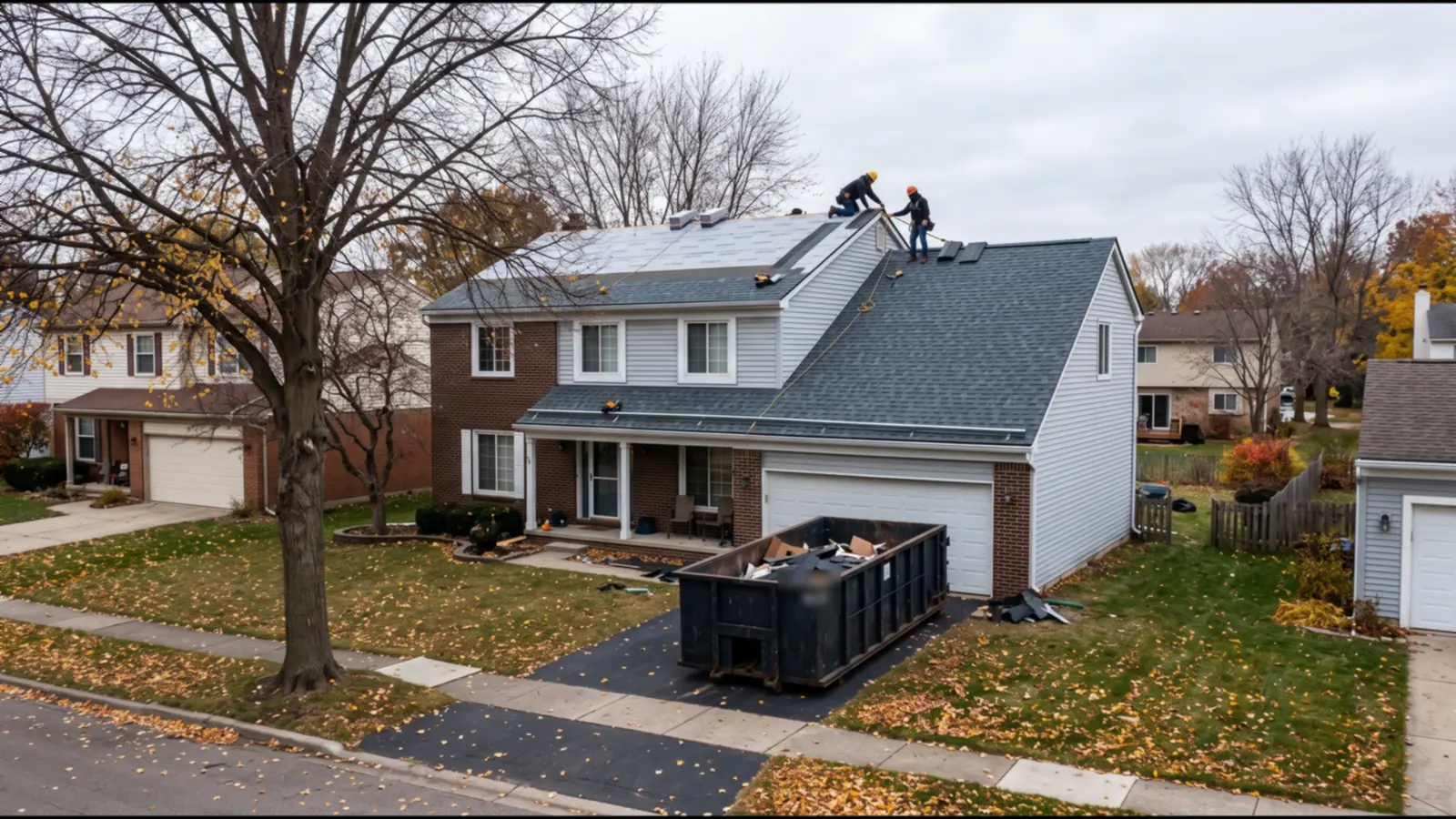
Slate Roof Repair Methods for Sterling Heights Homes
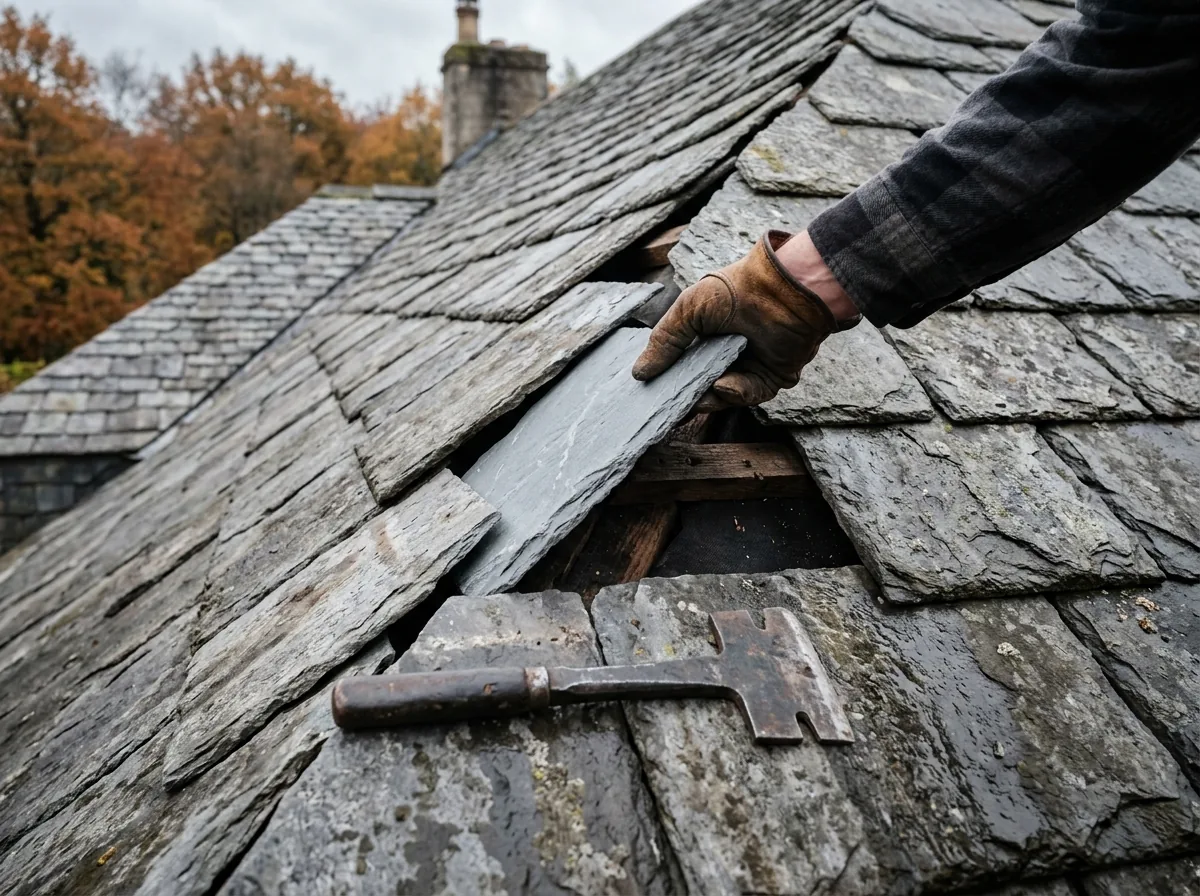
Single-Slate Swaps With Hooks or Bibs
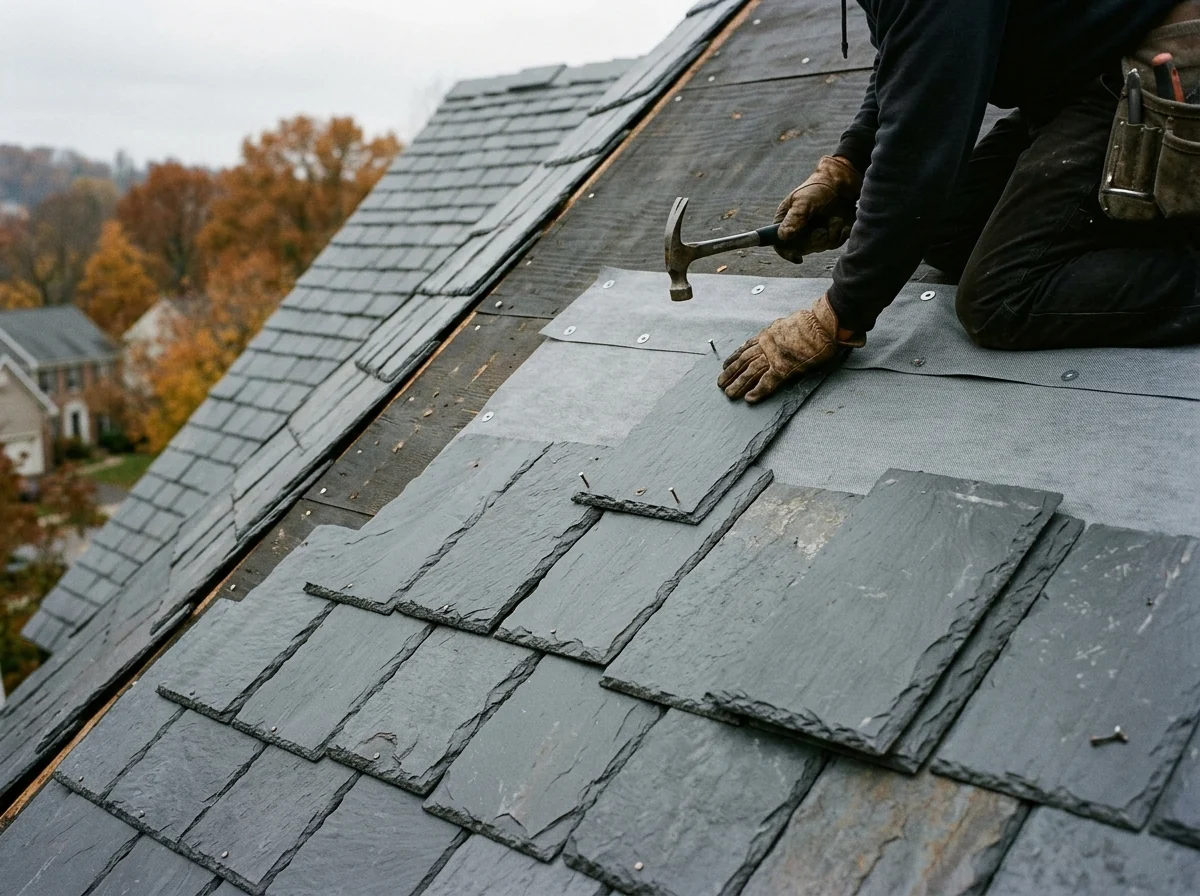
One broken slate doesn't mean opening the roof. A roofer slides a slate ripper up under the broken piece, hooks the two nails and cuts or pulls them. The National Park Service's slate guide then fixes the new slate with a copper nail and slips a copper bib over the nail head to shed water. The other common method is a stainless steel slate hook nailed to the deck: the new slate slides up and seats on the hook, and InspectAPedia calls hooks more reliable than copper strips. What not to accept is a bent copper tab. NPS warns it fails in northern climates, where snow and ice fold the tab open and the slate slides out.
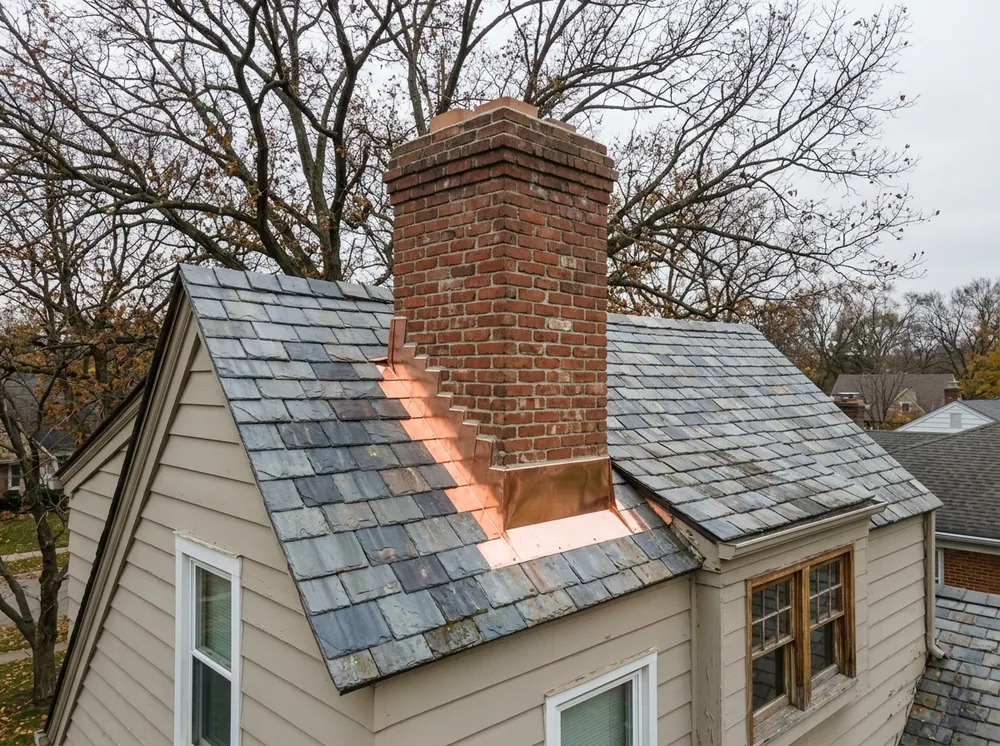
Copper and Lead Flashing on Slate
On a slate roof, the flashing usually wears out before the slate does, and NPS calls it the weakest point of the roof. It recommends 16-ounce copper as the minimum, and lead-coated copper is often used in restoration work. One rule matters: use a single metal throughout. Copper valleys with galvanized nails or steel gutters corrode by galvanic action. The code's own floor is lower (valley flashing at least 15 inches wide and 0.0179-inch G90 steel), but on a roof meant to last a century, galvanized steel is a weak link.
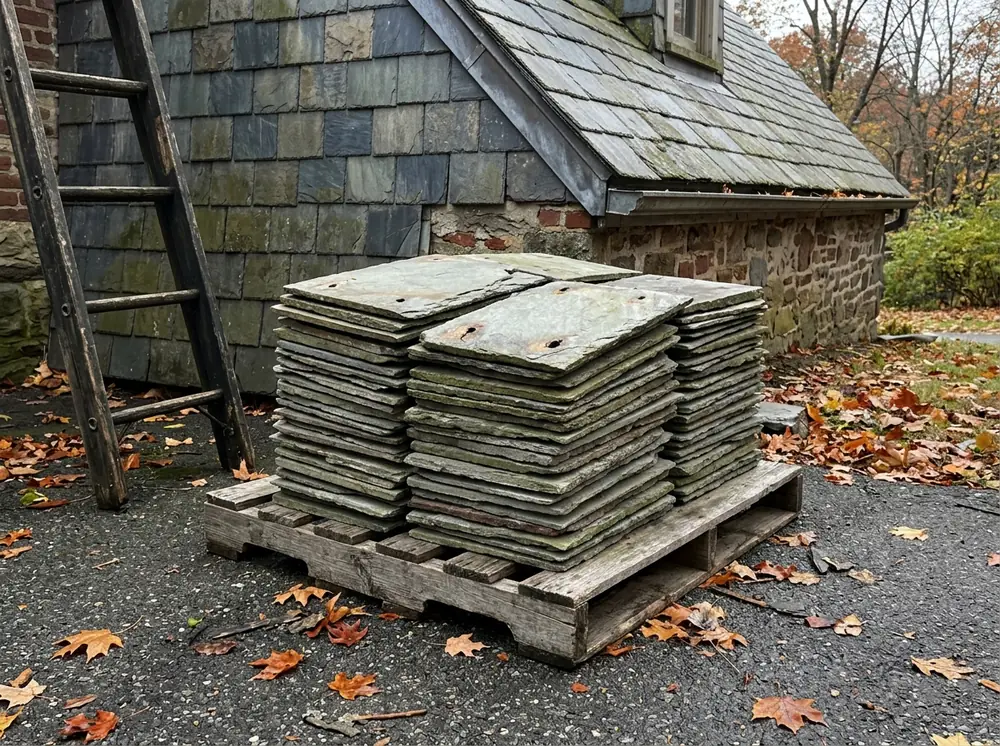
Matching Salvaged Slate
A new slate that doesn't match stands out from the street for decades. Slate color depends on the quarry. NPS notes that some slates fade to new shades within a short time while others hold their color, and that imported slate often won't match U.S. stone. Salvaged slate from the same quarry, or from a section of the roof being rebuilt, is often the best match. The IRC allows existing slate to be reinstalled but not cracked or broken pieces, so each salvaged slate gets checked. NPS also suggests tapping it: a sound slate gives a full ring, a deteriorated one a dull thud. New slate orders can take 4 to 12 weeks.
Composite Slate Replacement Roofs
When the natural slate is too far gone, composite (synthetic) slate is the usual replacement. It's a molded blend of plastic polymers or rubber, and it weighs less than natural slate, which HomeGuide puts at 8 to 10 pounds per square foot. HomeGuide gives synthetic slate 30 to 50 years. InterNACHI's chart is more cautious at 10 to 35. A new roof can't be laid over slate, so this is a full tear-off (permit and layer rules apply). Compare it with cedar shake or standing seam metal at the same time.
Why Sterling Heights homeowners call Sterling Heights Expert Roofing
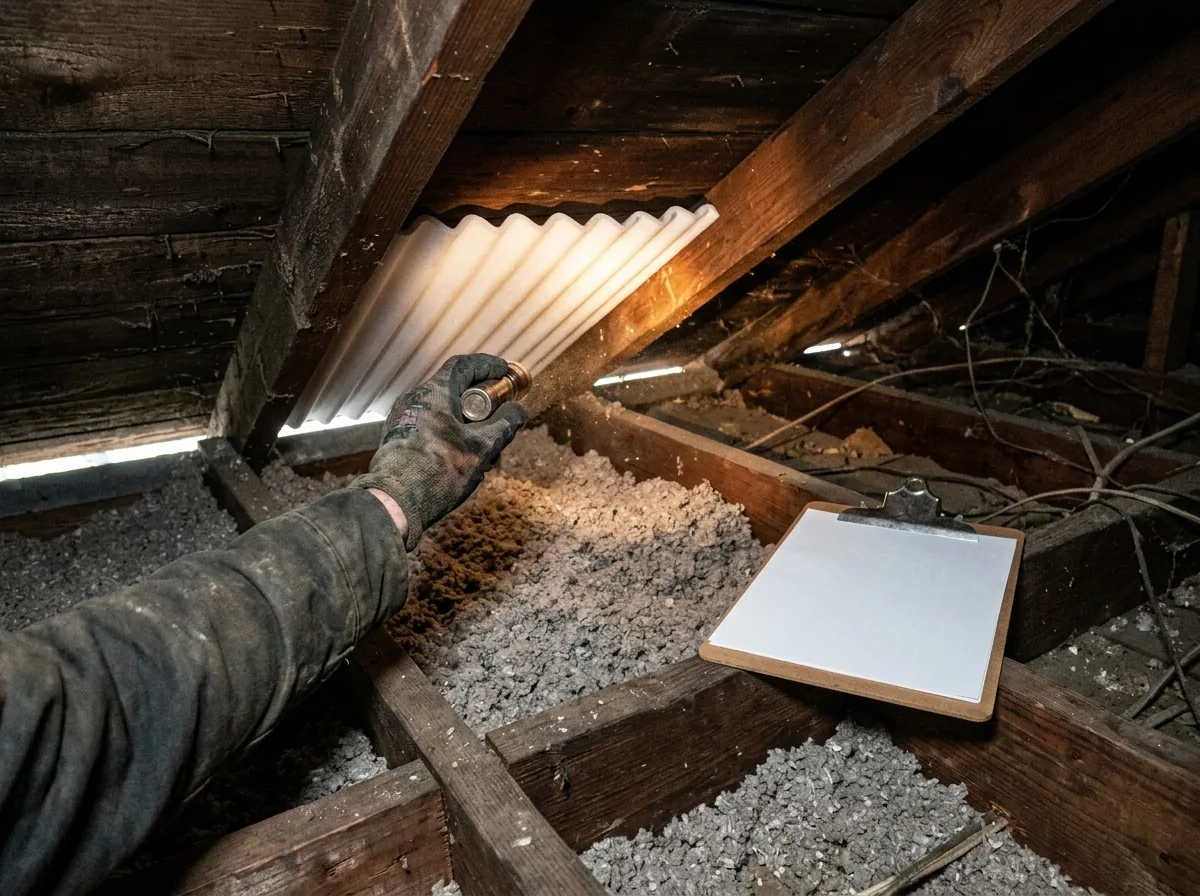
- Free roof and attic inspection
- Itemized written estimate before any work
- Your request goes to one local roofer, not a call list
- Requests from inside Sterling Heights city limits
- Nothing to pay for the referral
Slate Roof Repair or Replacement: How to Choose
NPS gives a plain rule of thumb: if fewer than about 20 percent of the slates are deteriorated and the roof is generally sound, look at repair before replacement. Signs of worn-out slate are flaking along the layers, a soft or spongy feel, and slates that crack when pressed by hand. Sound slate doesn't move.
Before blaming the stone, look at three other things NPS lists:
- 1
Slipping slates
A row of slates sliding out of place often means the old iron nails rusted through while the slates are fine. Those slates can be pulled, saved and re-laid on new nails. - 2
Flashings
A pinhole in a valley lets in a lot of water, and the slate around it gets the blame. - 3
Attic condensation
Poor ventilation produces "false leaks" that look like a roof problem.
When slates are re-laid, the IRC still applies: slate goes only on solid sheathing at a 4:12 pitch or steeper, with two fasteners per slate and a headlap of 4 inches on slopes under 8:12, 3 inches up to 20:12 and 2 inches above that. Skip-sheathed or patched decks found under old slate have to be brought up to that first. Ring-shank nails are a poor choice too, since InspectAPedia notes they can't be pulled cleanly with a ripper when the slate needs work again.
How long natural slate lasts depends on where it was quarried. NPS gives Vermont and New York slate about 125 years, Buckingham Virginia slate 175 or more, and Pennsylvania soft-vein slate over 60. InterNACHI's chart puts slate as a whole at 60 to 150 years. If your slate is in the middle of that life and the flashings are the problem, our view is that repair usually makes more sense. Either way, look from the ground or the attic. Slate is brittle underfoot, and a homeowner on the roof tends to add to the list of broken pieces.
Slate Roof Repair Prices: What Moves the Estimate
HomeGuide's national figures, which are estimates and not quotes:
| Slate work | Typical price |
|---|---|
| Average slate repair | $500 to $2,100 (about $1,400 typical) |
| Replacing broken slates | $50 to $300 per slate |
| Replacing flashings and fasteners | $400 to $3,000 |
| Reslating with natural slate | $10 to $30 per sq ft |
| Synthetic slate replacement | $9 to $12 per sq ft |
The price climbs with height and access (a second-story slope above a sunroom is harder than a garage roof), with how hard the matching slate is to find, and with how much flashing has to be rebuilt. Hard slate costs more than soft. If several slopes are worn, NPS points out that the worst slope can be redone first and the rest later, which spreads the cost over several years. Ask the roofer to price each slope separately so you can do that.