
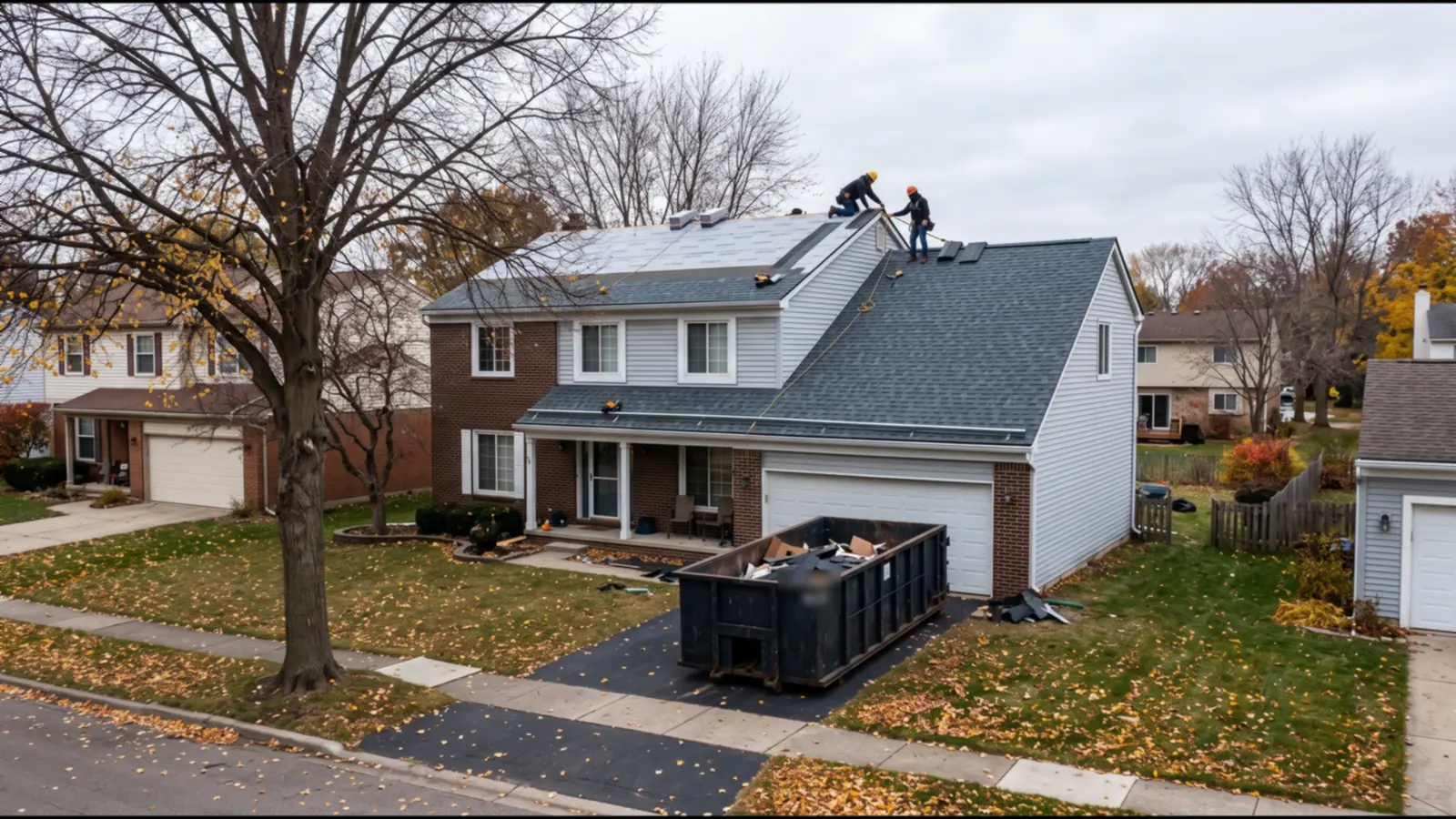
Ice Dam Removal Methods, One by One
Some of these open the ice and leave the shingles intact, some only buy a few days, and one is a code item that goes in only when the roof is replaced.
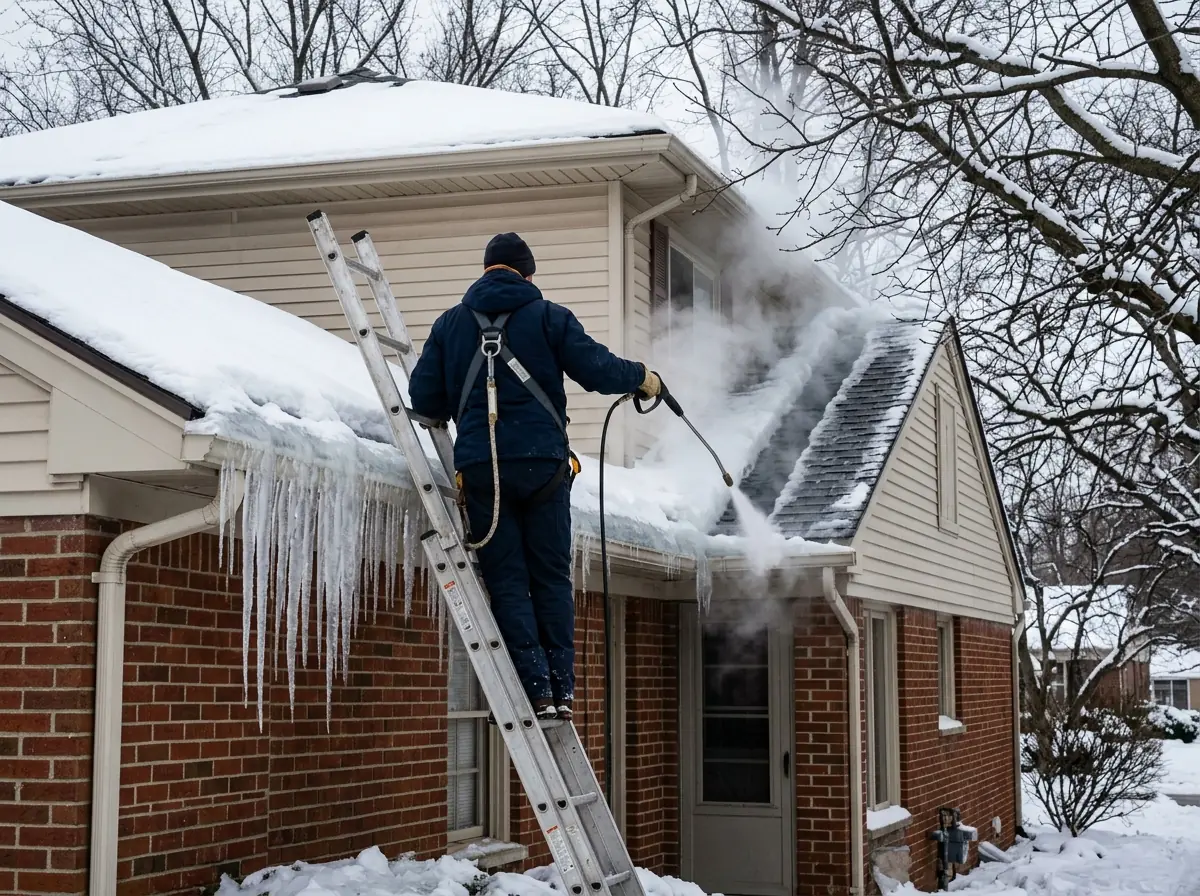
Low-Pressure Steam Removal
Steam is the method to ask for when water is already coming in. The operator cuts channels and then slabs through the ice with a wand fed by a boiler at around 290°F, at low pressure, so the ice melts away from the shingle surface instead of being pried off it. HomeGuide puts steam removal at $800 to $2,400 for 2 to 4 hours of work. That makes it the priciest method, and the one least likely to leave you with broken tabs, torn underlayment or a punctured gutter. Chipping with a hatchet or ice pick costs nearly as much and can damage the roof under the ice.
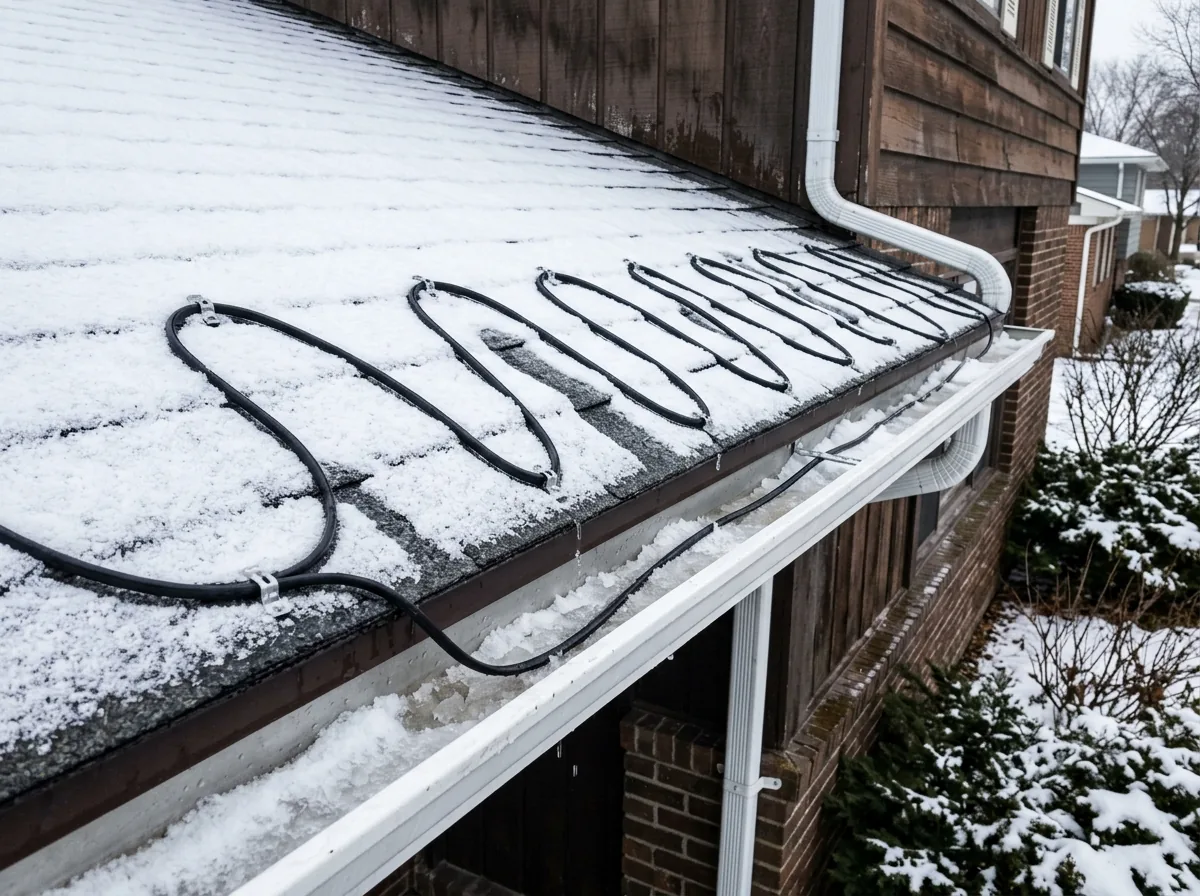
Roof-Edge and Gutter Heat Cable
Heat cable is clipped in a zigzag along the eave, laid in the gutter and run down the downspout so meltwater has an open path off the roof. HomeAdvisor lists typical installs at $900 to $1,800. Self-regulating cable ($2 to $5 a foot) turns its output up and down with the temperature. Constant-power cable ($1 to $3) runs at one level until somebody switches it off. Heat cable treats the symptom. A University of Minnesota extension fact sheet notes that the cable melts only a few inches to either side, that the sawtooth pattern can start a second dam further up the slope, and that the cables use a lot of electricity. It makes sense over a problem spot such as an entry door or a valley that can't be fixed from the attic.
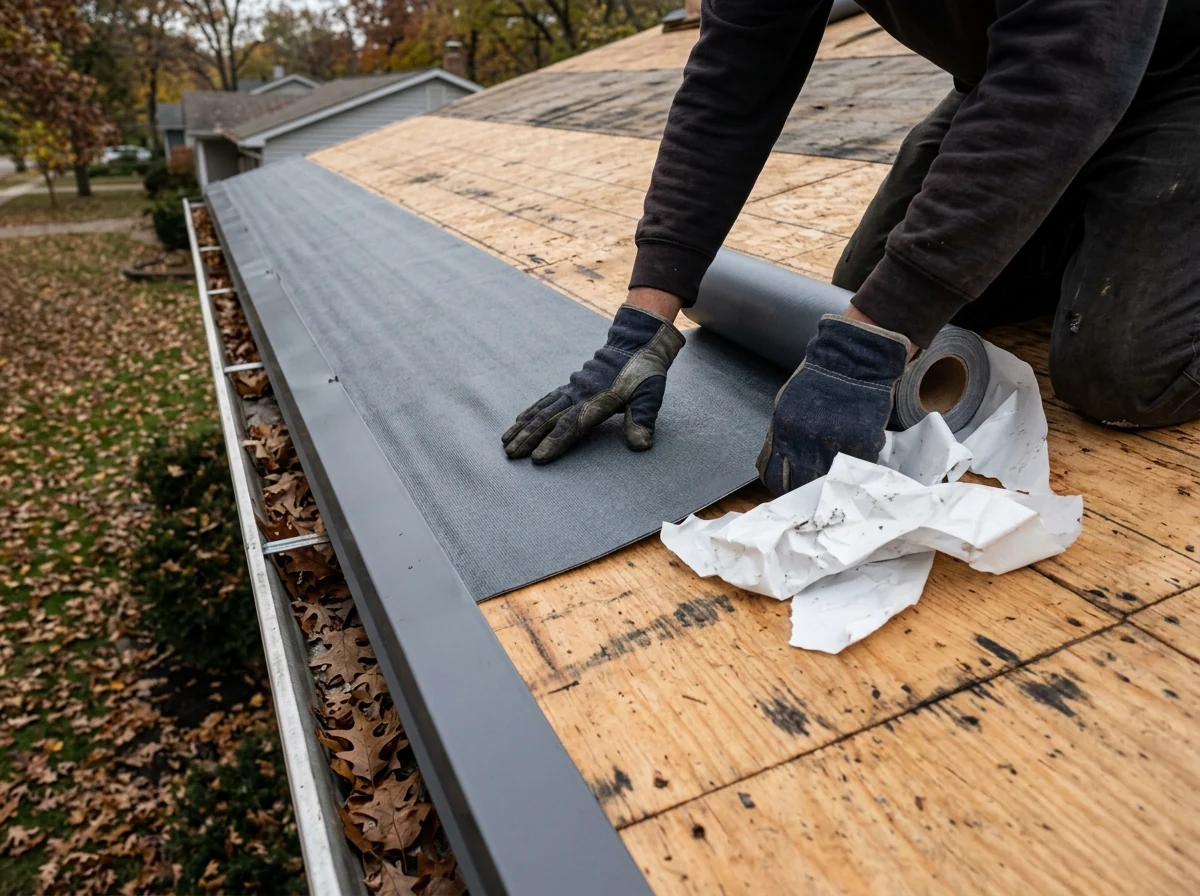
Self-Adhered Ice Barrier at Reroof
Under the shingles, the ice barrier keeps backed-up water from soaking into the deck. The International Residential Code (R905.1.2) calls for one wherever eave ice has a history of backing up water. The barrier can be two layers of underlayment cemented together or a self-adhering polymer-modified bitumen sheet. It must run from the lowest roof edge to at least 24 inches inside the exterior wall line. The Michigan Residential Code applies the rule to the house, to unheated attached garages and to detached buildings with conditioned space. A detached garage with no heated space is exempt. Sterling Heights adds its own rule: on a complete tear-off, ice and snow shield goes on the decking. On a wide overhang, 24 inches inside the wall line means more than one course of membrane.
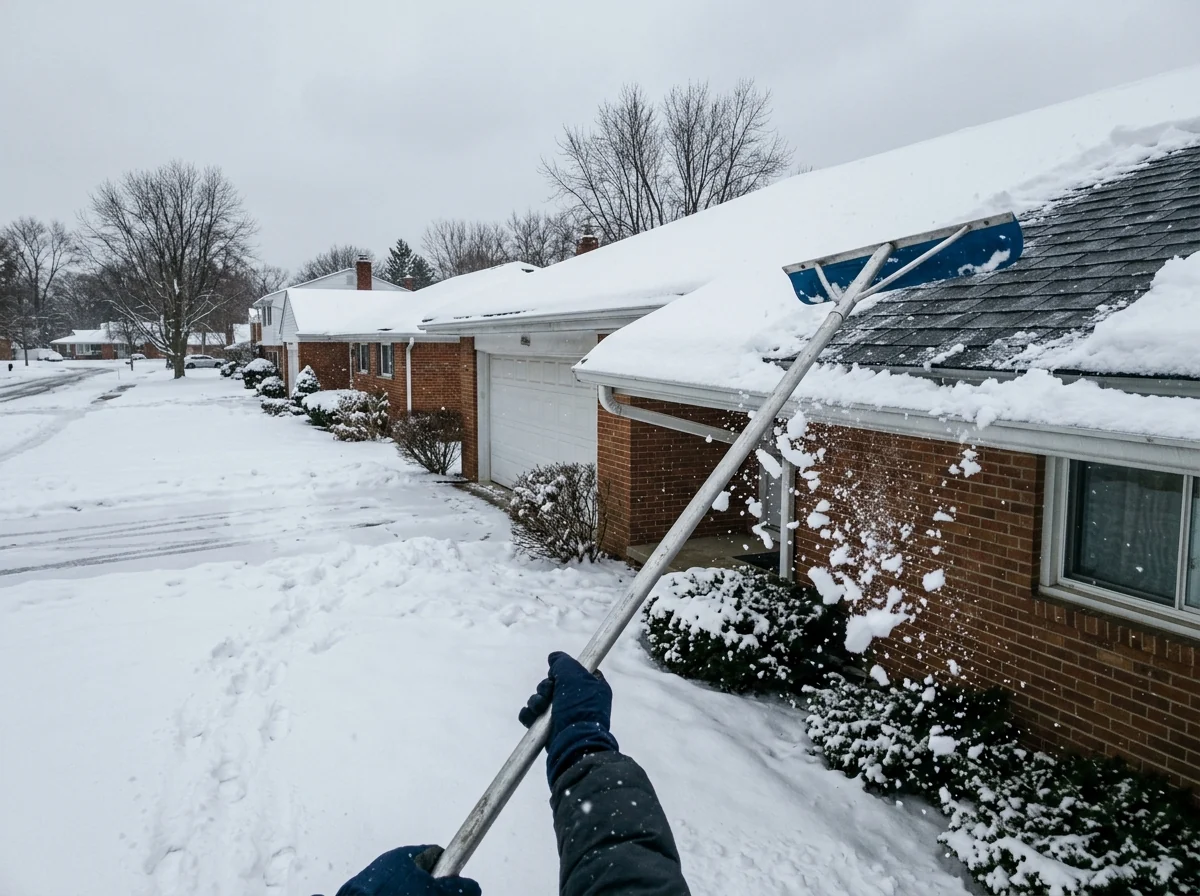
Snow Raking From the Ground
If there's no snow up there to melt, no dam can form. A roof rake on a long pole pulls the first few feet of snow off the eave from the ground, which is about the only ice dam job a homeowner should take on. The 1979 Minnesota fact sheet recommends the rake and warns never to chop through ice down to the shingles or use a torch on it. HomeGuide lists hired roof-raking at $200 to $500 a visit. Raking works best on a ranch or the single-story garage roof. On a two-story colonial, the upper eave is often out of reach from the ground, and a ladder on ice is the wrong answer to that.
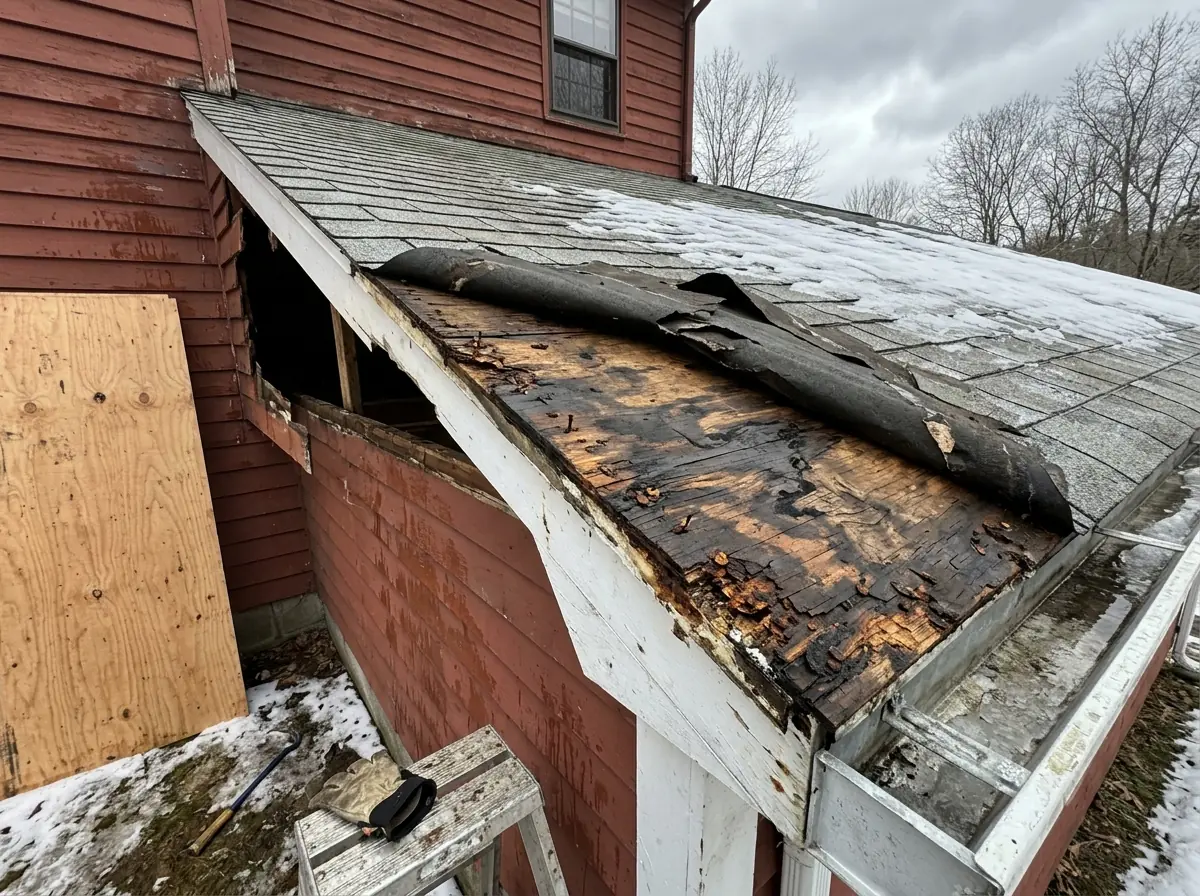
Repairs After Ice Dam Water Damage
Once the ice is off, look at what the water did. On the roof that can mean delaminated plywood or soft plank boards along the eave, rusted nails, and soaked underlayment that should be replaced along with a strip of ice barrier. Behind the gutter, the fascia and soffit may have rotted. Inside, it can mean wet insulation over the outside wall and stained drywall. Take photos before anything is torn out. Michigan's Department of Insurance and Financial Services (DIFS) lists ice dams among the winter losses standard policies generally cover. The rules for filing are explained on our storm damage roof repair page. HomeGuide notes that the removal itself usually isn't covered, but the damage it causes may be.
Why Sterling Heights homeowners call Sterling Heights Expert Roofing
- Free roof and attic inspection
- Itemized written estimate before any work
- Your request goes to one local roofer, not a call list
- Requests from inside Sterling Heights city limits
- Nothing to pay for the referral
Ice Dam Removal in a Macomb County Winter
The National Weather Service's 1991-2020 normals for the nearest official station put seasonal snowfall at 45 inches. From December through March, the normal high sits above freezing while the normal low falls below it. So snow on a roof melts by day and refreezes at night for four months running.
Building Science Corporation sums up how an ice dam forms in three conditions. It's below freezing outside, the roof deck is above freezing, and there's snow on the roof. Snow melts against the warm deck, the water runs down to the eave overhang, which is outside the heated walls and stays cold, and it freezes there. Each new round of meltwater pools behind the ice and works its way up under the shingle laps, which shed water running downhill but can't hold water standing still.
The lasting fix is a cold deck. ENERGY STAR describes that as air sealing and insulation on the attic floor plus winter attic ventilation. The Minnesota fact sheet makes the same point from the other side: insulation alone won't stop ice dams unless ventilation is there to carry away the heat that leaks past it. The vent sizes the code calls for are on our roof ventilation page.
Clear gutters help a little and cost almost nothing. DIFS advises clearing leaves and debris from gutters to prevent ice damming, since a gutter packed with wet maple leaves freezes solid and gives the dam a head start. Pulling the gutters off doesn't work, though. HomeGuide notes the ice just forms at the shingle edge instead.
Ice Dam Removal Prices: What Moves the Estimate
HomeGuide's national figures give a sense of scale. They are estimates, not quotes from anyone here:
Method
Salt or roof-melt tablets $200 to $300 for minor ice. Pressure washing $400 to $2,000. Chipping $800 to $1,800. Steam $800 to $2,400.Hours on site
Steam crews bill $400 to $600 an hour, so a 40-foot run of thick ice on a back eave costs more than a short dam over the porch.Height and access
A two-story eave needs taller ladders and more setup than a ranch or garage roof.Snow on top
If the roof has to be cleared before the ice can be reached, raking is added.What's behind the ice
Wet decking, rotted fascia and wet attic insulation are separate line items, priced once they can be seen.
A written estimate should say which method is being used. If it says "chip" or "pressure wash," ask why not steam.
Ice Dam Removal or Attic Repairs: How to Choose
Removal is for the dam that's on the roof now and leaking. Call when water is coming through a ceiling, a window head or the soffit, or when the ice has backed up past the gutter onto the shingles. Waiting for a thaw lets the water keep running into the wall.
Attic work is for the dam that will come back next January. If the same eave builds ice every winter, ask the roofer to check the attic for insulation pushed against the deck, soffit vents blocked by blown-in insulation, a bathroom fan venting into the attic, or a warm chimney chase. Fixing those deals with the cause. Steam never does.
At the next reroof, both get done: the ice barrier described above, new intake and exhaust vents, and decking repairs at the eaves. The roof replacement page covers the permit and layer rules that come with it.