
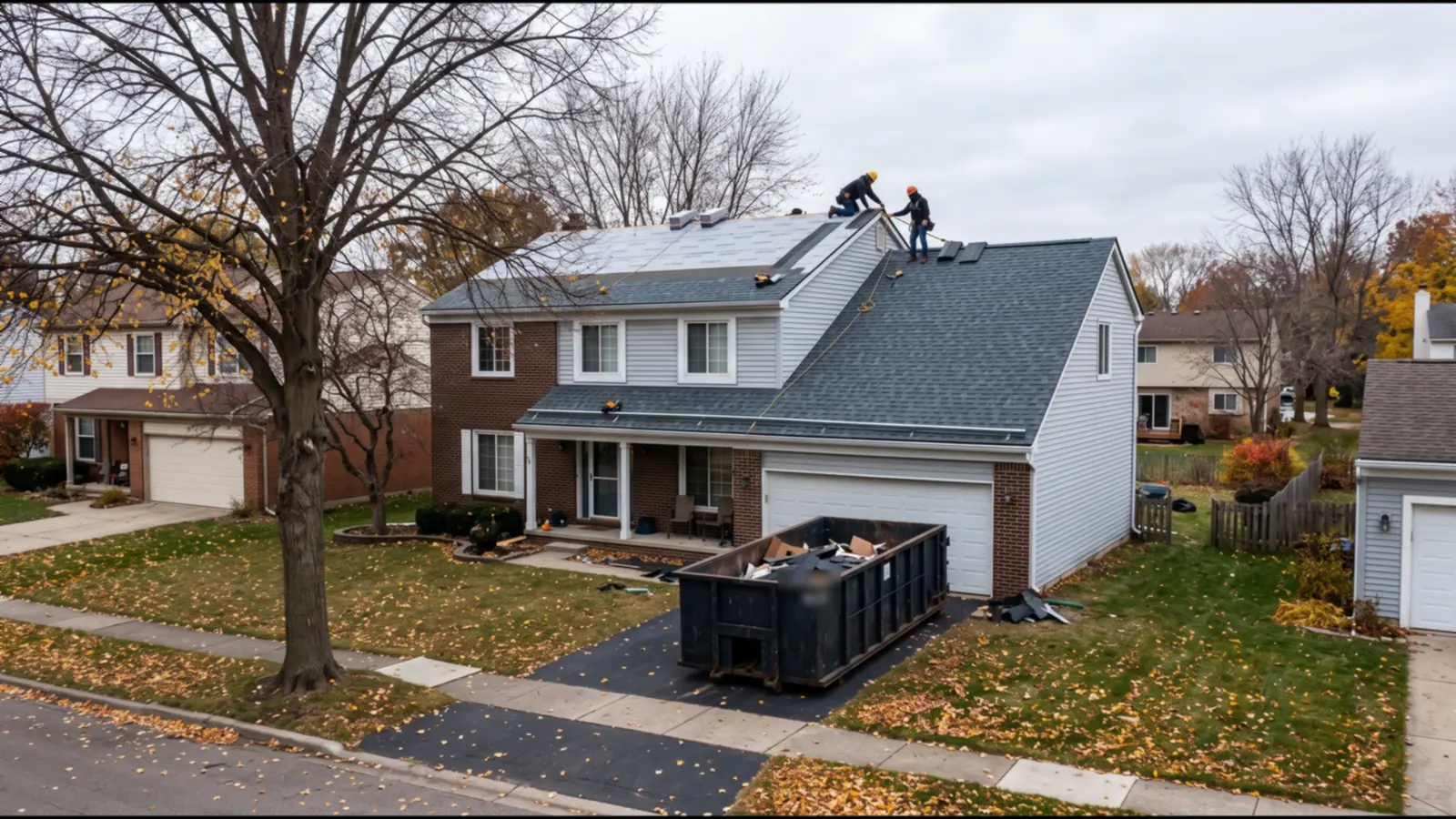
Gutter Guard Choices for Sterling Heights Gutters
Prices below are HomeGuide's national material ranges per linear foot, before labor, with its lifespan estimates for each type. They're estimates to compare types, not quotes.
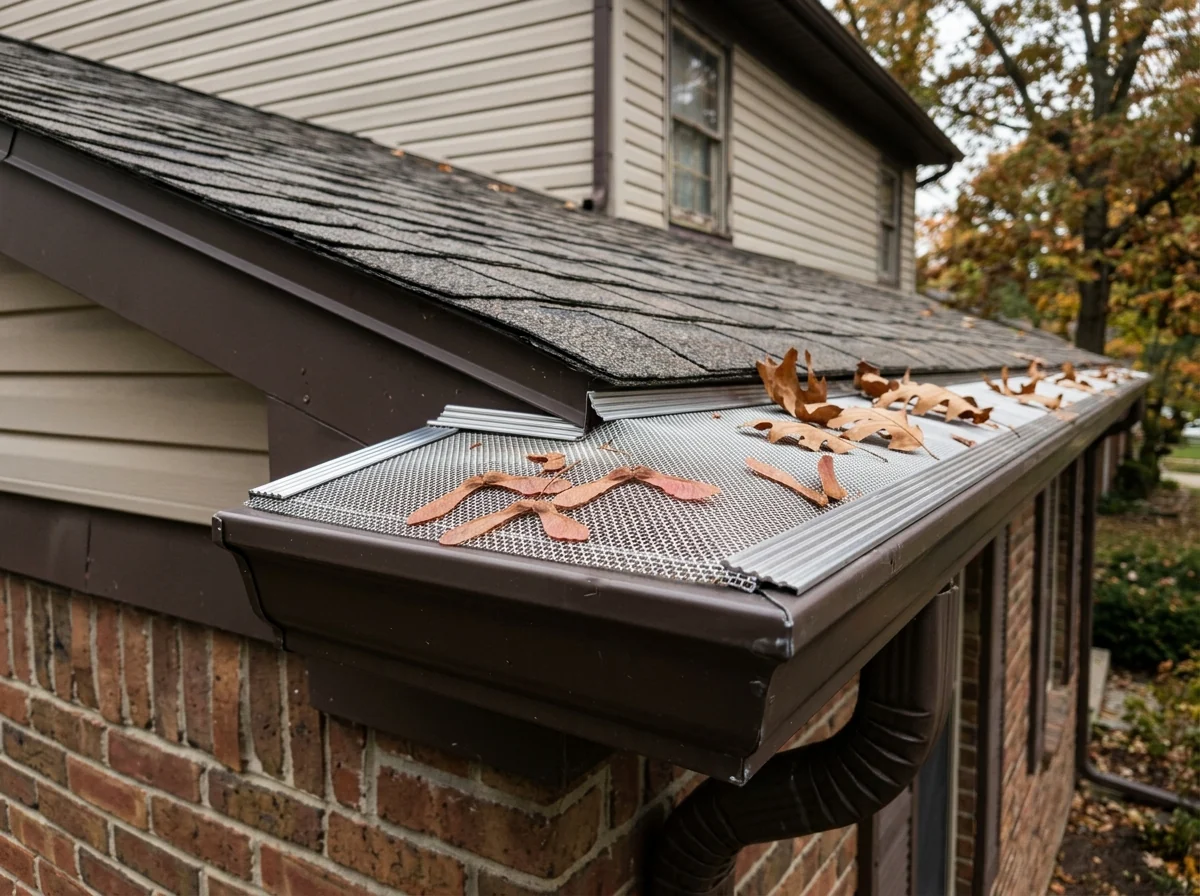
Stainless Micro-Mesh Covers
Micro-mesh is a fine woven screen, usually stainless steel, stretched over a stiff frame that sits on the gutter. Its holes are much smaller than a standard screen's, so it stops pine needles and other small debris that slip through a coarse screen. HomeGuide lists the material at $2 to $5 a foot and gives it 3 to 10-plus years. The fine weave cuts both ways. HomeGuide notes it blocks more but is also more prone to clogging. Check how it's fastened. HomeGuide lists a possibly voided roof warranty among the downsides of guards, so ask whether the back edge screws to the fascia or slides under the shingles.
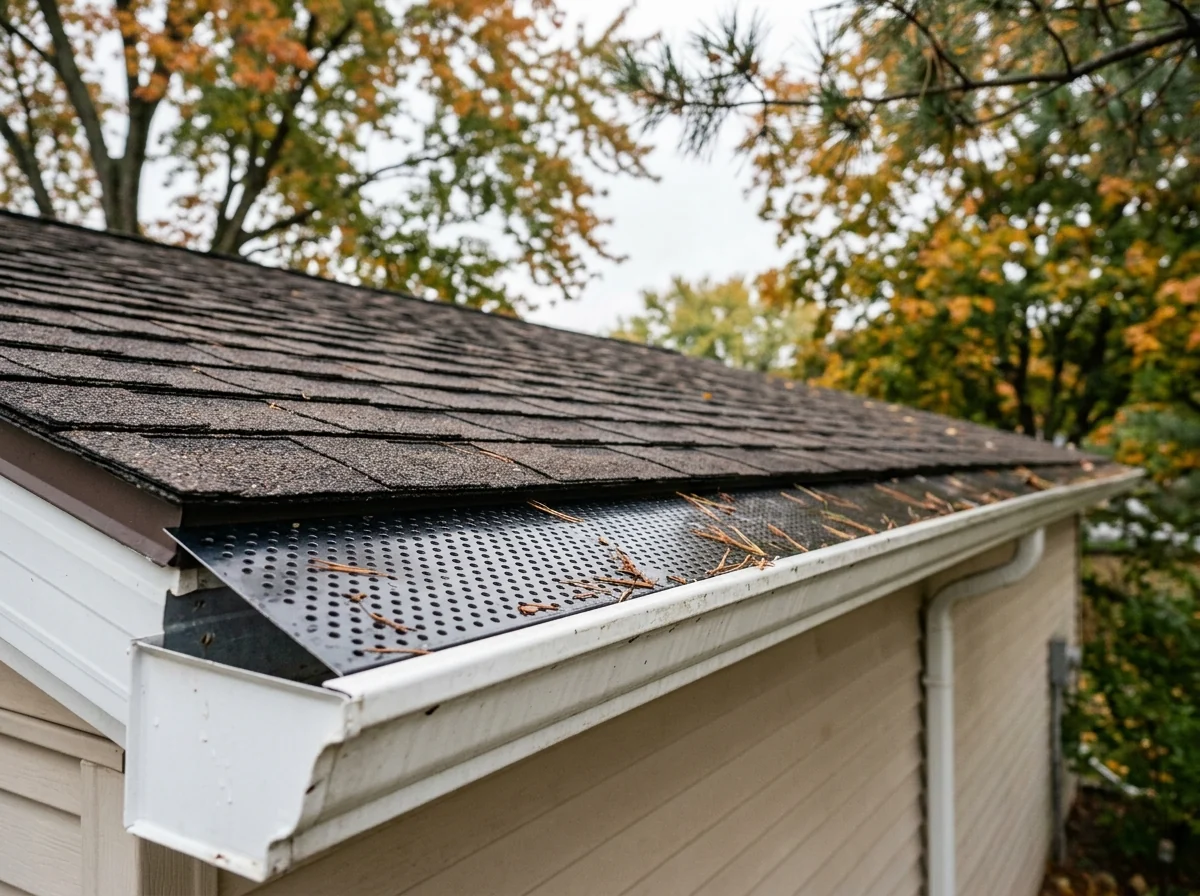
Perforated Metal Guard Panels
Perforated guards are flat or slightly ribbed aluminum sheets punched with rows of small holes, snapped onto the front lip and set against the roof edge or the fascia. They're the budget metal option: $0.50 to $2 a foot in HomeGuide's table, with 10 to 20-plus years of life and a rating for "all climates." The holes are larger than mesh, so whole leaves and needles stay out while seeds and grit can get through. Expect to flush the gutter now and then anyway.
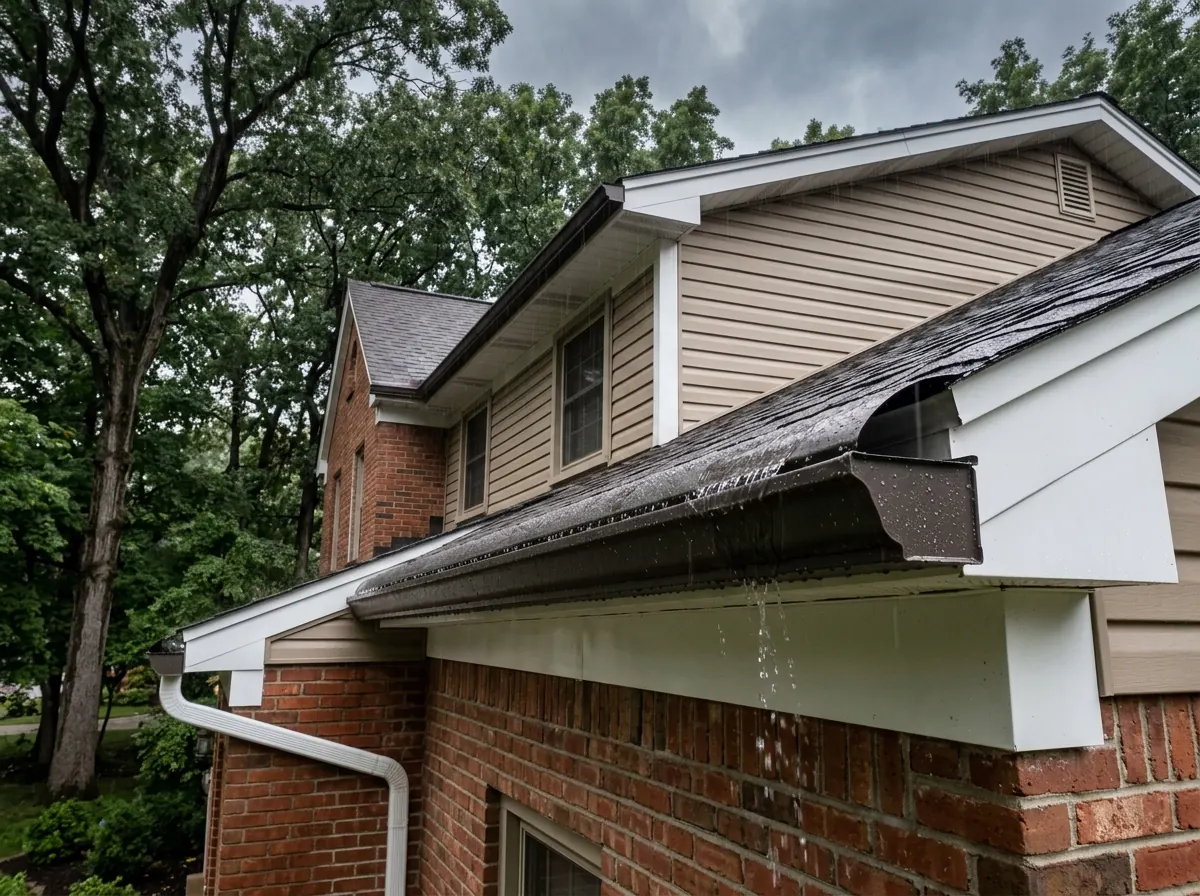
Surface-Tension Hoods
Surface-tension guards, also called reverse-curve or helmet guards, cover the gutter with a solid aluminum hood whose front edge rolls back under itself. Water clings to the curve and drops into a slot underneath, and leaves slide off the front onto the lawn. HomeGuide prices the material at $3.50 to $10 a foot, the most of any type, rates it 10 to 20-plus years, and says it usually needs a professional installer, because the hood's angle has to match the roof. The known weakness is a downpour. HomeGuide reports that some reverse-curve and fine-mesh guards let fast water shoot past instead of in.
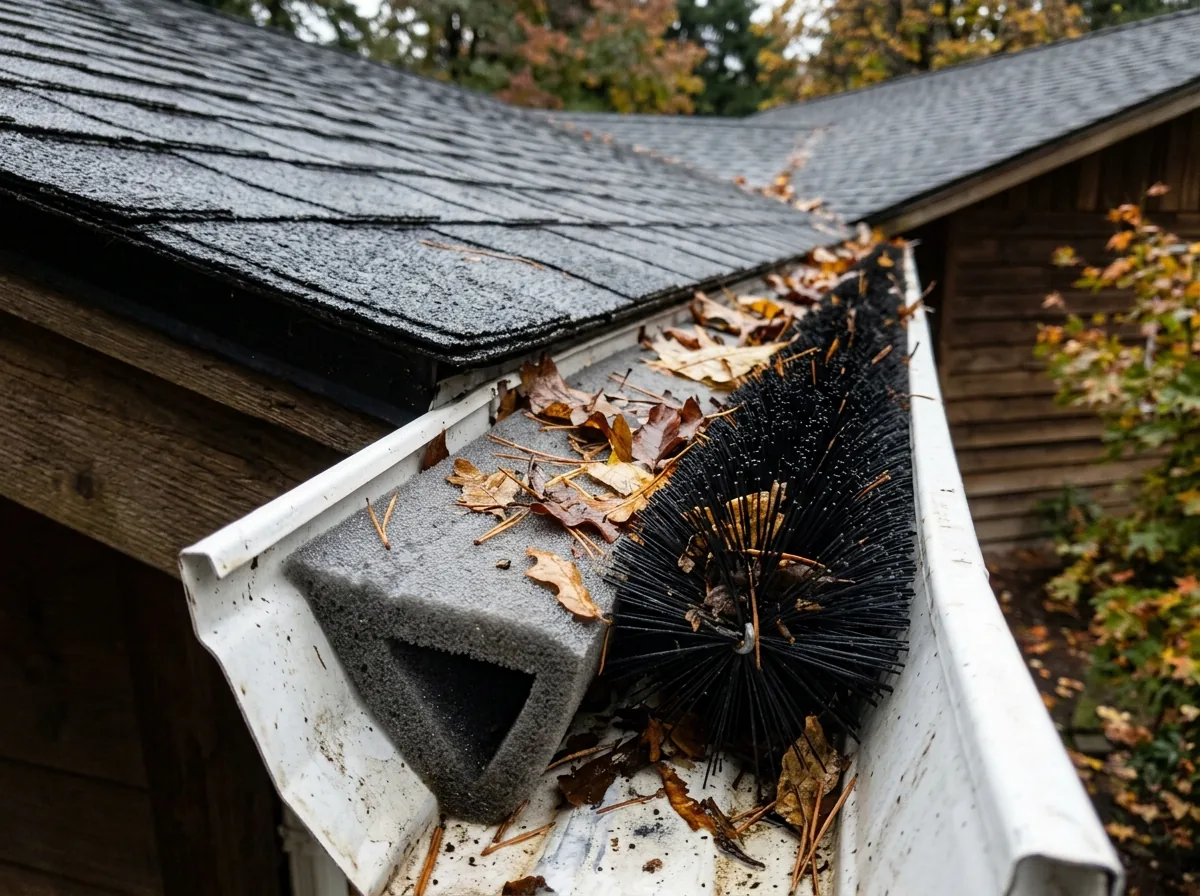
Foam and Brush Inserts
Inserts sit down in the trough instead of over it. Foam is a porous wedge that water soaks through. Brush guards are a long spiral of plastic bristles that leaves rest on. Both cost little ($1.50 to $3.50 a foot for foam, $2 to $4 for brush) and are easy to install yourself. They wear out fast, though. HomeGuide gives foam just 2 to 5 years and warns that seeds can take root in it and that it can grow mold. Brush lasts longer, 10 to 20 years, but needles and seeds tangle in the bristles. Both make sense for a garage gutter or a short run, less so for the whole house.
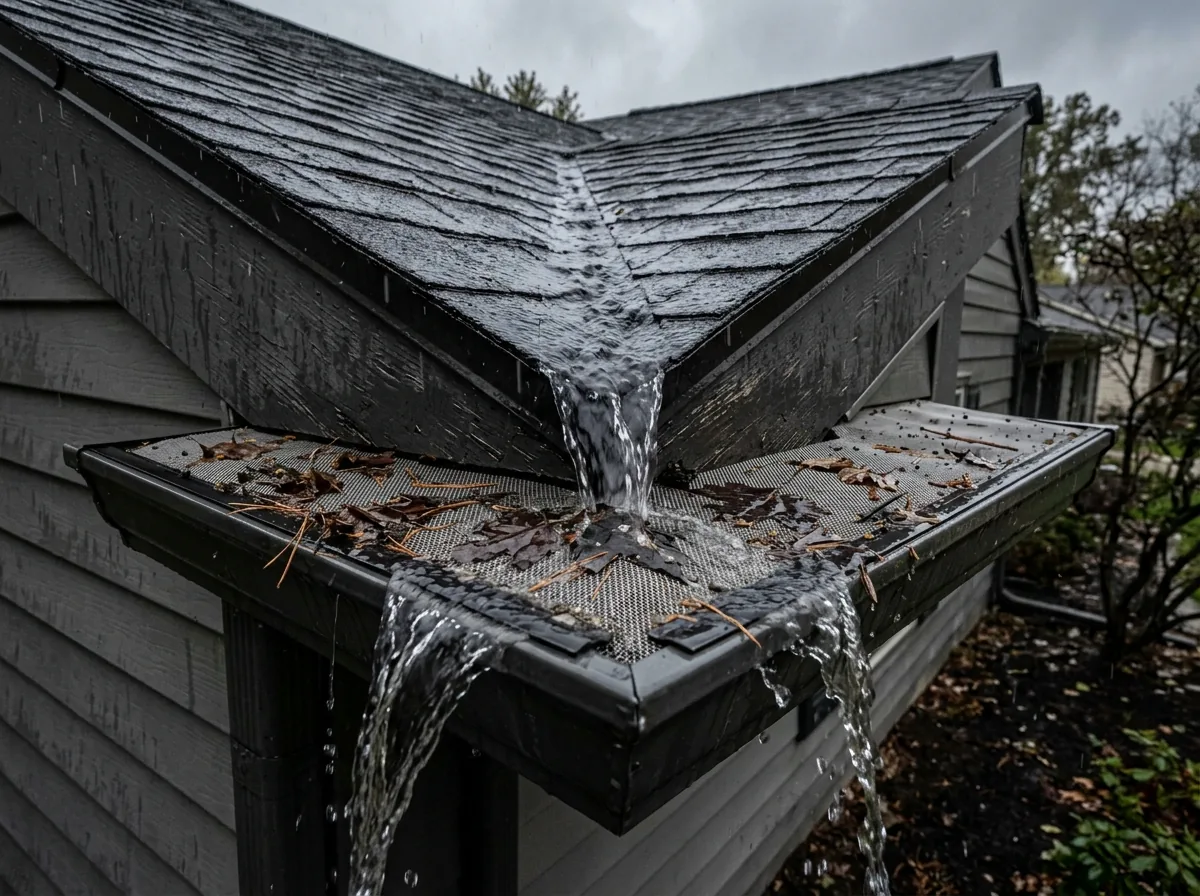
Guards for Valleys and Heavy Leaf Lots
The hardest spot on any guard is the corner under a roof valley. Two slopes empty into one point, and that's where a hood or fine mesh is most likely to overshoot in a storm. A lot shaded by old maples and oaks adds a second problem: the guard surface itself collects leaves. On those houses, ask the roofer how the guard handles the valley corner (a wider opening there, or a different section) and whether the downspout outlet can be reached for cleaning without pulling the guard. In our view, a larger outlet or an extra downspout is worth pricing next to any cover for an overflowing corner. Those changes belong to the gutter itself, covered on the gutter installation page.
Why Sterling Heights homeowners call Sterling Heights Expert Roofing
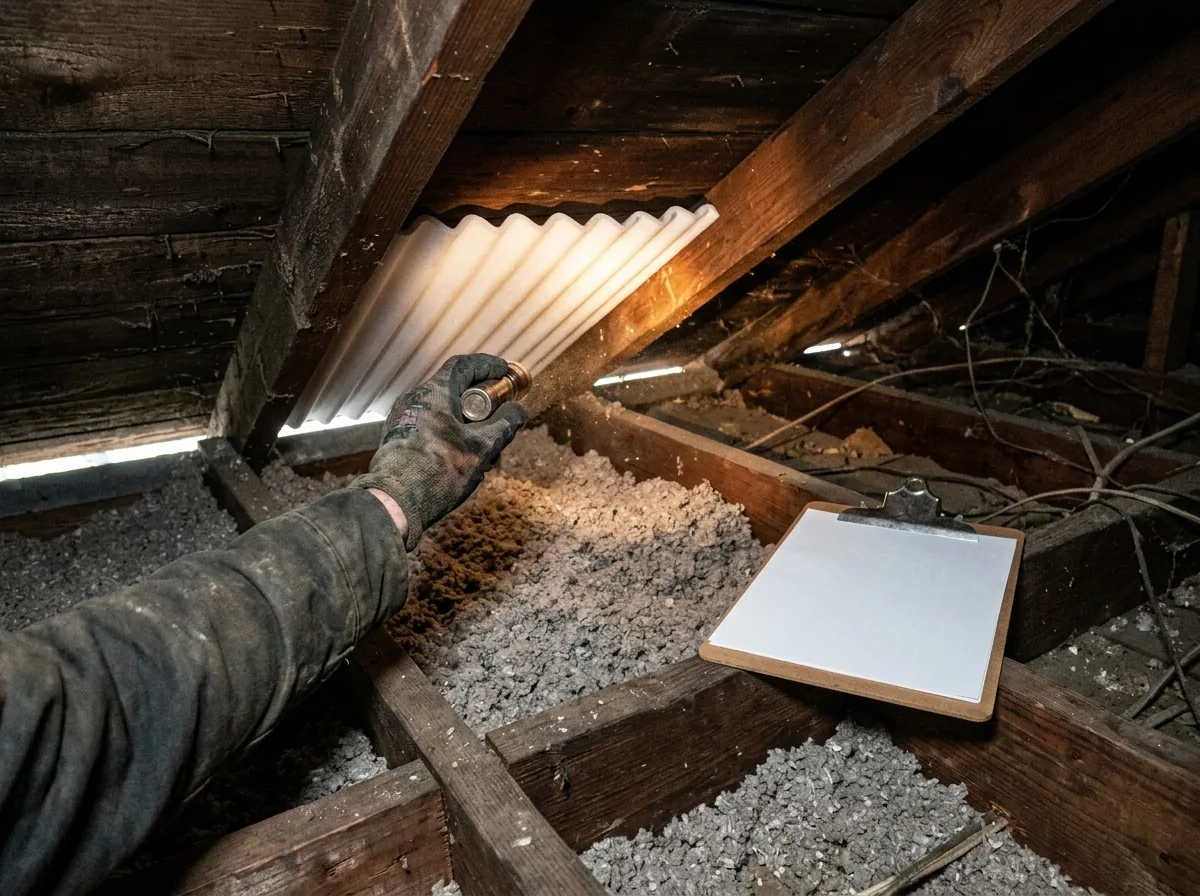
- Free roof and attic inspection
- Itemized written estimate before any work
- Your request goes to one local roofer, not a call list
- Requests from inside Sterling Heights city limits
- Nothing to pay for the referral
Gutter Guards in a Macomb County Winter
HomeGuide lists possible ice dam trouble in cold climates as a drawback of guards. Guards don't cause ice dams, though. Attic heat does, and our ice dam removal page explains how. A clean gutter does drain better, and keeping it clean is the point of a guard.
Ask how the guard is fastened before winter tests it, and whether it can come off for a cleaning without bending. HomeGuide also notes that a heated cable laid with the guards raises the cost but helps on homes that see a lot of ice and snow. That's worth thinking about over a front entry or a north-facing eave that stays shaded all winter.
Gutter Guard Prices: What Moves the Estimate
HomeGuide puts professionally installed guards at $15 to $45 per linear foot, or $3,000 to $9,000 for about 200 feet, with a national average near $6,000. Its rule of thumb is that most homes have about one foot of gutter for every 10 square feet of floor area, so a 1,800-square-foot colonial carries roughly 180 feet (our arithmetic on that rule).
The spread comes from a few things:
Guard type
Perforated panels sit at the bottom of the range and surface-tension hoods at the top. Labor alone runs $3 to $20-plus a foot.Height
A two-storey colonial means taller ladders and more setup than a ranch.Gutter condition
Guards go on good gutters. Sagging runs, leaking seams or rotted fascia get fixed first, often as gutter repair on the same visit.Brand
HomeGuide notes that local installers using lesser-known products can charge much less than the national guard companies. If one bid is far below the others, ask which product and type it is.
Gutter Guards or Regular Cleaning: How to Choose
Guards cut down on cleaning. They don't end it. HomeGuide says guarded gutters still need cleaning at least once a year, and a professional cleaning costs $100 to $250. At its averages, a $6,000 guard job pays for about 34 cleanings at $175 apiece (our calc).
Guards earn their price when the gutters clog more than once a season, when the house is too tall to clean safely from a ladder, or when overflow has already stained the siding or soaked the ground by the foundation. On a one-storey ranch with no big trees nearby, cleaning twice a year is usually cheaper. Either way, a roofer on a ladder at the gutters can also check the roof edge, the drip edge and the fascia while they're up there.