
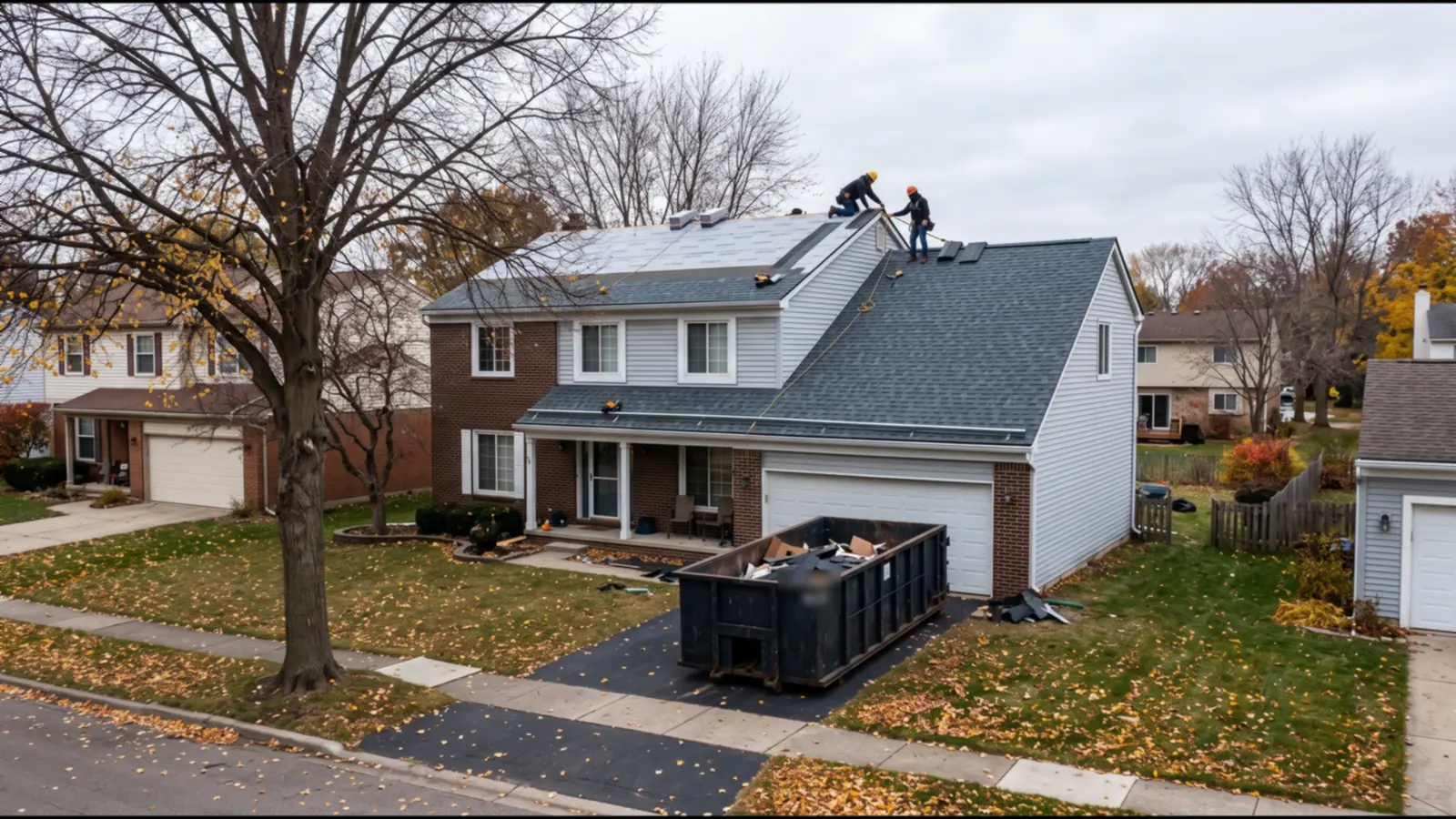
Flat Roofing Options for Sterling Heights Houses
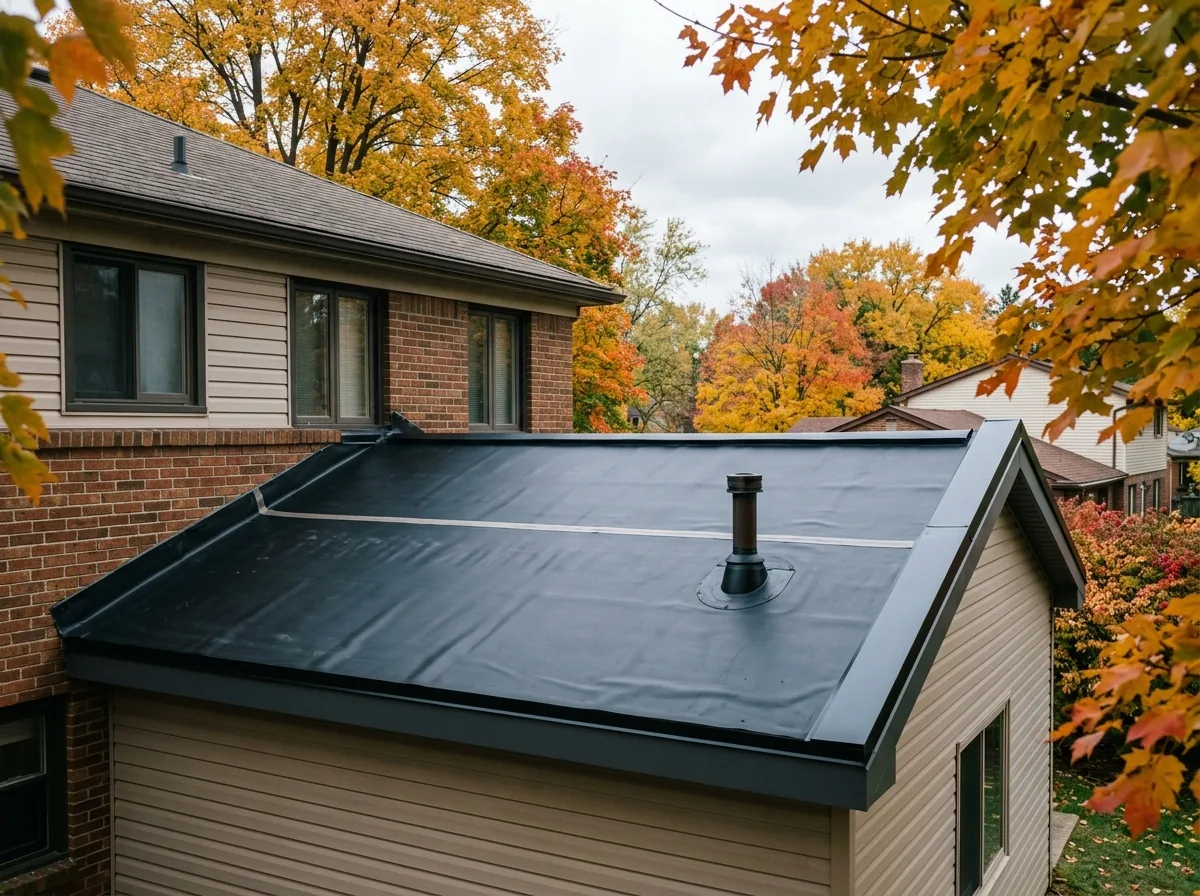
EPDM Rubber Membrane
EPDM is a thermoset synthetic rubber, made to ASTM D4637 or D5019, and it comes in big sheets, so a garage or addition roof may need only one or two seams. Those seams are glued or taped, not welded. HomeGuide notes that this is where EPDM tends to break down first, sooner than on heat-welded TPO or PVC. In return, EPDM handles cold well: HomeGuide lists it and modified bitumen as the membranes that do well in cold climates. When an EPDM roof leaks, check the seam laps and curb corners before the open field of the sheet.
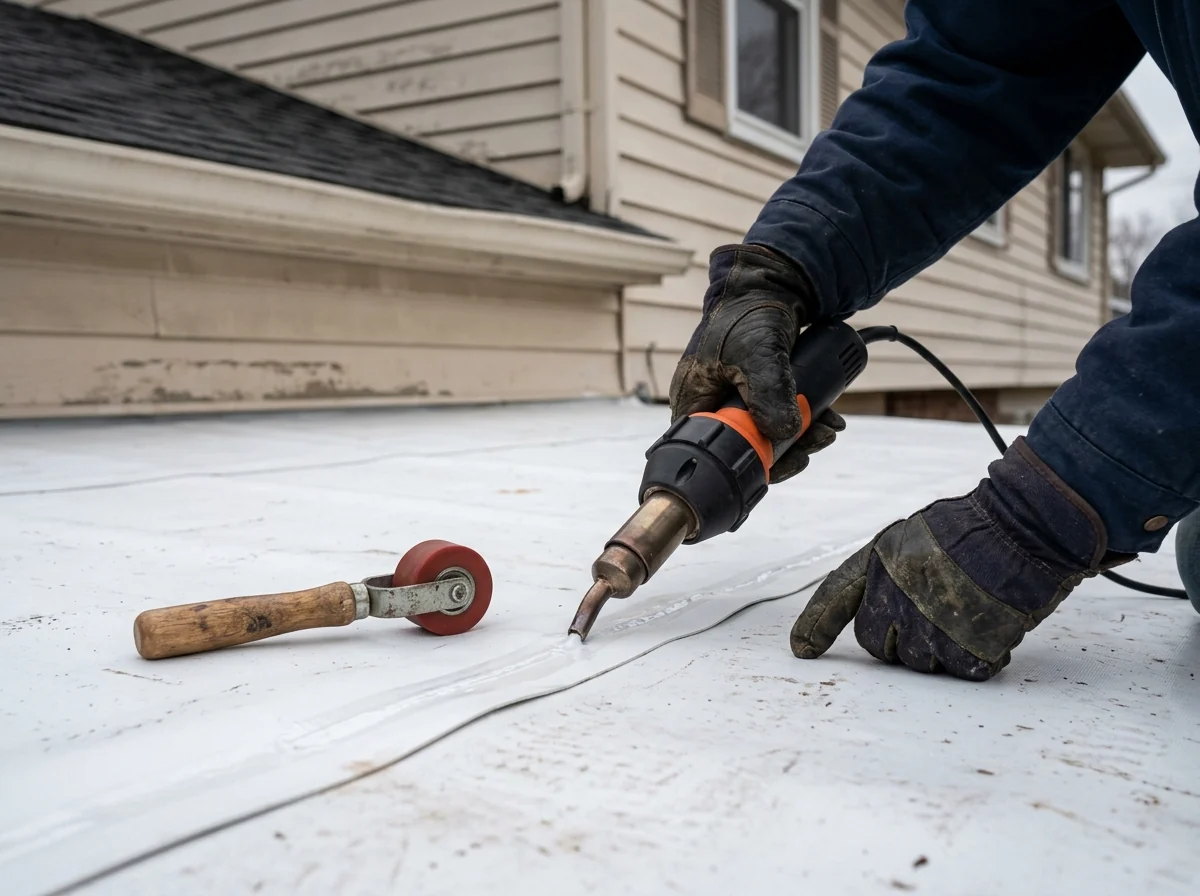
White TPO Membrane
TPO (thermoplastic polyolefin, ASTM D6878) is laid in narrower rolls and joined with a hot-air welder, so the seam becomes one piece of plastic. Narrow rolls also mean more seams, so ask whether every weld gets checked before the crew leaves. The membrane is usually 45 or 60 mil thick. It can be ballasted, mechanically fastened with plates and screws, or fully adhered, and adhered systems cost the most. White is the common color, and it's why TPO shows up on sunny additions where a black roof would bake the room below.
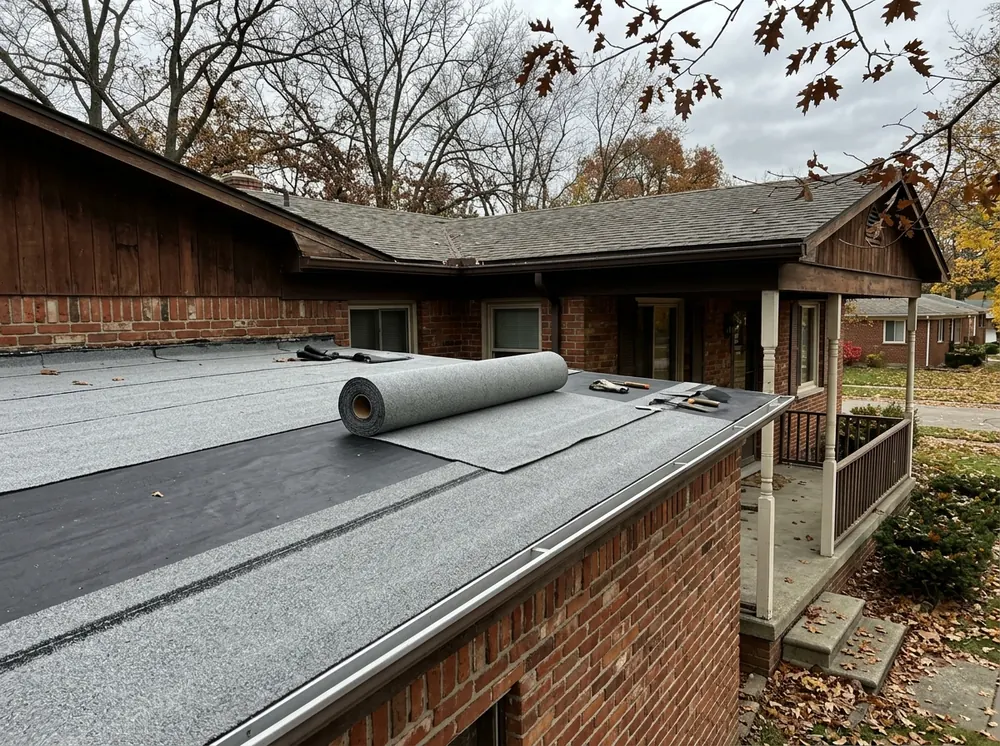
Torch-Applied and Peel-and-Stick Modified Bitumen
Modified bitumen is asphalt reinforced with a polymer. SBS (styrene-butadiene-styrene) stays flexible at lower temperatures, so it suits cold climates, while APP is aimed at hot, sunny ones. It goes down three ways: hot-mopped, torch-applied, or as self-adhered "peel-and-stick" rolls, which keep an open flame off a wood-framed house. A typical system is a base sheet plus a granule-surfaced cap sheet. HomeGuide warns that its seams don't handle standing water well.
Tapered Insulation for Ponding
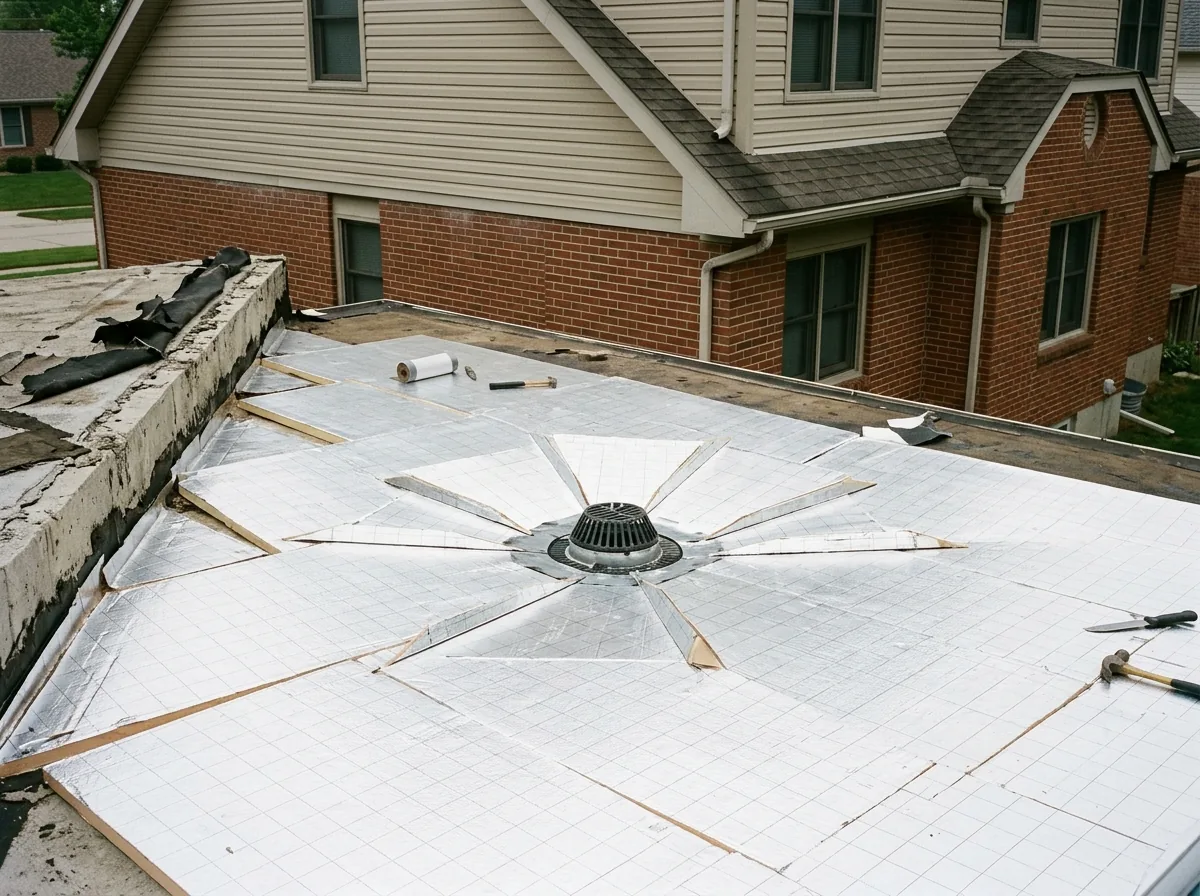
GAF defines ponding as water still on the roof 48 hours after the rain stops. Every low-slope membrane in the residential code, from built-up to TPO, calls for a design slope of at least 1/4 inch per foot. When the framing is dead flat or has sagged, a tapered system fixes it: polyiso boards cut with a built-in pitch, laid toward a drain, scupper or edge, with crickets between drains. Polyiso board runs $0.50 to $3.00 per square foot installed in HomeGuide's figures. A reroof with positive drainage can skip the quarter-inch rule, but on a roof that holds water, we'd pay for the taper.
Membrane Roofs on Sunrooms and Breezeways
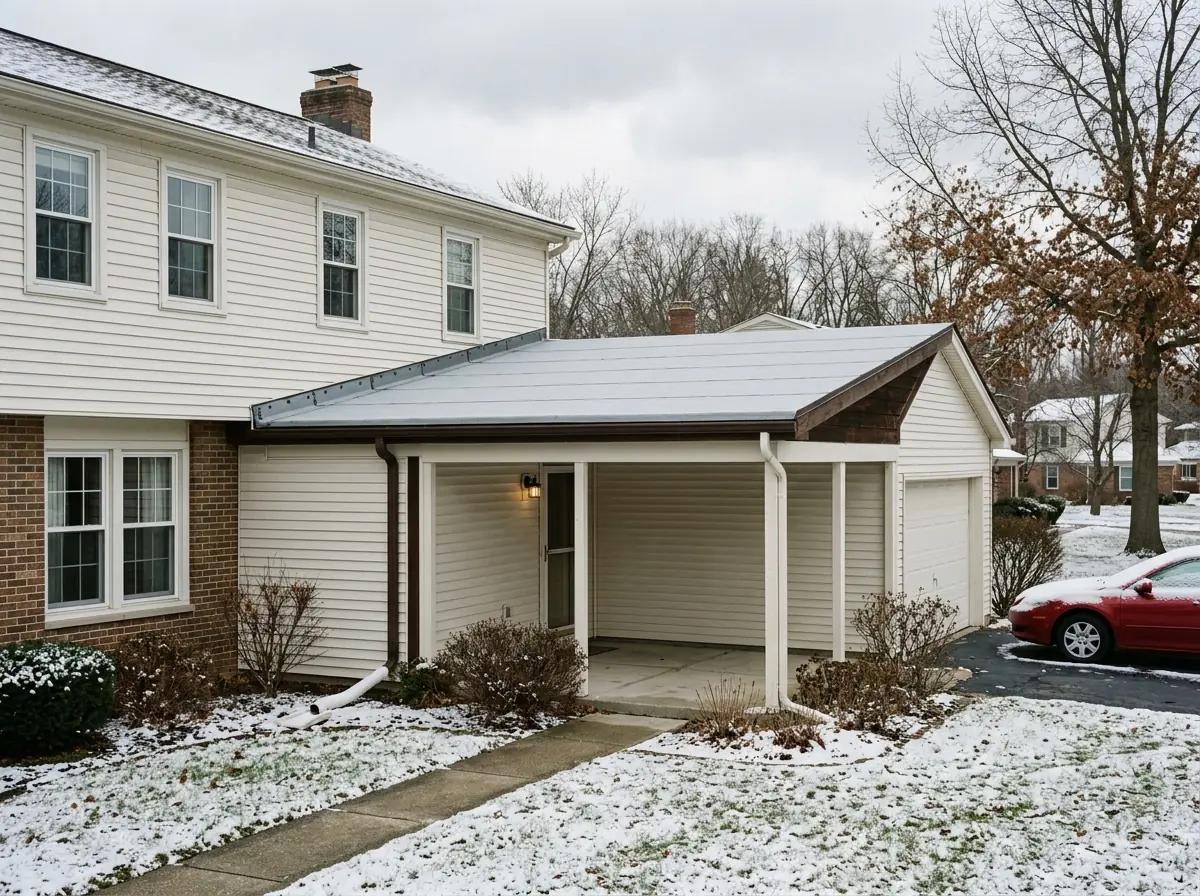
Breezeways between the house and an attached garage, and the shallow roofs over a three-season room, are often too flat for shingles. Shingles need a 2:12 slope at the very least. These small roofs leak where they meet the house. The membrane has to turn up the wall behind the siding, under a counterflashing, and terminate high enough that snow piled in the corner can't reach the top. A breezeway roof usually drains to one gutter, so a clogged downspout there backs water up against the wall flashing fast. On a sunroom with skylights, each curb gets its own membrane boot.
Why Sterling Heights homeowners call Sterling Heights Expert Roofing
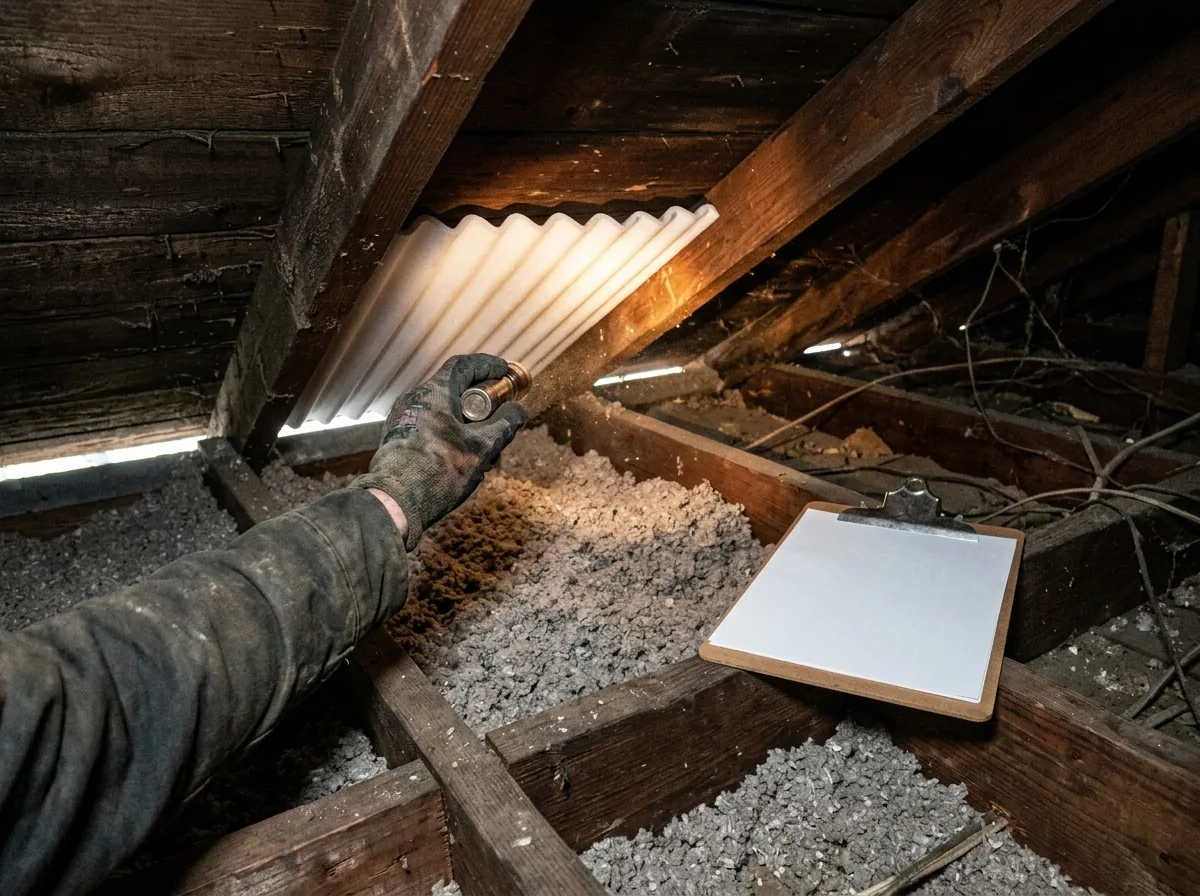
- Free roof and attic inspection
- Itemized written estimate before any work
- Your request goes to one local roofer, not a call list
- Requests from inside Sterling Heights city limits
- Nothing to pay for the referral
Flat Roofing Prices: What Moves the Estimate
These are published national estimates, not quotes. HomeGuide puts flat roof replacement on a house at $3 to $11 per square foot. By membrane, per square foot installed:
| Membrane | Installed price | Average life |
|---|---|---|
| EPDM rubber | $3.50 to $10.00 | 15 to 20 years |
| TPO | $4.00 to $10.00 | 10 to 25 years |
| Modified bitumen | $4.00 to $7.50 | 10 to 20 years |
| PVC | $5.00 to $12.00 | 20 to 30 years |
What pushes a job toward the top of those ranges:
Tear-off
Removing an old flat roof adds $1 to $2 per square foot, disposal included.Wet insulation or soft decking
Both have to come out. Decking is priced on the roof deck replacement page.Tapered insulation
Adds board and labor on a roof that ponds.Attachment method
Fully adhered membrane costs more than mechanically fastened.Small size
HomeGuide prices a flat roof on a 2-car garage at $1,200 to $4,400. On a roof that small, edge metal and flashings make up a bigger share of the bill.
Flat Roofing in a Macomb County Winter
A flat roof here spends months under snow that melts on sunny afternoons and refreezes overnight (the ice dam page has the freeze-thaw numbers). Meltwater on a low-slope roof has nowhere to go if the scupper or downspout is frozen, so it sits at the low spot and works at any seam that isn't perfect. That favors the cold-climate membranes covered above, and a membrane that welds or bonds into one piece over one held together with mastic.
Snow on a flat roof is also weight, and drifts pile up where a breezeway roof meets a second-story wall. Rake it if you can do it from the ground, but don't chip ice off a membrane: a shovel edge or an ice pick goes straight through EPDM and TPO. Adhesives and self-adhered rolls have minimum application temperatures printed on the label, which is why a January leak usually gets a temporary patch and the new roof waits for a mild stretch in spring.
Flat Roofing Estimate: Line Items to Ask About
Ask the roofer to write these down, so two quotes can be compared:
- 1The membrane, its thickness in mil and how it's attached.
- 2Whether the old roof is torn off, and how many layers are coming off. Sterling Heights' permit and layer rules apply to flat sections too.
- 3Insulation type, R-value and any tapered layout, with the drain or scupper locations marked.
- 4Edge metal, wall flashing and termination bar, and how high the flashing runs up each wall.
- 5Pipe boots, curb flashings and skylight boots, counted, with a unit price for any wet insulation found once the roof is open.
If the membrane is old but still dry underneath, ask whether a roof coating buys more years for less money. On a business building, the commercial roofing page covers ballasted systems and roof drains.